
Lauric Acid Trade in 2026: Coconut and Palm Kernel Supply Under Pressure
Introduction
Lauric acid remains one of the most important fatty acids in the global oleochemicals industry, serving as a critical raw material for soaps, detergents, personal care products, food ingredients, and specialty industrial applications.
In 2026, the market is facing growing supply-side pressures as competition for feedstocks intensifies and weather-related risks threaten production in key producing regions. With Indonesia and Malaysia supplying more than 85% of the world's coconut oil and palm kernel oil, developments in Southeast Asia continue to have an outsized impact on global lauric acid pricing and availability.
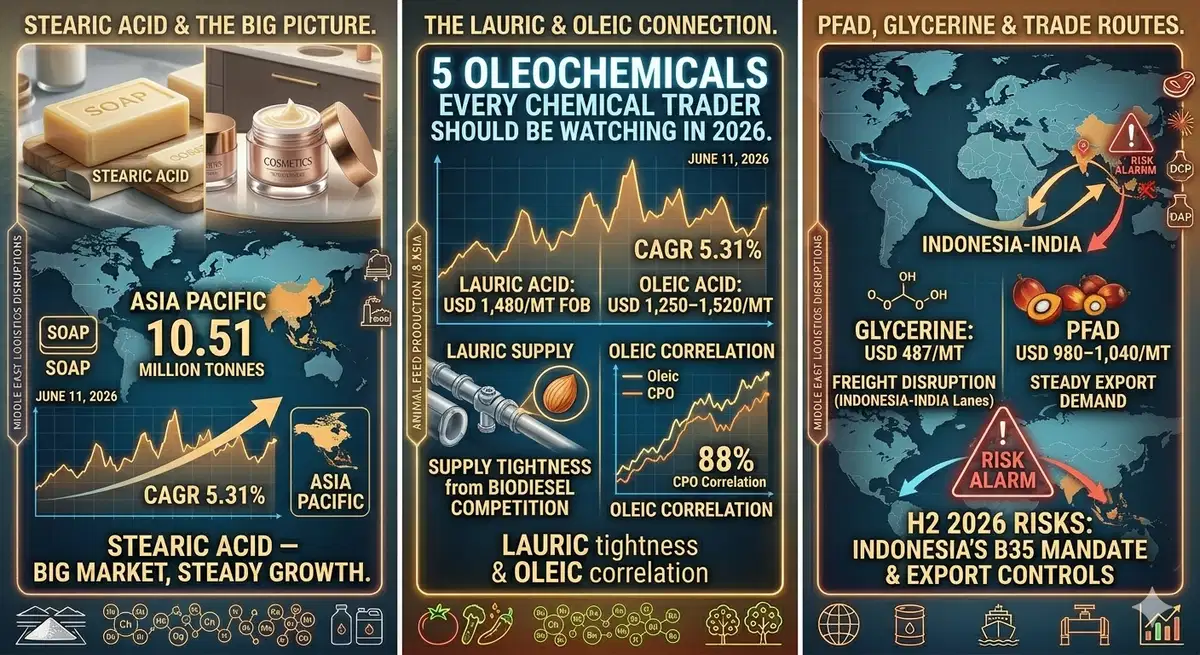
By April 2026, lauric acid prices had reached approximately USD 1,480 per metric tonne FOB Indonesia, reflecting tight feedstock conditions and strong demand from downstream industries.
What Is Lauric Acid?
Lauric acid is a saturated medium-chain fatty acid (C12) primarily derived from:
Coconut oil
Palm kernel oil
Because of its excellent cleansing, foaming, emulsifying, and antimicrobial properties, lauric acid is widely used across multiple industries.
Key applications include:
Soap manufacturing
Detergent formulations
Personal care products
Food emulsifiers
Antimicrobial compounds
Industrial surfactants
Its versatility makes it one of the most commercially important products within the oleochemicals sector.
Southeast Asia Dominates Global Supply
The global lauric acid market is heavily concentrated in Southeast Asia.
Indonesia and Malaysia collectively account for more than 85% of global production of the primary feedstocks used to manufacture lauric acid: coconut oil and palm kernel oil.
This concentration provides the region with significant influence over global pricing, trade flows, and supply availability.
The integrated palm oil and oleochemical industries developed across both countries have created large-scale production infrastructure that supports exports to Europe, North America, Asia, and the Middle East.
However, this concentration also means that disruptions affecting Southeast Asian agriculture or biofuel policies can rapidly impact global markets.
Biodiesel Policies Increase Feedstock Competition
One of the biggest challenges facing the lauric acid market in 2026 is increasing competition for palm-based feedstocks.
Indonesia's B35 biodiesel mandate requires diesel fuel to contain 35% biodiesel, increasing demand for palm-derived oils throughout the country.
While the policy supports renewable energy objectives and domestic agricultural markets, it also creates competition between fuel producers and oleochemical manufacturers for limited feedstock supplies.
As biodiesel consumption rises, less palm-based material may be available for conversion into higher-value oleochemicals such as lauric acid.
This growing competition is contributing to tighter supply conditions and higher raw material costs throughout the value chain.
Weather Risks Add Further Uncertainty
Agricultural commodities remain highly sensitive to weather conditions, and lauric acid is no exception.
Production of both coconut oil and palm kernel oil can be affected by:
Excessive rainfall
Drought conditions
El Niño events
Flooding
Crop disease outbreaks
Any significant disruption to harvest yields in Indonesia or Malaysia can quickly reduce feedstock availability and place upward pressure on prices.
Given the market's reliance on a relatively small number of producing regions, weather-related supply risks remain a major concern for procurement teams.
Palm Oil Prices Drive Lauric Acid Costs
One of the most important market dynamics affecting lauric acid pricing is its close relationship with crude palm oil (CPO).
Industry analysis indicates an approximately 88% correlation between crude palm oil prices and downstream oleochemical products, including lauric acid.
This means that changes in CPO pricing are rapidly transmitted throughout the oleochemical supply chain.
For buyers, this relationship creates both opportunities and challenges:
When Palm Oil Prices Rise:
Lauric acid prices typically increase
Procurement costs climb
Contract negotiations become more complex
When Palm Oil Prices Fall:
Lauric acid pricing often softens
Purchasing opportunities improve
Inventory strategies may shift
As a result, many procurement professionals actively monitor crude palm oil markets as a leading indicator for future oleochemical pricing
Personal Care Industry Supports Demand Growth
The personal care industry remains one of the largest consumers of lauric acid derivatives.
The ingredient is widely used in products such as:
Shampoos
Facial cleansers
Body washes
Creams and lotions
Cosmetic emulsions
Consumers increasingly favor products with plant-based ingredients, supporting continued demand for palm- and coconut-derived oleochemicals.
The expansion of premium skincare and beauty markets across Asia, North America, and Europe is expected to remain a significant growth driver for lauric acid consumption.
Detergents and Surfactants Remain Core Applications
Beyond personal care, lauric acid continues to play a central role in detergent and surfactant manufacturing.
Its strong foaming and cleansing properties make it a preferred raw material for:
Household cleaning products
Industrial cleaners
Laundry detergents
Dishwashing liquids
Institutional hygiene products
Growing demand for hygiene products and cleaning solutions continues to support stable consumption in this segment.
Food and Antimicrobial Applications Expand
Food manufacturers increasingly utilize lauric acid and its derivatives in emulsification systems and specialty formulations.
At the same time, the compound's natural antimicrobial properties are generating interest across food preservation, healthcare, and specialty chemical applications.
These emerging uses provide additional diversification for producers and help strengthen long-term demand fundamentals.
Market Outlook
The outlook for the lauric acid market remains positive despite ongoing supply pressures.
Several factors are expected to shape market conditions through 2026 and beyond:
Continued competition from biodiesel feedstock demand
Tight coconut oil and palm kernel oil supplies
Weather-related agricultural risks
Strong demand from personal care industries
Growth in detergent and surfactant applications
Expanding food-grade and antimicrobial uses
Ongoing dependence on Southeast Asian production
While supply challenges may contribute to price volatility, demand fundamentals remain strong across key end-use sectors.
Conclusion
The global lauric acid market is navigating a complex environment characterized by tightening feedstock availability, biodiesel competition, and agricultural supply risks. As Indonesia's B35 biodiesel mandate increases pressure on palm-based feedstocks and weather uncertainties affect crop production, buyers face growing challenges in securing reliable supply.
At the same time, demand from personal care, detergent, food, and antimicrobial applications continues to expand, supporting long-term market growth.
With Malaysia and Indonesia maintaining their dominant position in global feedstock production and crude palm oil prices heavily influencing oleochemical costs, procurement teams will need to closely monitor both agricultural and energy market developments throughout 2026.
Lauric Acid 70% Min CAS: 0143-07-07