

Basic Information
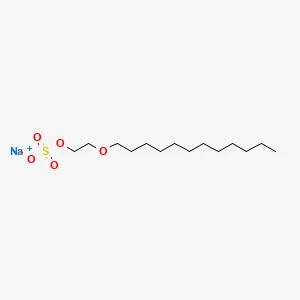
Sodium Lauryl Ether Sulfate Structure
IUPAC Name | Sodium 2-(2-dodecoxyethoxy)ethyl sulfate (C12 EO2 form; mixture in practice) |
CAS Number | 68585-34-2 (C12–C14 EO2–3 mixture) |
HS Code | 3402.11 |
Molecular Formula | C16H33NaO6S (C12 EO2 form) |
Structural Formula | R-O-(CH2CH2O)n-SO3Na (R = C12–C14 alkyl; n = 2–3) |
Synonyms | SLES, Sodium laureth sulfate, Sodium alkyl ether sulfate, Sodium polyoxyethylene lauryl sulfate |
Molecular Weight | Approx. 372.5 g/mol (C12 EO2 form) |
Description
Sodium lauryl ether sulfate (SLES) is one of the most widely used anionic surfactants globally. It is produced by the ethoxylation of lauryl alcohol (or a C12–C14 fatty alcohol blend) followed by sulfation with SO3 and neutralization with NaOH.
Compared to sodium lauryl sulfate (SLS), SLES has improved mildness and skin compatibility due to the ethylene oxide groups that reduce direct contact between the charged sulfate group and the skin surface. This makes SLES the preferred surfactant in mild personal care formulations.
SLES is used in shampoos, body washes, liquid soaps, bubble baths, toothpastes, and household cleaners. It produces abundant, stable foam and provides excellent cleansing performance over a wide range of water hardness.
Chemical and Physical Properties
Physical Description | Clear to slightly hazy viscous liquid or paste. |
Color / Form | Colorless to pale yellow. |
Odor | Mild, characteristic surfactant odor. |
Taste | Not applicable. |
Boiling Point | Not determined (aqueous solution). |
Melting Point | Below 0 °C (aqueous solution). |
Flash Point | >100 °C |
Solubility | Freely soluble in water. |
Density | Approx. 1.04–1.07 g/cm³ (28% solution) |
Vapor Density | Greater than air. |
Vapor Pressure | Low (aqueous solution). |
Stability / Shelf Life | Stable over a wide pH range. May hydrolyze under strongly acidic or basic conditions. |
Viscosity | Viscous liquid to paste (concentration-dependent). |
Heat of Combustion | Not applicable (aqueous solution). |
Polymerization | No hazardous polymerization. |
Ionization Potential | No data available. |
Uses and Manufacturing
Uses
Sodium lauryl ether sulfate (SLES) is the world's most widely used anionic surfactant in personal care formulations, valued for its combination of excellent cleansing, foaming, and skin compatibility.
In shampoos, SLES is the primary surfactant at concentrations of 8–15% actives, providing the backbone cleansing and foaming performance. It is typically combined with cocamidopropyl betaine (CAPB) as a mild secondary surfactant and foam booster, sodium chloride as a viscosity builder, and conditioning agents (silicones, cationic polymers) to create balanced shampoo formulations for different hair types.
Body washes, shower gels, and liquid hand soaps use SLES at 8–20% actives, with mild secondary surfactants, moisturizers (glycerine, glycols), and emollients to deliver cleansing performance with good skin feel and mildness. Baby care products (baby shampoos, baby washes) use ultra-mild SLES variants (higher EO degree, e.g., SLES-3) for enhanced eye and skin mildness.
Household and industrial cleaning applications include dishwashing liquids (SLES at 15–30% actives with non-ionic co-surfactants), multi-purpose cleaners, laundry detergents (in combination with LAS and non-ionics), and hard surface disinfectants. In industrial applications, SLES is used in textile wet processing, leather degreasing, car wash concentrates, and oilfield production chemicals.
In construction and building materials, SLES is used as a foaming agent in foam concrete production, and as a wetting agent in cement and concrete admixtures. In fire fighting, SLES-based formulations are components of aqueous film-forming foam (AFFF) concentrates.
Methods of Manufacturing
SLES is produced in a two-step process: ethoxylation of fatty alcohol followed by sulfation and neutralization.
Step 1 — Ethoxylation: Lauryl alcohol (or C12–C14 lauryl/myristyl alcohol blend) reacts with ethylene oxide (1–3 moles per mole of alcohol) in the presence of KOH catalyst at 140–180 °C and 2–5 bar pressure in a closed reactor (loop or tubular reactor). The degree of ethoxylation (average EO units, n) determines the mildness and performance: SLES-2 (n=2) is standard, SLES-3 (n=3) is milder for baby care.
Step 2 — Sulfation and Neutralization: The ethoxylated fatty alcohol (laureth-2 or -3) reacts with gaseous SO₃ in a falling film reactor at 40–60 °C. The resulting lauryl ether sulfuric acid is immediately neutralized with aqueous NaOH solution to pH 7–8, yielding the sodium salt (SLES) as an aqueous solution of 28–70% active content.
Quality control parameters include active matter content (MBAS titration), unsulfated material, pH, color (APHA), viscosity, dioxane content (formed as trace byproduct in ethoxylation, regulated in personal care products), sodium sulfate, and odor.
Hazard Identification
Hazard Summary
Mild to moderate skin and eye irritant. Lower irritation potential than SLS. May cause sensitization in some individuals.
Fire Hazard
Non-flammable aqueous solution under normal conditions.
Skin, Eye & Respiratory Irritations
Milder skin and eye irritant than SLS; still may cause irritation on prolonged contact or at high concentrations.
Safety and First Aid
Physical Dangers
Non-flammable aqueous solution.
Skin First Aid
Wash with soap and water thoroughly.
Eye First Aid
Flush immediately with water for 15 minutes. Seek medical attention.
Ingestion First Aid
Rinse mouth with water. Seek medical attention.
Fire Fighting Procedures
Use water spray, CO₂, or foam.
Handling and Storage
Nonfire Spill Response
Small spill: Absorb with inert absorbent material or dilute with large amounts of water. Collect in labeled containers. Prevent foamy material from entering drains and waterways.
Large spill: Contain with bunds to prevent spreading. Do not use water hose — foaming will worsen the spill. Pump concentrated material into recovery containers. Dilute residual with large volumes of water before draining (high foaming, high BOD). Notify environmental authorities for significant spills.
Safe Storage
Store in original, tightly closed containers in a cool, dry, well-ventilated area. Do not store in galvanized or unlined carbon steel containers — use HDPE or stainless steel. Protect from frost (freezing causes product separation/instability). Keep away from strong acids (cause hydrolysis and loss of active matter). Do not store near strong oxidizing agents or foods.
Storage Conditions
Recommended storage temperature: 10–30 °C. Do not allow to freeze (protect from frost). Avoid storage above 40 °C for extended periods (thermal degradation). Shelf life: 12 months in original sealed containers at recommended temperature. Suitable containers: HDPE tanks, stainless steel 304/316. Protect from direct sunlight. Recirculate or rehomogenize before use if stored for a long time.