

Basic Information
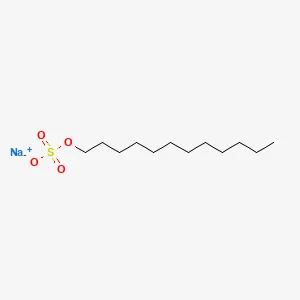
Sodium Lauryl Sulfate Structure
IUPAC Name | Sodium dodecyl sulfate |
CAS Number | 151-21-3 |
HS Code | 3402.11 |
Molecular Formula | C12H25NaO4S |
Structural Formula | CH3(CH2)11OSO3Na |
Synonyms | SLS, Sodium dodecyl sulfate (SDS), Sodium laurilsulfate, Sodium monododecyl sulfate |
Molecular Weight | 288.38 g/mol |
Description
Sodium lauryl sulfate (SLS) is an anionic surfactant synthesized from lauryl alcohol by sulfation and neutralization with sodium hydroxide. It is one of the oldest and most widely studied synthetic surfactants, commonly used in personal care, household cleaning, and laboratory applications.
SLS is highly effective at removing oils, dirt, and grease, and it produces abundant, stable foam. These properties have made it a standard ingredient in toothpastes, shampoos, and cleaning products for decades.
In laboratories, SLS (often called SDS, sodium dodecyl sulfate) is widely used in protein electrophoresis (SDS-PAGE) to denature proteins and impart uniform negative charge for molecular weight determination.
Chemical and Physical Properties
Physical Description | White to cream powder, needles, or granules. |
Color / Form | White. |
Odor | Faint, characteristic soapy odor. |
Taste | Soapy, bitter. |
Boiling Point | Decomposes before boiling. |
Melting Point | 204–207 °C (decomposes) |
Flash Point | >200 °C |
Solubility | Freely soluble in water; slightly soluble in ethanol. |
Density | Approx. 1.01 g/cm³ (1% aqueous solution) |
Vapor Density | Greater than air. |
Vapor Pressure | Negligible. |
Stability / Shelf Life | Stable under dry conditions. May hydrolyze in strongly acidic or basic aqueous solutions. |
Viscosity | Low viscosity aqueous solutions; concentrated paste is viscous. |
Heat of Combustion | Not applicable (decomposes; aqueous solutions). |
Polymerization | No hazardous polymerization. |
Ionization Potential | No data available. |
Uses and Manufacturing
Uses
Sodium lauryl sulfate is one of the most ubiquitous chemical additives in consumer products worldwide, with a broad range of applications in personal care, household cleaning, industrial processes, and scientific research.
In personal care, SLS is used as the primary surfactant and foaming agent in toothpastes (0.5–2%), shampoos, medicated shampoos, body washes, and bar soap adjuvants. Its excellent degreasing and emulsifying properties make it effective at removing sebum and dirt from hair and skin. However, its relatively high irritation potential compared to SLES has led to its replacement by SLES in many mild formulations.
In pharmaceutical applications, SLS serves multiple roles: as a solubilizer for poorly water-soluble drugs in oral solid dosage forms (tablets and capsules), as a wetting agent in tablet granulation, as a disintegrant aid, and as a component of dermal formulations. It is widely used as a controlled skin irritant in dermatological research for standardized skin irritation testing.
In biochemistry and molecular biology, SDS (sodium dodecyl sulfate, same compound as SLS) is indispensable for SDS-PAGE protein electrophoresis. SDS denatures proteins and binds uniformly (~1.4 g SDS/g protein), imparting a net negative charge proportional to protein mass, enabling molecular weight determination. It is also used in Western blotting, 2D electrophoresis, and protein extraction protocols.
Industrial uses include application in fire extinguishing foam concentrates, textile wetting agents, leather degreasing, mineral flotation agents, emulsion polymerization of synthetic rubbers and latexes (SBR, NBR, PTFE), and as a frothing agent in mining mineral processing.
Methods of Manufacturing
SLS is produced by sulfation of lauryl alcohol (1-dodecanol) with sulfur trioxide (SO₃) in a falling film reactor or batch sulfation vessel, followed by neutralization with sodium hydroxide (NaOH) solution.
In the continuous falling film SO₃ sulfation process, lauryl alcohol flows as a thin film down a cooled tube while gaseous SO₃ (diluted with air or N₂ to ~4–7%) reacts with the alcohol at 40–60 °C. The resulting lauryl hydrogen sulfate is continuously neutralized with aqueous NaOH at controlled pH to prevent hydrolysis and obtain the desired pH of 7–8.
The product can be used as an aqueous paste (28–30% or 60–70% active content) or spray-dried to produce a free-flowing white powder (≥90% active). Spray drying is performed at inlet temperatures of 180–200 °C with careful control to minimize thermal degradation and maintain product color and odor quality.
Quality parameters for SLS include: active matter content (MBAS titration), unsulfated alcohol, sodium sulfate (Na₂SO₄), pH (1% solution), color (Klett or APHA), moisture (powder), and odor. Pharmaceutical grade SLS must comply with USP/NF or Ph.Eur. monograph specifications.
Hazard Identification
Hazard Summary
Moderate skin and eye irritant. More irritating than SLES. Dust may irritate respiratory tract. Prolonged contact may cause dermatitis.
Fire Hazard
Combustible solid at elevated temperatures.
Skin, Eye & Respiratory Irritations
Skin, eye, and mucous membrane irritant. Repeated exposure may cause contact dermatitis.
Safety and First Aid
Physical Dangers
Combustible solid. Dust may be irritating.
Skin First Aid
Wash thoroughly with soap and water. Remove contaminated clothing.
Eye First Aid
Flush immediately with water for at least 15 minutes. Seek medical attention.
Ingestion First Aid
Rinse mouth. If symptomatic, seek medical attention.
Fire Fighting Procedures
Use water spray, CO₂, foam, or dry chemical.
Handling and Storage
Nonfire Spill Response
Small spill (powder/granule): Vacuum or carefully sweep to minimize dust. Collect in labeled containers. Avoid inhaling dust. Wear dust mask.
Large spill: Contain. Vacuum collect dry material — avoid wetting which causes foaming and spreading. If wet spill occurs, prevent large foamy quantities from entering drains (very high BOD, toxic to aquatic organisms). Collect in waste containers. Clean residual from surfaces with water.
Safe Storage
Store in original, tightly sealed containers in a cool, dry, well-ventilated warehouse. SLS powder is hygroscopic — moisture causes caking and potential degradation. Keep away from strong acids (cause hydrolysis and H₂SO₄ release), strong oxidizing agents, and metals. Avoid dust accumulation — dust in air with ignition sources may create a fire hazard. Store away from food and incompatible materials.
Storage Conditions
Recommended storage temperature: 15–30 °C. Relative humidity: <60% RH. Shelf life: 24 months in original sealed containers under dry conditions. Suitable containers: HDPE bags/drums (for powder), stainless steel for paste/solution. Protect from moisture — use dessicant if needed in high-humidity environments. Containers must be resealed immediately after use. Store on pallets off the ground.