

Basic Information
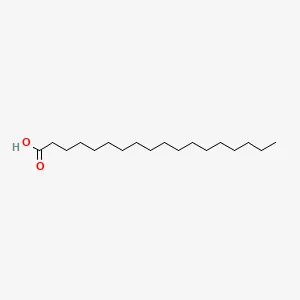
Stearic Acid Structure
IUPAC Name | Octadecanoic acid |
CAS Number | 57-11-4 |
HS Code | 2915.70 |
Molecular Formula | C18H36O2 |
Structural Formula | CH3(CH2)16COOH |
Synonyms | Octadecanoic acid, n-Octadecanoic acid, C18:0 fatty acid, Cetylacetic acid |
Molecular Weight | 284.48 g/mol |
Description
Stearic acid is an 18-carbon saturated fatty acid, one of the most common naturally occurring saturated fatty acids in both plant and animal fats. Commercial stearic acid is frequently a mixture of stearic and palmitic acids in varying ratios, depending on the source (tallow-based or palm-based) and purification level.
Stearic acid is a versatile oleochemical raw material used in a broad range of industries including cosmetics, pharmaceuticals, plastics, rubber, and lubricants. Its physical properties — high melting point, low solubility in water, and waxy solid texture — make it ideal for applications requiring solid fatty acid character.
In rubber processing, stearic acid serves as an activator for vulcanization. In plastics, it is used as a lubricant and release agent. In cosmetics, it functions as an emollient, emulsifier, and thickener in creams and lotions.
Chemical and Physical Properties
Physical Description | White to off-white waxy solid, flakes, or pellets. |
Color / Form | White to off-white. |
Odor | Faint, characteristic fatty odor. |
Taste | Bland, slightly fatty. |
Boiling Point | Approx. 383 °C |
Melting Point | 68–70 °C (technical grade: 54–70 °C) |
Flash Point | ~220 °C |
Solubility | Practically insoluble in water; soluble in hot ethanol, diethyl ether, and chloroform. |
Density | Approx. 0.847 g/cm³ (liquid) |
Vapor Density | Greater than air. |
Vapor Pressure | Negligible at ambient temperature. |
Stability / Shelf Life | Highly stable due to fully saturated nature. Excellent resistance to oxidation. |
Viscosity | Low viscosity liquid when molten. |
Heat of Combustion | Approx. −11,368 kJ/mol. |
Polymerization | No hazardous polymerization. |
Ionization Potential | No data available. |
Uses and Manufacturing
Uses
Stearic acid is one of the most commercially important fatty acids, serving as a key raw material in the rubber, plastics, cosmetics, pharmaceutical, and specialty chemical industries.
In rubber manufacturing, stearic acid is an essential activator for the sulfur vulcanization process. It reacts with zinc oxide (ZnO) during vulcanization to form zinc stearate, which acts as the actual activator for accelerated sulfur vulcanization, improving cure rates, crosslink density, and mechanical properties of rubber products (tires, seals, hoses). Typical usage is 1–3 parts per hundred rubber (phr) in tire compounds and technical rubber goods.
In the plastics and polymer industry, stearic acid (and its metallic soaps — zinc stearate, calcium stearate, magnesium stearate) are essential additives. Metallic stearates serve as heat stabilizers for PVC (preventing HCl liberation during processing), internal and external lubricants in PVC compounding, mold release agents in thermoset resins, and anti-caking agents in powders.
In cosmetics and personal care, stearic acid is a primary emulsifier and thickener in creams, lotions, and cleansing formulations. It forms stable o/w emulsions when partially neutralized with triethanolamine (TEA) or sodium hydroxide to form the corresponding soap (sodium or TEA stearate). This self-emulsifying property makes stearic acid a foundational ingredient in cold creams, moisturizers, and facial cleansers.
Pharmaceutical applications include use as a tablet lubricant (calcium stearate), a coating agent, a sustained-release matrix component, and an excipient in topical formulations. Magnesium stearate is the world's most widely used pharmaceutical tablet lubricant.
Other industrial uses include: candles (stearic acid wax), polishes and waxes, textile fiber lubricants and softeners, paper sizing agents, food emulsifiers (E570), cosmetic pencil/crayon binders, and water-repellent treatments for fabrics.
Methods of Manufacturing
Stearic acid is produced by hydrolysis of animal fats (tallow) or palm stearin and fractionation. Commercial stearic acid is typically not pure C18:0 but a mixture of stearic and palmitic acids in varying ratios.
Different commercial grades are produced based on palmitic:stearic ratio and purity: (1) Single-pressed (oleic acid content up to 45%, palmitic ~35%, stearic ~35%); (2) Double-pressed (~15% oleic, palmitic ~40%, stearic ~45%) — standard commercial grade; (3) Triple-pressed/hydrogenated (~0% oleic, palmitic ~35%, stearic ~60–65%) — high-quality grade. For pure stearic acid (>90%), tallow-based stearic acid is rehydrogenated to convert any residual oleic acid to stearic acid.
Palm-based stearic acid (derived from palm stearin splitting) is an important vegetable source. Palm stearic acid is typically softer (lower stearic content, higher palmitic) than tallow-derived stearic acid unless further hydrogenated.
Quality is controlled by GC purity, acid value, iodine value (degree of unsaturation), melting point, color (APHA), and moisture.
Hazard Identification
Hazard Summary
Low acute toxicity. May cause mild skin and eye irritation on direct contact. Dust may irritate the respiratory tract.
Fire Hazard
Combustible solid. Melts at 68–70 °C; the melt is combustible.
Skin, Eye & Respiratory Irritations
Mild irritant at direct, prolonged contact.
Safety and First Aid
Physical Dangers
Combustible solid; molten material is combustible.
Skin First Aid
Wash with soap and water.
Eye First Aid
Flush with water for 15 minutes.
Ingestion First Aid
Generally low toxicity. Seek medical advice if large amounts are ingested.
Fire Fighting Procedures
Use CO₂, foam, or dry chemical. Water may be used to cool containers.
Handling and Storage
Nonfire Spill Response
Small spill (solid): Sweep or vacuum carefully. Avoid generating dust. Collect in labeled containers. For molten spill, allow to cool and solidify before collection.
Large spill: Allow to solidify if molten. Bund area to contain. Collect mechanically. Prevent entry into drains and waterways. Dispose in accordance with local regulations. Slip hazard from solidified stearic acid on floor — post warning.
Safe Storage
Store in original, tightly closed containers in a cool, dry, well-ventilated area. Keep away from strong oxidizing agents, strong bases, and reactive metals. Bulk melt storage in stainless steel or mild steel tanks at 75–85 °C. Nitrogen blanket recommended to preserve color and prevent oxidation. Avoid copper-containing alloys in contact with product.
Storage Conditions
Recommended storage temperature: 15–30 °C (solid); 75–85 °C (melt). Shelf life: 24–36 months in original sealed containers under recommended conditions. Suitable containers: HDPE drums, multi-wall paper bags (for solid); stainless steel 304/316 or mild steel tanks (for melt). Nitrogen blanket for bulk melt storage. Protect from moisture and heat. Store in a dedicated fatty acid warehouse, away from chemicals and food products.