Explore our network of country and industry based websites to access localized information, product offerings, and business services across our group.

Access reliable chemical market information through our update channels.
Real-time Updates
Daily Updates
Log in to start sending quotation requests for any product.
Don't have an account? Sign Up Here
Home Asia and Middle East Soap Noodle Export Hubs in 2026: Who Leads the Market?
Trade Insights | Supply Chain | 20 January 2026

Introduction
Global Soap Noodle Market Overview
Why Asia Leads the Global Soap Noodle Trade
What Defines a Leading Soap Noodle Export Hub
Country-Level Export Hub Overview
The Role of the Middle East in Soap Noodle Trade
Cost Structure, Logistics, and Certification Considerations
What Global Buyers Should Consider
Conclusion
Asia continues to dominate the global soap noodle export market in 2026, driven by its strong palm oil supply base, large-scale oleochemical capacity, and established trade infrastructure. Soap noodles are a critical raw material for bar soap manufacturing, and their availability directly affects producers in personal care, household cleaning, and institutional hygiene sectors. As global demand for palm-based soap products remains steady, sourcing decisions increasingly focus on export hubs that offer scale, cost efficiency, and supply reliability.
This article examines how the global soap noodle market is structured, why Asia remains the leading export region, how the Middle East fits into the trade landscape, and what global buyers should consider when selecting sourcing hubs in 2026.
Soap noodles are semi-processed raw materials used in the production of bar soaps. They are manufactured mainly through the saponification of palm oil or palm kernel oil and supplied in solid noodle or pellet form. This format allows efficient storage, transport, and formulation into finished soaps for personal care, household, and institutional applications.
The global soap noodle market was valued at approximately USD 1.7 billion in 2024 and is projected to grow steadily through the end of the decade. Market estimates suggest the value could approach USD 2.5 billion by 2030, reflecting a moderate compound annual growth rate in the range of 3 to 5 percent. Growth is supported by population expansion, urbanization, and rising hygiene awareness, particularly in emerging economies across Asia-Pacific and Africa. Increased interest in natural and sustainable soap products also reinforces demand for palm-based soap noodles.
International trade plays a central role in this market because production capacity is concentrated in a limited number of cost-competitive countries, while consumption is global. Asia accounts for more than 70 percent of global soap noodle exports, making it the primary supply region for manufacturers worldwide.
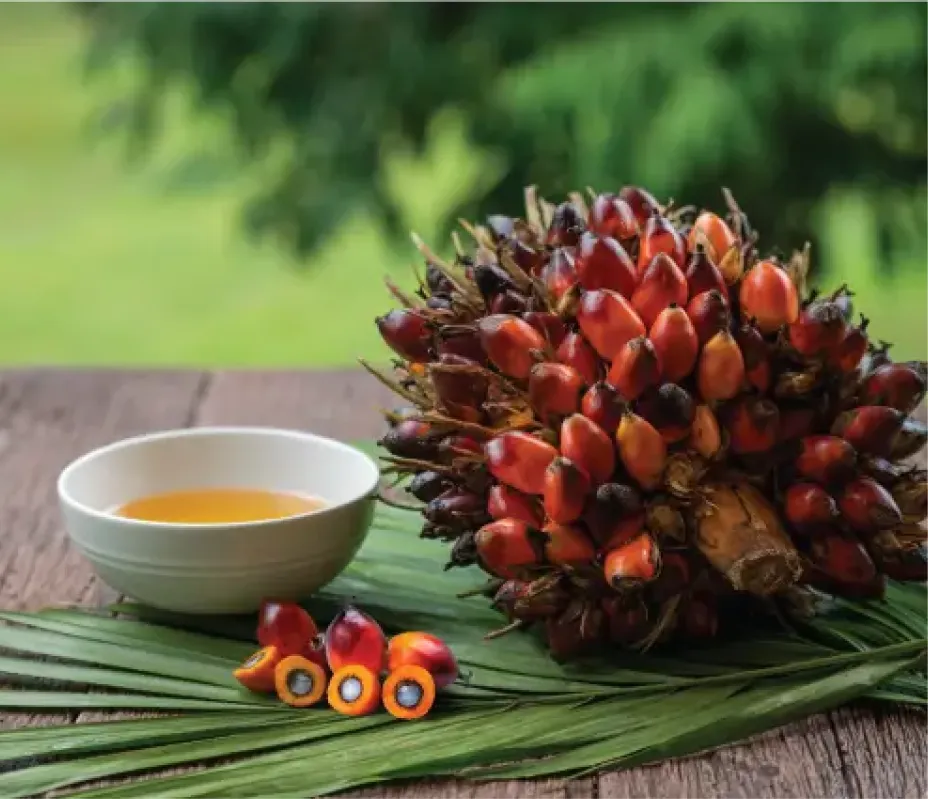
Asia’s dominance in soap noodle exports is closely tied to its position in the global palm oil industry. Indonesia and Malaysia, the world’s largest palm oil producers, together form the backbone of international soap noodle supply. Indonesia alone contributes roughly two-thirds of global export volumes, while Malaysia accounts for about one-quarter.
These two countries benefit from abundant local feedstock, integrated oleochemical industries, and extensive export infrastructure. Soap noodle producers in Southeast Asia supply manufacturers across Europe, North America, Africa, the Middle East, and Latin America, where local production capacity is often limited or less cost-competitive. Other regions, including Europe and North America, maintain smaller domestic soap noodle production, often focused on tallow-based or specialty grades, but still rely on imports for bulk requirements.
Not all exporting regions offer the same advantages. Leading soap noodle export hubs share several structural characteristics that support high-volume, reliable supply.
Feedstock availability is the most important factor. Export hubs located near major palm oil producing regions benefit from stable and cost-effective access to raw materials. Indonesia and Malaysia operate within integrated palm oil ecosystems, which reduces exposure to supply disruptions and price volatility compared to regions that rely on imported oils.
Production scale is another defining element. Leading hubs host large, vertically integrated oleochemical facilities that combine palm oil processing, fatty acid production, and soap noodle manufacturing. These operations benefit from economies of scale, enabling lower unit costs and the ability to fulfill large orders consistently.
Cost efficiency extends beyond feedstock. Competitive labor costs, relatively affordable energy, and efficient plant operations contribute to pricing advantages. In 2026, soap noodle pricing remains closely linked to palm oil markets, so hubs that manage input volatility through integration and inventory strategies maintain a structural edge.
Logistics infrastructure also plays a critical role. Major ports in Indonesia and Malaysia are optimized for containerized and bulk exports, enabling smooth shipment to key markets. Proximity to ports, established shipping routes, and reliable freight availability reduce transit times and landed costs for buyers.
Quality consistency and compliance further distinguish top hubs. Leading exporters maintain strict quality control systems to deliver uniform fatty acid composition, moisture levels, and performance characteristics. Many producers hold international certifications and adhere to recognized manufacturing standards, which simplifies downstream processing for buyers.
Sustainability and certification have become increasingly important. Export hubs in Southeast Asia now offer a wide range of RSPO-certified soap noodles, responding to regulatory and brand requirements in markets such as the European Union and North America. Traceability, audit readiness, and certification availability are now standard expectations for many international buyers.
Indonesia remains the largest soap noodle exporter globally. In 2024, export values reached approximately USD 485 million, supported by large-scale producers and direct access to palm oil plantations. Production facilities located near ports such as Belawan and Dumai enable efficient shipment to global markets. Indonesian soap noodles are widely used for both toilet soap and laundry bar applications.
Malaysia ranks second, with exports valued at close to USD 300 million in 2024. Malaysian producers are known for consistency, refined product quality, and strong certification coverage. While overall volumes are lower than Indonesia, Malaysia is often preferred by buyers requiring certified and traceable palm-based materials.
India plays a smaller but growing role. Indian producers focus on flexible production and regional supply, particularly within South Asia. However, reliance on imported palm oil limits scale compared with Southeast Asian exporters.
The Middle East does not compete with Asia in terms of production volume but serves as a regional distribution and re-export hub. Countries such as the United Arab Emirates, Saudi Arabia, and Egypt import soap noodles from Asia for local finishing or redistribution to nearby markets.
The UAE benefits from advanced logistics infrastructure and strategic location, supporting supply to Africa and parts of the Middle East. Egypt functions as a gateway to North Africa. These hubs are relevant for regional sourcing strategies but do not replace Asia as the primary global supply base.
Asia’s cost competitiveness is driven primarily by feedstock economics. Palm oil availability in Indonesia and Malaysia allows lower production costs than import-dependent regions. In contrast, Middle Eastern producers benefit from lower energy costs but face higher raw material expenses due to imported palm oil.
Shipping efficiency further strengthens Asia’s position. Direct export routes to major consuming regions reduce freight complexity. Soap noodles are commonly shipped in 25-kilogram bags or jumbo sacks, allowing efficient container utilization.
Certification availability is another key differentiator. RSPO-certified soap noodles are widely available from Southeast Asian exporters, supporting compliance with sustainability requirements. Middle Eastern re-exporters typically offer fewer certified options due to their reliance on imported feedstock.
When selecting soap noodle export hubs, buyers should assess volume requirements, certification needs, and exposure to palm oil price fluctuations. Long-term contracts with Indonesian and Malaysian suppliers remain the most reliable option for large-scale procurement.
Diversifying sourcing across multiple origins can help manage supply risk, particularly during periods of feedstock price volatility or regulatory change. Regional hubs in the Middle East can complement sourcing strategies for Africa and nearby markets.
Asia clearly leads the global soap noodle export market in 2026, with Indonesia and Malaysia setting the benchmark for scale, cost efficiency, and supply reliability. The Middle East plays a supporting role in regional distribution, while India offers limited diversification options.
For soap manufacturers and traders seeking stable palm-based soap noodle supply, understanding the strengths of each export hub enables more informed sourcing decisions. Chemtradeasia works with buyers and producers across Asia and the Middle East to facilitate access to soap noodles that meet volume, quality, and certification requirements in line with current market conditions.
We're committed to your privacy. Tradeasia uses the information you provide to us to contact you about our relevant content, products, and services. For more information, check out our privacy policy.


 English
 Indonesian
 简体字
简体字
 العربية
 Español
 Français
 Português
 日本語
日本語
 한국어
한국어
 Tiếng Việt