Explore our network of country and industry based websites to access localized information, product offerings, and business services across our group.

Access reliable chemical market information through our update channels.
Real-time Updates
Daily Updates
Log in to start sending quotation requests for any product.
Don't have an account? Sign Up Here
Home How Indonesian Palm Kernel Oil Re-Calibrates Stearic Acid Feedstock Choices
Trade Insights | Supply Chain | 19 November 2025
The High Cost of Quality: PKO’s Undeniable Premium
Procurement Strategy: Managing the Quality-Cost Trade-Off
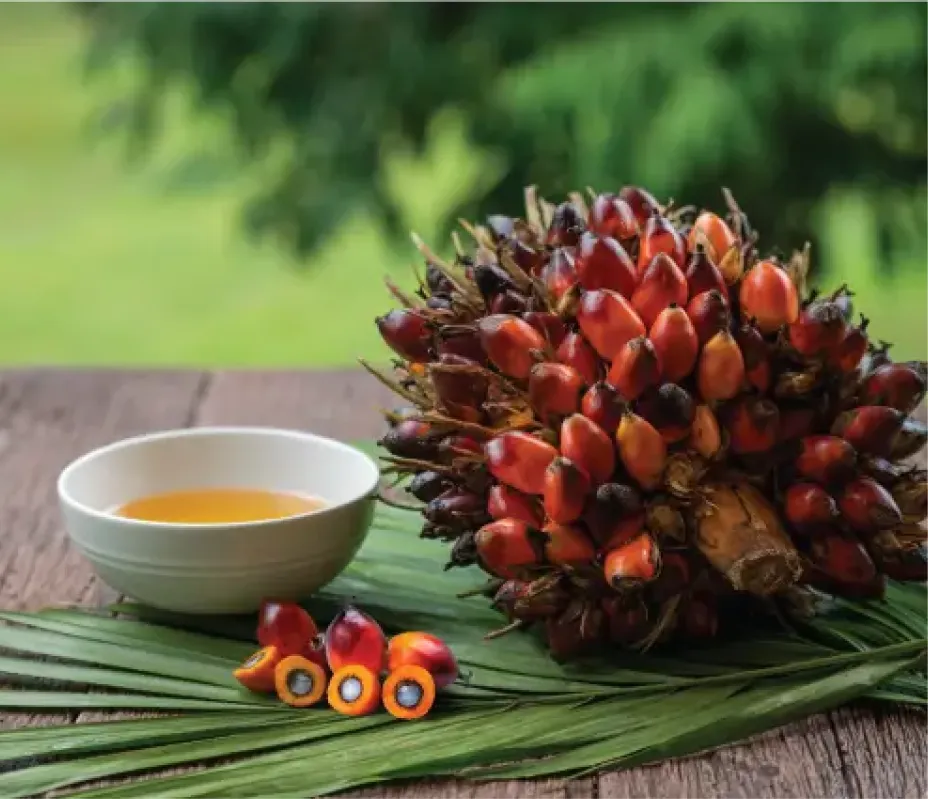
While Palm Stearin (PST) remains the workhorse for bulk Stearic Acid (SA) production, Palm Kernel Oil (PKO) from Indonesia is playing an increasingly critical, albeit expensive, role in November's supply dynamics. PKO, known for its distinct fatty acid profile, is a vital 'flex-feedstock' for producers aiming to achieve specialized, high-purity SA grades, particularly Triple Pressed Stearic Acid. Its availability and price premium are now key factors influencing product composition and profitability across the region.
The intricate supply chain of palm and oleochemicals is where Tradeasia International excels, providing transparent access to diverse feedstock options like PKO and PST. We believe that securing the right raw material, at the right price, is the foundation of product excellence. When navigating complex market choices—like balancing cost with the stringent Iodine Value (IV) requirements of certain SA applications—our expertise becomes invaluable. Indonesia's cumulative PKO production remained robust, reaching an impressive 3.38 Million Tons by the end of August 2025, suggesting overall availability. However, strong internal demand is creating a unique market tension.
The main market tension comes from competing demand within the oleochemical sector. The lauric segment (producing high-value Fatty Alcohols) is pulling PKO away, thereby tightening the feedstock supply for SA producers. This tension maintains PKO's steep price premium. As of mid-November, RBD Palm Kernel Oil (PKO) was priced around $1,739/MT, creating a substantial $724/MT differential over the RBD Palm Stearin (PST) price of $1,015/MT (FOB).
The significant cost barrier means most manufacturers are prioritizing cost efficiency by relying heavily on PST for mass-market SA grades. The estimated 1.48 Million Tons of palm oil and PKO consumed by the Indonesian oleochemical industry up to August demonstrates the powerful domestic pull, further supporting the high PKO price. Consequently, buyers must exercise extreme caution this month: purchasing decisions should be based on a meticulous review of product specifications, particularly the final Iodine Value and fatty acid profile. Paying the PKO premium is a strategic necessity for quality assurance in niche markets; otherwise, leveraging the lower-cost PST supply, despite its limitations in specific grades, remains the financially prudent path for November.
We're committed to your privacy. Tradeasia uses the information you provide to us to contact you about our relevant content, products, and services. For more information, check out our privacy policy.


 English
 Indonesian
 简体字
简体字
 العربية
 Español
 Français
 Português
 日本語
日本語
 한국어
한국어
 Tiếng Việt