Explore our network of country and industry based websites to access localized information, product offerings, and business services across our group.
Access reliable chemical market information through our update channels.
Real-time Updates
Daily Updates
Log in to start sending quotation requests for any product.
Don't have an account? Sign Up Here
Home Learning Center Cocamidopropyl Betaine
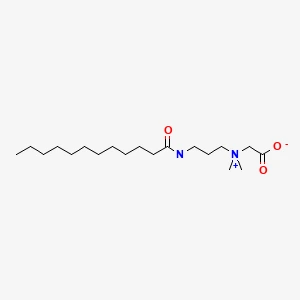
Cocamidopropyl Betaine Structure
| IUPAC Name | 3-[[3-(Dodecanoylamino)propyl]dimethylammonio]propionate (predominant C12 form) |
| CAS Number | 61789-40-0 |
| HS Code | 3402.13 |
| Molecular Formula | C19H38N2O3 (average, based on C12 chain) |
| Structural Formula | RCO-NH(CH2)3-N⁺(CH3)2-CH2COO⁻ (R = coconut alkyl) |
| Synonyms | CAPB, Cocoamidopropyl betaine, Cocamidopropyl dimethyl glycine |
| Molecular Weight | Approx. 342.5 g/mol (average) |
Cocamidopropyl betaine (CAPB) is an amphoteric surfactant derived from coconut oil. It is one of the most widely used surfactants in personal care and household cleaning products due to its mild, skin-compatible nature and excellent foam-boosting and thickening properties.
CAPB is produced by reacting coconut fatty acids with dimethylaminopropylamine, followed by reaction with sodium chloroacetate. The resulting zwitterionic molecule exhibits both cationic and anionic character depending on pH.
It functions synergistically with anionic surfactants (such as SLS or SLES), improving mildness, foam quality, and product viscosity. It also provides antistatic and conditioning benefits in hair care products.
| Physical Description | Clear to slightly yellowish viscous liquid. |
| Color / Form | Clear to pale yellow. |
| Odor | Mild, characteristic odor. |
| Taste | Not applicable (not for consumption). |
| Boiling Point | Not determined (aqueous solution). |
| Melting Point | Freezes below 0 °C |
| Flash Point | >100 °C |
| Solubility | Miscible with water; soluble in polar solvents. |
| Density | Approx. 1.04 g/cm³ (30–35% solution) |
| Vapor Density | Greater than air. |
| Vapor Pressure | Low (aqueous solution). |
| Stability / Shelf Life | Stable over a wide pH range (4–9). Sensitive to strong acids and bases. |
| Viscosity | Moderately viscous liquid (aqueous solution). |
| Heat of Combustion | Not applicable (aqueous solution). |
| Polymerization | No hazardous polymerization. |
| Ionization Potential | No data available. |
Cocamidopropyl betaine is one of the most important secondary surfactants in modern personal care formulation. It is used extensively in shampoos, body washes, liquid hand soaps, facial cleansers, baby care products, and intimate hygiene washes. Its mild, non-irritating nature allows it to reduce the irritation potential of stronger primary surfactants such as SLS and SLES when used in combination, making it an essential ingredient in 'gentle' and 'mild' formulation categories.
In shampoos, CAPB acts as a foam booster, increasing foam volume and stability, and also as a rheology modifier that helps thicken the formulation when used with electrolytes. Its zwitterionic nature provides some conditioning benefit to hair, reducing static and improving combability.
In household and industrial cleaning applications, CAPB is used in dishwashing liquids, surface cleaners, and hard surface disinfectants, where it improves foam stability, wetting, and cleaning efficacy. In industrial applications, it is used in agricultural formulations as a wetting agent and in oilfield chemicals as a corrosion inhibitor and foam booster.
At pH values below the isoelectric point (~3.5–4.5), CAPB takes on net cationic character and can provide antimicrobial activity; this property is exploited in some preservative booster and biocide formulation systems.
CAPB is produced in a two-step synthesis. In the first step, coconut oil fatty acids (or methyl esters, or coconut oil directly) react with 3-dimethylaminopropylamine (DMAPA) at elevated temperature (150–180 °C) to form a fatty amidopropyl dimethylamine intermediate via an amidation reaction.
In the second step, the amide intermediate undergoes betainization by reaction with sodium monochloroacetate (SMCA) in aqueous alkaline conditions, forming the zwitterionic betaine product. Reaction conditions are carefully controlled to minimize the formation of DMAPA-based impurities and to achieve a high ratio of amidopropyl betaine to amine oxide byproducts.
The product is typically sold as a 28–35% aqueous solution. Quality is controlled by active matter content, pH, color, sodium chloride content, free DMAPA content, and absence of nitrosamine precursors, which are regulated in personal care applications.
May cause mild skin and eye irritation. Has potential to cause sensitization in susceptible individuals.
Non-flammable aqueous solution under normal conditions.
May cause eye and skin irritation on direct contact. Some individuals may exhibit sensitization reactions.
Non-flammable aqueous solution.
Wash with soap and water thoroughly.
Immediately flush eyes with water for 15 minutes. Seek medical attention.
Do not induce vomiting. Rinse mouth, drink water, and seek medical attention.
Use water spray, foam, or CO₂. Use water to cool containers exposed to heat.
Small spill: Absorb with sand, earth, or other non-combustible absorbent. Collect and place in appropriate waste containers. Rinse area with water.
Large spill: Contain spill with absorbent barriers. Do not allow entry into storm drains or waterways — CAPB is harmful to aquatic organisms. Notify environmental authorities. Recover liquid by pumping into sealed containers. Clean area with water.
Store in original, tightly closed containers in a cool, dry, well-ventilated area. Protect from frost (freezing may cause product separation) and elevated temperatures (>40 °C). Keep away from strong acids, strong bases, and oxidizing agents. Do not store in open or galvanized metal containers — use HDPE or stainless steel. Keep away from food and feed materials.
Recommended storage temperature: 10–30 °C. Do not allow to freeze. Shelf life: 12 months in original sealed containers at recommended temperature. Suitable containers: HDPE, stainless steel 304/316. Avoid carbon steel and galvanized containers. Protect from direct sunlight and frost. Agitate gently before use if settled.
For more detailed information including pricing, customization, and shipping:
Discover more about this product and understand how it may fit into your operations, formulations, or production requirements.
Browse Product

 English
 Indonesian
 简体字
简体字
 العربية
 Español
 Français
 Português
 日本語
日本語
 한국어
한국어
 Tiếng Việt




















