Explore our network of country and industry based websites to access localized information, product offerings, and business services across our group.
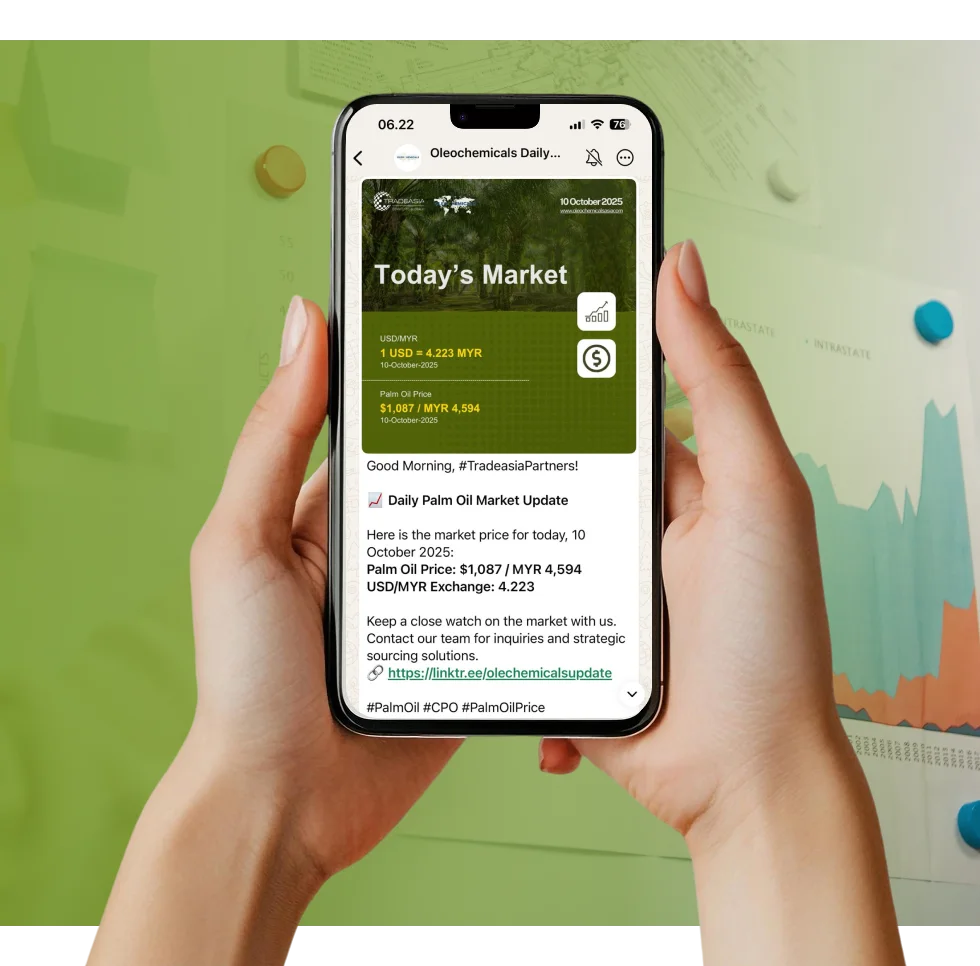
Access reliable chemical market information through our update channels.
Real-time Updates
Daily Updates
Log in to start sending quotation requests for any product.
Don't have an account? Sign Up Here
Home Why FMCG Giants are Redefining Lauryl Myristyl Alcohol Procurement for 2026
Trade Insights | Applications and Buyers | 11 March 2026

The landscape for Lauryl Myristyl Alcohol (C12-C14) is undergoing a fundamental shift as we move through 2026, driven not by simple volume requirements but by the aggressive "green chemistry" mandates of global FMCG and pharmaceutical conglomerates. B2B buyers are no longer merely looking for chemical consistency; they are restructuring their entire supply chains to prioritize renewable, palm-based alcohols that can serve as the backbone for next-generation bio-surfactants and eco-emollients. This transition is visible in the market data, where the global Lauryl Myristyl Alcohol market is projected to reach approximately USD 13.5 billion by 2032, maintaining a robust CAGR of 5.7%. The surge is particularly concentrated in the personal care and home care sectors, where the push to replace petroleum-derived ingredients with natural fatty alcohols has moved from a marketing ambition to a procurement necessity.
Modern B2B buyers are focusing heavily on the performance characteristics of C12-C14 blends in specific high-growth applications. In the detergent sector, the demand for bio-surfactants that offer high biodegradability without sacrificing foam stability is pushing Lauryl Myristyl Alcohol to the forefront of formulation strategies. Similarly, the pharmaceutical and high-end cosmetic industries are increasingly utilizing these alcohols as eco-emollients to achieve superior skin-feel and emulsion stability in "clean beauty" products. As of early 2026, the demand for natural-source fatty alcohols in the Asia-Pacific region alone is expanding at the fastest rate globally, as manufacturers in China and India pivot toward sustainable feedstock to satisfy both domestic environmental policies and international export standards.
The shift in buyer behavior is also characterized by a move away from spot-market volatility toward long-term, sustainability-linked contracts. Large-scale buyers are now requiring detailed "green" dossiers for every metric ton of Lauryl Myristyl Alcohol purchased. This involves not only technical specifications but also comprehensive carbon footprint data and evidence of renewable sourcing. These mandates have created a bifurcated market where suppliers who can provide certified, high-purity C12-C14 are commanding significant premiums. Procurement teams are increasingly bypassing traditional middleman structures to engage directly with integrated Southeast Asian refiners who can guarantee the integrity of the "green chemistry" chain from plantation to final distillation.
Beyond traditional cleaning and personal care, the pharmaceutical sector is emerging as a critical volume driver for high-purity Lauryl Myristyl Alcohol in 2026. As an excipient and emulsion stabilizer, its role in topical drug delivery systems is being re-evaluated under stricter global health and environmental regulations. The industry is seeing a concentrated effort to standardize C12-C14 fractions that meet both USP/NF standards and international sustainability certifications. This dual-requirement has led to a tightening of supply for the highest pharmaceutical grades, with 2026 price points for these specialized alcohols frequently trading at a 15% to 20% premium over standard industrial grades.
The 2026 reality for Lauryl Myristyl Alcohol is one of targeted, data-driven sourcing. Manufacturers are moving toward a "total value" model where the environmental cost of the ingredient is weighed as heavily as the USD/MT price. We are seeing a 10% year-over-year increase in the adoption of natural fatty alcohols in regions that were previously price-sensitive, indicating that the green chemistry mandate has become a global standard. For procurement managers, the challenge for the remainder of 2026 will be securing consistent volumes of high-purity C12-C14 amidst a tightening supply of sustainable feedstock, making strategic partnerships with transparent Southeast Asian producers more valuable than ever.
Sources:
We're committed to your privacy. Tradeasia uses the information you provide to us to contact you about our relevant content, products, and services. For more information, check out our privacy policy.


 English
 Indonesian
 简体字
简体字
 العربية
 Español
 Français
 Português
 日本語
日本語
 한국어
한국어
 Tiếng Việt