Explore our network of country and industry based websites to access localized information, product offerings, and business services across our group.

Access reliable chemical market information through our update channels.
Real-time Updates
Daily Updates
Log in to start sending quotation requests for any product.
Don't have an account? Sign Up Here
Home Navigating the Global Stearic Acid Supply Chain for Industry
Trade Insights | Supply Chain | 22 April 2026
Introduction Stearic Acid
The Global Stearic Acid Market: A 2026-2030 Outlook
Stearic Acid in Oleochemicals: Key Applications and Benefits
Navigating the Supply Chain: Challenges and Strategic Sourcing
The Role of Digital Platforms and Suppliers like Chemtradeasia
Conclusion
The global oleochemicals industry stands as a critical pillar for countless manufacturing sectors, from personal care and food to plastics and rubber. At the heart of many formulations within this vast landscape lies Stearic Acid, a saturated fatty acid prized for its versatility, stability, and multifunctional properties. As we look toward the period of 2026-2030, understanding the dynamics of the Stearic Acid supply chain becomes paramount for industry stakeholders. This article provides a comprehensive, forward-looking analysis of the market forces, sourcing strategies, and technological trends that will define the procurement and application of Stearic Acid on a global scale.
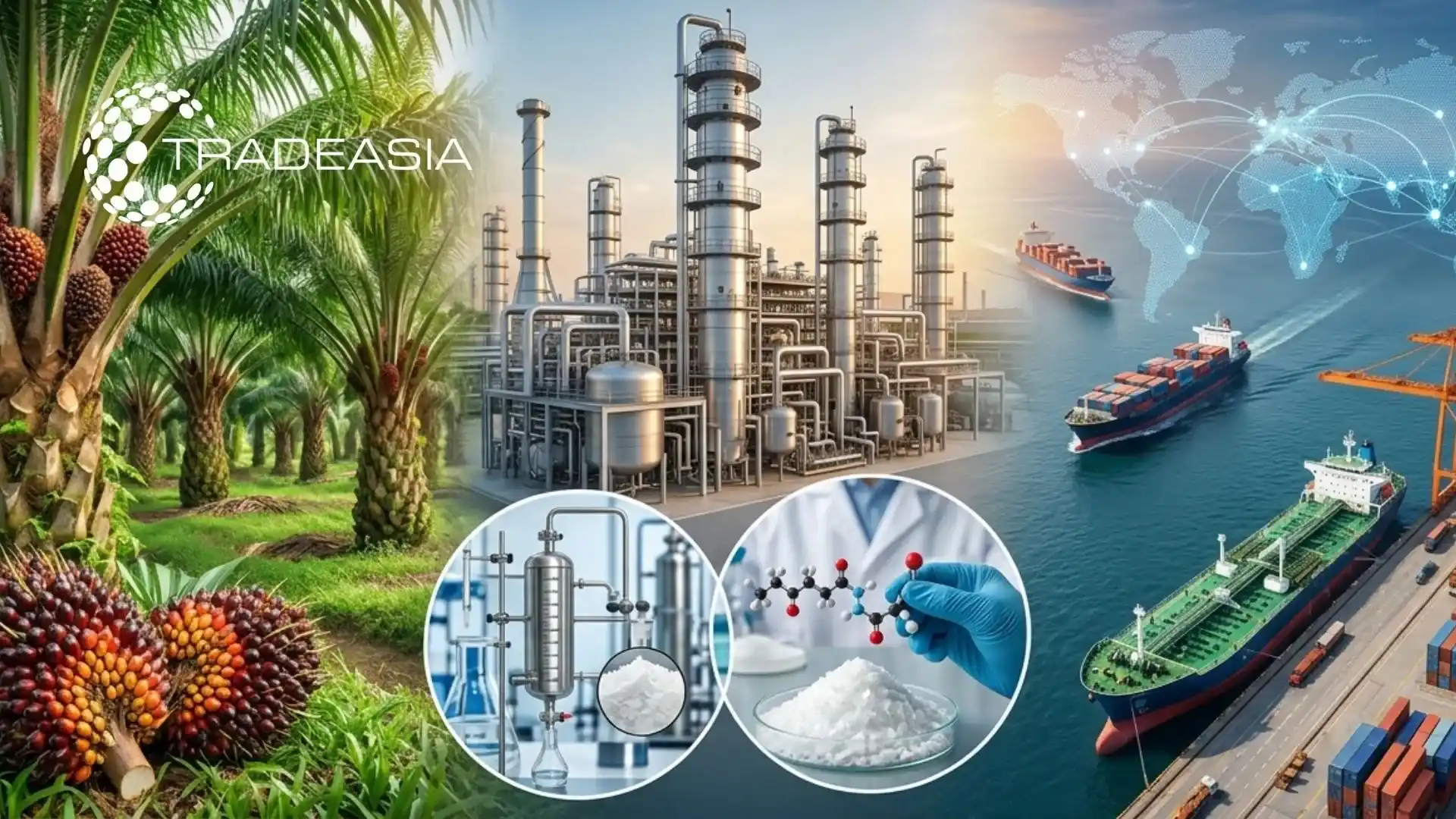
The journey of Stearic Acid from raw material, primarily palm oil, tallow, or other vegetable oils, to a refined industrial product involves a complex network of producers, traders, logistics providers, and end-users. Geopolitical shifts, sustainability mandates, and evolving consumer preferences are reshaping this network. For procurement managers, product developers, and strategic planners, gaining deep market insight is no longer a luxury but a necessity for ensuring supply security, cost-effectiveness, and compliance. This analysis will delve into these aspects, offering a roadmap for navigating the next five years.
The market for Stearic Acid is projected to experience steady growth from 2026 to 2030, driven by its irreplaceable role in emerging and traditional industries alike. Analysts forecast a compound annual growth rate (CAGR) of approximately 3-4%, pushing the market value well into the multi-billion-dollar range by the decade's end. This growth is not uniform; it is heavily influenced by regional production capacities, with Southeast Asia (notably Indonesia and Malaysia) solidifying its position as the dominant production hub due to vast palm oil resources. North America and Europe remain significant markets, particularly for high-purity, sustainably certified grades.
Key trends shaping this outlook include the accelerating demand for bio-based and renewable raw materials across all consumer-facing industries. Stearic Acid, as a naturally derived oleochemical, is a direct beneficiary of this macro-trend. Furthermore, technological advancements in hydrogenation and fractionation processes are enabling producers to offer more consistent and specialized grades of Stearic Acid, catering to high-value applications in pharmaceuticals and cosmetics. However, this growth trajectory faces headwinds from volatile raw material (palm kernel oil, tallow) prices and increasing regulatory scrutiny on deforestation-linked supply chains, making traceability a non-negotiable factor for future procurement.
Stearic Acid is a workhorse within the oleochemicals family, valued for its unique chemical structure that provides excellent lubricating, softening, and stabilizing properties. Its primary function as a thickening agent and emulsifier makes it indispensable. In the rubber industry, it acts as a vulcanization activator and mold release agent, critical for tire manufacturing and industrial rubber goods. In plastics and polymer production, it serves as a powerful lubricant and flow enhancer, improving processing efficiency and final product surface quality.
Beyond industrial uses, its applications in personal care and cosmetics are vast. Here, Stearic Acid is the foundational ingredient for producing sodium stearate and other stearates, which are key components in bar soaps, creams, lotions, and deodorants. It provides the desired consistency, pearlescent effect, and cleansing properties. In the food industry, it finds use as a release agent, binder, and emulsifier (designated as E570). The benefits driving its adoption across these sectors are clear: it is effective, multifunctional, derived from renewable resources, and generally recognized as safe (GRAS) in many applications, offering a compelling alternative to synthetic counterparts.
When specifying Stearic Acid, industry buyers must consider key parameters such as iodine value (indicating saturation), titre (melting point, typically between 54-69°C), and acid value. Grades can range from single-pressed to triple-pressed, with higher-pressed grades offering greater purity and lighter color, essential for sensitive applications in cosmetics and food. Understanding these specifications is crucial for selecting the right product that balances performance requirements with cost considerations.
The global Stearic Acid supply chain is a multifaceted ecosystem susceptible to various disruptions. Primary challenges include geopolitical tensions affecting trade routes, climate-related impacts on agricultural yields of palm and other oil crops, and stringent environmental regulations that can alter production landscapes overnight. The concentration of raw material sourcing in specific geographical regions creates inherent risks of supply bottlenecks. For industries dependent on just-in-time manufacturing, these vulnerabilities necessitate a robust and agile sourcing strategy.
Strategic sourcing in this environment moves beyond price negotiation to encompass risk mitigation and value creation. Leading companies are diversifying their supplier base across different regions to avoid over-reliance on a single source. They are also investing in deeper supplier relationships, often engaging in long-term contracts that provide price stability and guaranteed capacity. Furthermore, the integration of sustainability and ethical sourcing criteria—such as certifications from the Roundtable on Sustainable Palm Oil (RSPO)—into procurement policies is becoming a standard practice to ensure regulatory compliance and protect brand reputation.
In response to the complexity of modern chemical procurement, digital B2B platforms have emerged as transformative tools for the industry. These platforms demystify the supply chain by providing centralized access to a global network of verified suppliers, real-time market intelligence, and streamlined logistics solutions. They empower buyers with transparency, allowing for efficient comparison of Stearic Acid grades, specifications, and prices from multiple producers, thereby optimizing procurement decisions and reducing administrative overhead.
Established chemical supplier networks like Chemtradeasia exemplify this evolved model. They function not merely as intermediaries but as integrated supply chain partners. A platform such as Chemtradeasia provides critical market insight through trend reports and price indices, helping buyers anticipate market movements. More importantly, they vet suppliers for reliability and quality assurance, mitigating the risk of dealing with unknown entities. For a global buyer seeking Stearic Acid, leveraging such a platform means gaining a partner that can navigate international logistics, handle documentation, and ensure a consistent supply of material that meets precise technical specifications, from standard industrial grades to high-purity cosmetic variants.
The period from 2026 to 2030 presents both significant opportunities and formidable challenges for users of Stearic Acid in the oleochemicals industry. Success will hinge on a proactive approach that combines deep technical understanding of the product's applications with a sophisticated, data-driven strategy for supply chain management. Companies that embrace digital sourcing tools, prioritize sustainable and traceable supply chains, and foster strategic partnerships with reliable suppliers will be best positioned to secure a competitive advantage.
As the demand for sustainable, bio-based ingredients continues its upward trajectory, Stearic Acid is poised to maintain its vital role. By staying informed on market dynamics, technological advancements in processing, and evolving regulatory frameworks, industry professionals can make informed decisions that ensure resilience, innovation, and growth in the coming years.
Disclaimer: This article is for informational and market insight purposes only. It is not intended to serve as technical, safety, or professional advice for specific applications of Stearic Acid or any other chemical. The data and trends presented are based on current market analysis and are subject to change. Readers are strongly advised to independently verify all information, consult directly with technical experts, and refer to official product documentation, including Material Safety Data Sheets (MSDS/SDS), for critical safety, handling, and application guidance. For specific procurement or technical inquiries, please contact our professional team directly.
We're committed to your privacy. Tradeasia uses the information you provide to us to contact you about our relevant content, products, and services. For more information, check out our privacy policy.


 English
 Indonesian
 简体字
简体字
 العربية
 Español
 Français
 Português
 日本語
日本語
 한국어
한국어
 Tiếng Việt



















