Explore our network of country and industry based websites to access localized information, product offerings, and business services across our group.

Access reliable chemical market information through our update channels.
Real-time Updates
Daily Updates
Log in to start sending quotation requests for any product.
Don't have an account? Sign Up Here
Home How to Secure Reliable Lauric Acid Supply for Oleochemicals in 2026?
Trade Insights | Supply Chain | 08 April 2026
Introduction Lauric Acid
Global Feedstock Landscape for Lauric Acid
Lauric Acid Specifications and Industrial Applications
Supply Chain Dynamics and Logistics for Oleochemicals
Market Outlook to 2026 and Sourcing Strategies with chemtradeasia
Conclusion
The global lauric acid supply chain is a critical backbone of the modern oleochemicals industry, supporting applications from detergents and personal care products to lubricants, food additives, and pharmaceuticals. As manufacturers and formulators seek more sustainable and bio-based alternatives to petrochemicals, lauric acid derived from natural oils has become a strategic raw material. Between 2024 and 2026, the industry is undergoing significant shifts driven by changing feedstock availability, evolving environmental regulations, and increasingly complex logistics networks.
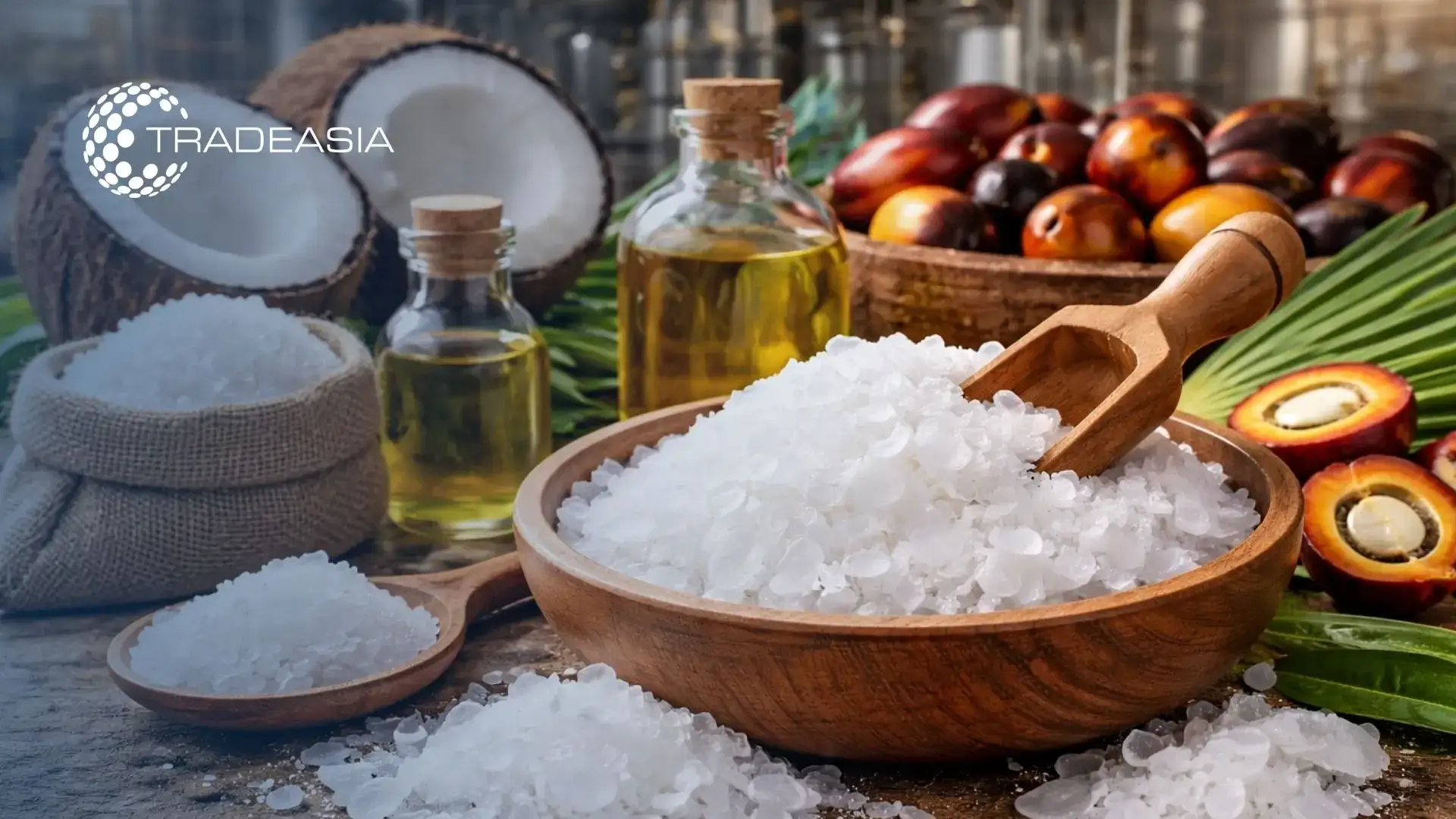
Lauric acid is a medium-chain saturated fatty acid (C12:0) primarily obtained from coconut oil and palm kernel oil. Its unique balance of high melting point, good foaming properties, and antimicrobial activity makes it indispensable in surfactants, soaps, and specialty oleochemical derivatives. For procurement, supply chain, and technical teams, understanding how lauric acid flows from plantations and crushing mills through refineries, fractionation plants, and global distribution hubs is essential to managing cost, quality, and supply security.
This article provides a structured overview of the lauric acid supply chain for industrial oleochemicals with a global perspective toward 2026. It examines feedstock origins, product specifications, logistics and trade flows, market trends, and risk-mitigation strategies, while also highlighting how integrated trading and distribution platforms such as chemtradeasia can support reliable sourcing and inventory management. The objective is to equip decision-makers with practical market insight to strengthen their procurement and supply chain strategies in a rapidly evolving oleochemical landscape.
The supply of lauric acid is fundamentally tied to the production of lauric oils, principally coconut oil and palm kernel oil. The Philippines, Indonesia, and India are the leading producers of coconut, while Indonesia and Malaysia dominate palm and palm kernel oil production. According to industry data, lauric oil production has grown steadily, with palm kernel oil output exceeding 8 million tonnes annually and coconut oil around 3–4 million tonnes, providing the primary feedstock for lauric acid fractionation. Any disruption in these upstream agricultural regions has a direct impact on lauric acid availability and pricing.
Climate variability, such as El Niño events, can significantly affect coconut and oil palm yields, altering the supply balance for lauric oils. For example, past El Niño cycles have reduced coconut harvests in the Philippines, driving up coconut oil prices and shifting demand toward palm kernel oil–based lauric acid. At the same time, policy changes related to land use, environmental protection, and labor in Southeast Asia continue to influence plantation expansion and investment decisions, with downstream effects on lauric oil and lauric acid capacity.
By 2026, sustainability requirements and traceability are expected to play an even more central role in the lauric acid feedstock landscape. Major FMCG and chemical companies are committing to deforestation-free and responsibly sourced palm and coconut oils. This is pushing suppliers and traders to adopt certification schemes such as RSPO (Roundtable on Sustainable Palm Oil) and to develop transparent supply chain documentation. For buyers of lauric acid used in oleochemicals, this means that supply contracts increasingly include sustainability clauses, and partners like chemtradeasia are being evaluated not only on price and logistics performance but also on their ability to provide certified and traceable material.
Lauric acid used in industrial oleochemicals is typically produced by hydrolysis and subsequent fractionation of lauric oil feedstocks, followed by distillation. Commercial grades usually have a purity of 96–99% C12, with controlled levels of moisture, iodine value, and color. Common specifications include acid value around 280–290 mg KOH/g, low moisture content (often below 0.5%), and solid flake, bead, or prill physical forms for easier handling. Technical grades are widely used in detergents and soaps, while higher-purity or pharma-grade lauric acid is required for food, cosmetic, and pharmaceutical applications.
In the oleochemical industry, lauric acid is a key building block for a wide array of derivatives. It is esterified to produce lauric esters used as emollients and lubricants in personal care and metalworking fluids. Neutralization with sodium or potassium hydroxide yields laurate soaps with excellent foaming and cleansing properties, which are central to bar soaps and syndet formulations. Sulfonation and ethoxylation of lauric-based alcohols lead to surfactants widely employed in household and industrial cleaners, textile processing, and agrochemical formulations.
Beyond surfactants, lauric acid contributes to plasticizers, rubber additives, and food-related applications. Calcium and zinc laurates serve as stabilizers and lubricants in PVC and rubber compounding. In the food industry, lauric acid and its derivatives are used in confectionery fats, flavor carriers, and as components in emulsifiers. The antimicrobial activity of lauric acid and its monoglyceride (monolaurin) also finds use in preservative systems and health-oriented formulations. Suppliers such as chemtradeasia typically offer a portfolio of lauric acid grades tailored to these different application segments, enabling formulators to match performance requirements with cost and regulatory constraints.
The global lauric acid supply chain is characterized by long-distance trade flows from production hubs in Southeast Asia and South Asia to consuming regions in Europe, North America, Latin America, and East Asia. After extraction and fractionation, lauric acid is shipped in various forms: bulk liquid (for higher-temperature grades), flakes in multi-layer bags, or big bags and drums. Efficient logistics require careful management of storage conditions to prevent contamination, oxidation, or caking, especially in tropical climates and during long sea voyages.
Port infrastructure in Indonesia, Malaysia, the Philippines, and India is critical, as most lauric acid exports move through major hubs such as Jakarta, Surabaya, Port Klang, and Manila. Congestion, weather-related delays, and container shortages can all impact lead times and freight rates. Since the pandemic-era disruptions, many oleochemical buyers have re-evaluated their inventory policies, shifting from strict just-in-time models to more resilient safety stock strategies. Distributors and trading companies like chemtradeasia play a key role by maintaining multi-location warehouses and offering flexible shipment sizes, which help balance cost-efficiency with supply security.
Regulatory compliance and documentation are also central to lauric acid logistics. Depending on the destination market and application, shipments may need to comply with REACH in the EU, TSCA in the US, or local chemical inventory regulations in Asia and Latin America. For food, pharma, and cosmetic uses, additional quality and documentation requirements apply, including GMP-related standards, allergen statements, and traceability to specific production batches. A robust digital documentation system and standardized Safety Data Sheets (SDS) are therefore essential elements of a modern lauric acid supply chain, and are increasingly expected as part of service offerings by global suppliers and platforms.
From a market perspective, demand for lauric acid and lauric-based oleochemicals is projected to grow steadily toward 2026, supported by rising consumption of personal care products, detergents, and bio-based specialty chemicals. Industry analyses indicate that global fatty acid markets are growing in the low to mid single digits annually, with lauric and other medium-chain fatty acids slightly outpacing overall growth due to their performance and sustainability positioning. At the same time, competition from alternative feedstocks and synthetic surfactants, as well as fluctuating vegetable oil prices, will continue to influence lauric acid pricing cycles.
Key trends shaping the market outlook include the shift toward greener formulations, stricter regulations on fossil-based and high-VOC ingredients, and the increasing importance of ESG (environmental, social, and governance) criteria in supply chain decisions. Buyers are not only evaluating lauric acid on technical performance and delivered cost, but also on carbon footprint, certification status, and supplier transparency. This is driving interest in long-term offtake agreements, multi-sourcing strategies across coconut and palm kernel–based origins, and closer collaboration with integrated distributors that can provide market intelligence and risk management support.
In this context, sourcing strategies that leverage global trading and distribution networks such as chemtradeasia can offer tangible advantages. With access to multiple lauric acid producers across key origin countries, such platforms help buyers diversify their supplier base and reduce dependency on any single mill or refinery. They can offer contract structures ranging from spot purchases to formula-based or index-linked pricing, combined with regional warehousing to shorten lead times. Additionally, value-added services such as consolidated shipments of lauric acid and complementary oleochemicals, technical documentation support, and updated market reports enable procurement teams to make more informed decisions as they plan for 2026 and beyond.
The lauric acid supply chain for industrial oleochemicals is a complex, globally integrated system that connects tropical plantations with advanced chemical manufacturing and consumer markets around the world. As demand for sustainable, bio-based ingredients continues to grow, lauric acid remains a core building block for surfactants, soaps, esters, and specialty additives. Understanding how feedstock availability, logistics infrastructure, regulatory frameworks, and market dynamics interact is essential for companies seeking to secure reliable and cost-effective lauric acid supplies.
Looking ahead to 2026, successful players in the oleochemical value chain will be those who combine technical knowledge of lauric acid and its derivatives with strategic supply chain management. This includes diversifying feedstock origins, integrating sustainability and traceability into procurement criteria, and partnering with experienced trading and distribution platforms such as chemtradeasia that can provide multi-origin sourcing, flexible logistics, and up-to-date market insight. By taking a proactive, data-driven approach, manufacturers, formulators, and distributors can mitigate volatility, support innovation in bio-based products, and strengthen their competitive position in the global oleochemicals market.
This article is provided solely for informational and market insight purposes and does not constitute technical, safety, or professional advice. Readers should independently verify all information with qualified experts, consult official documentation such as MSDS/SDS and applicable regulations, or contact our team for guidance on specific products, processes, or applications before making operational or purchasing decisions.
We're committed to your privacy. Tradeasia uses the information you provide to us to contact you about our relevant content, products, and services. For more information, check out our privacy policy.


 English
 Indonesian
 简体字
简体字
 العربية
 Español
 Français
 Português
 日本語
日本語
 한국어
한국어
 Tiếng Việt