Explore our network of country and industry based websites to access localized information, product offerings, and business services across our group.

Access reliable chemical market information through our update channels.
Real-time Updates
Daily Updates
Log in to start sending quotation requests for any product.
Don't have an account? Sign Up Here
Home How Will the Global Soap Noodle Market Shape the Oleochemical Industry by 2030?
Trade Insights | Supply Chain | 17 April 2026
Introduction Soap Noodles
The Integral Role of Soap Noodles in Modern Oleochemicals
Global Market Dynamics and Forecast (2026-2030)
Key Features and Specifications of Industrial-Grade Soap Noodles
Navigating the Global Supply Chain: Challenges and Strategies
Strategic Sourcing and Supplier Evaluation
Conclusion
The global oleochemicals industry, a cornerstone of the modern chemical sector, is poised for significant evolution between 2026 and 2030. At the heart of this transformation lies a critical intermediate product: soap noodles. These versatile, semi-finished bases, derived from natural fats and oils, serve as the essential building blocks for a vast array of downstream products, from personal care items and detergents to industrial lubricants and plasticizers. Understanding the supply chain for soap noodles is no longer a niche concern but a strategic imperative for manufacturers, formulators, and investors worldwide.
This article provides a comprehensive analysis of the global soap noodle supply chain within the oleochemicals context for the coming half-decade. We will dissect market drivers, regional production hubs, logistical complexities, and evolving quality standards. Furthermore, we will explore the critical features that define industrial-grade soap noodles and offer a framework for strategic sourcing and supplier partnership, with a focus on platforms that facilitate global trade, such as Chemtradeasia.
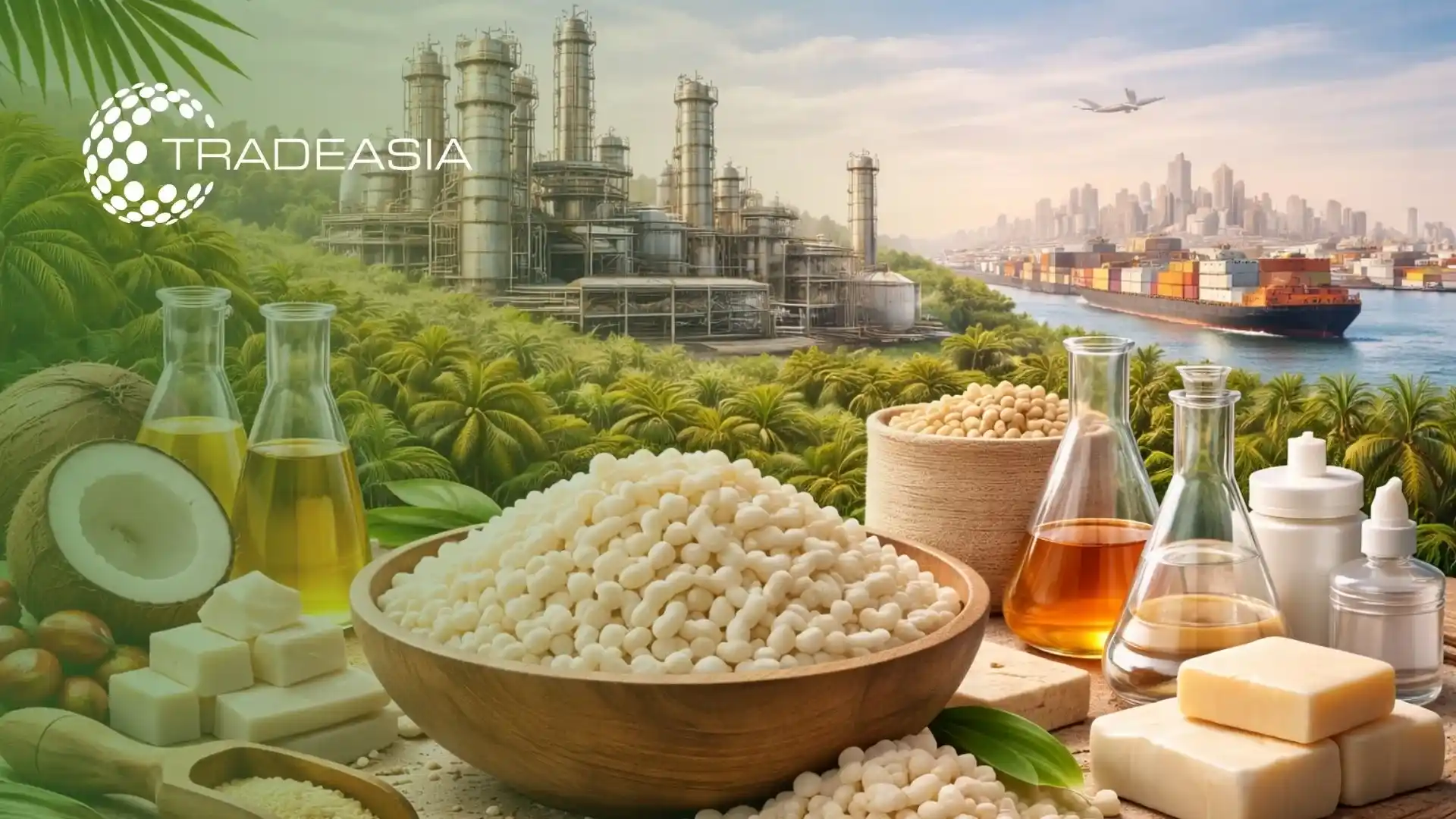
Soap noodles are not merely a commodity; they are a pivotal chemical intermediate that unlocks value across the oleochemical value chain. Produced through the saponification of natural triglycerides (from palm oil, tallow, coconut oil, etc.), they consist primarily of sodium salts of fatty acids. This simple composition belies their immense utility. Their primary function is as the direct raw material for the production of toilet soaps, laundry bars, and syndet bars. However, their application extends far beyond traditional soap making.
In the broader oleochemicals industry, soap noodles are a key precursor for the production of fatty acids and glycerol, two high-value oleochemical derivatives. Fatty acids are further processed into fatty alcohols, methyl esters, and other surfactants that form the backbone of biodegradable detergents, cosmetics, and industrial applications. The quality and consistency of the initial soap noodle directly impact the efficiency and output quality of these downstream processes. Therefore, a resilient and transparent supply chain for soap noodles is fundamental to the stability and innovation capacity of the entire sector.
The global market for soap noodles is projected to experience steady growth from 2026 to 2030, driven by a compound annual growth rate (CAGR) estimated between 3.5% to 4.5%. This growth is fueled by several interconnected trends. Firstly, rising population and disposable income in emerging economies across Asia-Pacific and Africa are increasing the demand for personal hygiene and cleaning products. Secondly, the global shift towards bio-based and sustainable chemicals is amplifying the demand for oleochemical derivatives, thereby pulling demand for their precursors like soap noodles.
Regionally, Southeast Asia, led by Indonesia and Malaysia, will continue to dominate production due to its vast palm oil plantations, serving as the primary feedstock. This region is expected to account for over 60% of global supply. However, significant production and consumption hubs also exist in the Indian subcontinent, China, Europe, and North America. A key trend to watch is the increasing regionalization of supply chains, where manufacturers seek to mitigate geopolitical and logistical risks by sourcing from closer, more reliable partners. Furthermore, price volatility of raw materials (palm oil, tallow) will remain a primary challenge, directly influencing soap noodle pricing and supply stability throughout the forecast period.
Not all soap noodles are created equal. For industrial applications in oleochemicals, specific features and stringent specifications are non-negotiable. The primary defining characteristic is the Titre or fatty acid composition, which determines the hardness, solubility, and lathering properties. Common types include high TFM (Total Fatty Matter) soap noodles (78% and above) for premium toilet soaps, and lower TFM grades for laundry bars and industrial splitting.
Other critical specifications include the free caustic alkali content, chloride content, and unsaponifiable matter. For instance, a high free caustic content can be detrimental in downstream chemical processes like acidulation to produce fatty acids. The color and odor of the noodles are also vital, especially for end-products in personal care. Manufacturers are increasingly demanding soap noodles with consistent moisture content (typically between 10-14%) to ensure stable processing and predictable yields. Understanding these specifications is crucial for procurement teams to match the right grade of soap noodle to their specific application, whether it's for direct molding, flaking for powder detergents, or chemical conversion.
The global soap noodle supply chain is a complex network involving feedstock producers, oleochemical plants, logistics providers, and end-users across continents. This complexity introduces several challenges. Logistical bottlenecks at major ports, fluctuating freight costs, and the need for climate-controlled transportation (to prevent melting or caking) add significant cost and risk. Quality consistency can vary between batches and suppliers, leading to production inefficiencies for buyers.
To navigate these challenges, leading companies are adopting sophisticated strategies. Many are moving towards dual or multi-sourcing from geographically diverse suppliers to build resilience. Implementing robust Quality Assurance/Quality Control (QA/QC) protocols, including pre-shipment inspections and certificate of analysis (CoA) verification, is becoming standard practice. Furthermore, leveraging digital platforms and marketplaces like Chemtradeasia can provide greater visibility into supplier networks, real-time pricing trends, and streamlined procurement processes, reducing the friction in global trade.
In a competitive and volatile market, strategic sourcing of soap noodles is a key differentiator. The process begins with a clear definition of technical requirements aligned with the end-use application. Beyond price, evaluating a supplier requires a multi-faceted approach. Production capability and scale are fundamental; can the supplier meet volume demands consistently? Quality management systems (e.g., ISO certifications) and a transparent record of compliance with international standards are strong indicators of reliability.
Equally important are the supplier's logistics expertise and financial stability. A supplier with experience in handling export documentation, incoterms, and international shipping can prevent costly delays. In the digital age, a supplier's presence on established B2B platforms is also a factor. Platforms such as Chemtradeasia often vet suppliers, provide a channel for communication, and host verified company profiles, which can de-risk the initial engagement phase. Building a partnership based on transparency, communication, and shared goals for sustainability and innovation is the ultimate objective of strategic sourcing in this sector.
The period from 2026 to 2030 will be defining for the oleochemicals industry, with the soap noodle supply chain acting as a critical barometer of its health and direction. Success will depend on a deep understanding of market dynamics, a meticulous approach to product specifications, and the ability to build agile, resilient supply networks. Companies that master the intricacies of sourcing high-quality soap noodles from reliable partners will secure a significant competitive advantage, enabling them to meet the growing global demand for sustainable, bio-based chemical solutions.
Disclaimer: This article is for informational and market insight purposes only. It is not intended as technical, safety, or professional advice. The data, trends, and forecasts presented are based on current market analysis and are subject to change. Readers are strongly advised to verify all information independently with qualified experts, consult official technical documentation such as Material Safety Data Sheets (MSDS/SDS) for specific products, and contact our team or relevant suppliers for guidance tailored to their specific applications and circumstances.
We're committed to your privacy. Tradeasia uses the information you provide to us to contact you about our relevant content, products, and services. For more information, check out our privacy policy.


 English
 Indonesian
 简体字
简体字
 العربية
 Español
 Français
 Português
 日本語
日本語
 한국어
한국어
 Tiếng Việt