Explore our network of country and industry based websites to access localized information, product offerings, and business services across our group.
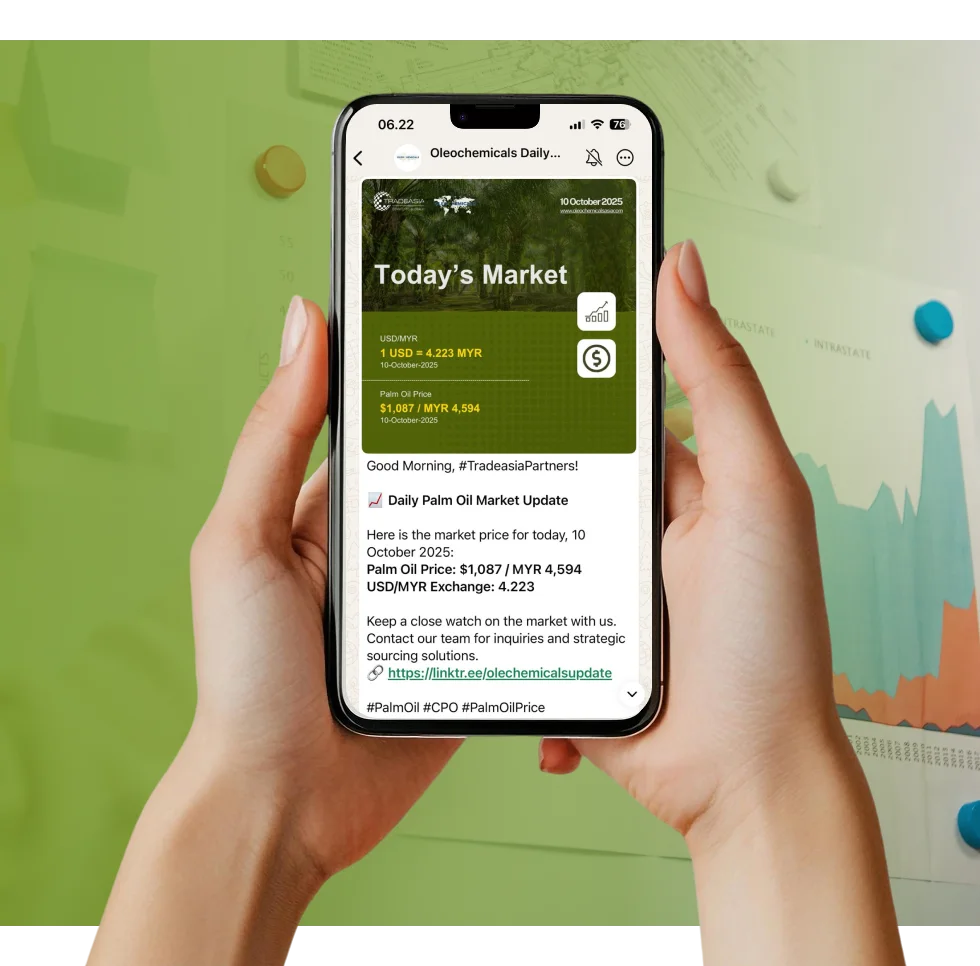
Access reliable chemical market information through our update channels.
Real-time Updates
Daily Updates
Log in to start sending quotation requests for any product.
Don't have an account? Sign Up Here
Home Structural Tug-of-War: Soap Noodles vs. Liquid Soap in the 2026 Indian Market
Trade Insights | Supply Chain | 08 February 2026

The Indian hygiene sector in 2026 is witnessing a fascinating structural divergence: the enduring dominance of the solid soap bar versus the meteoric rise of liquid detergents and gels. For a senior analyst, the Soap Noodle market, valued at 3.45 billion USD in 2026, remains the bedrock of the rural and semi-urban economy. However, the market share of traditional 80:20 (Palm/Coconut) noodles is being aggressively challenged by the "Liquidization" of the urban household. In early 2026, while soap noodle volumes are growing at a steady 4.5% CAGR, the liquid soap and body wash segment is expanding at double that rate, driven by a post-pandemic shift toward "No-Touch" hygiene and premium aesthetics.
For procurement officers, the 2026 challenge is one of Feedstock Volatility. Soap noodles are essentially a "Value-Added Solid" of palm oil and palm kernel oil. In early 2026, the landed price of high-TFM (78%) soap noodles at the Port of Kandla has stabilized at approximately 1,100 USD/MT, reflecting the firm price of Indonesian CPO. In contrast, the manufacturing of liquid soaps relies on Fatty Alcohol Ethoxylates (SLES), which are more susceptible to the price fluctuations of the fractionation sector. This has created a "Price Wedge" where bar soaps remain the most cost-effective hygiene delivery system for 70% of the Indian population, despite the aggressive marketing of liquid alternatives.
A defining 2026 trend for the soap noodle industry is the "Premiumization" of the bar soap. Manufacturers in Gujarat and Maharashtra are moving away from low-TFM (Total Fatty Matter) detergent-grade noodles toward Vegetable-Based, RSPO-certified 80:20 grades. These "Clean-Label" noodles allow brands to market their bars as "Natural" and "Moisturizing," leveraging the inherent benefits of glycerine that are often stripped out in low-cost production. In 2026, the demand for Halal-certified soap noodles has also surged, as Indian exporters target the growing demand in the Middle East and Southeast Asian markets, where the origin of the fatty acid is a critical regulatory hurdle.
Logistically, the 2026 market is seeing a move toward "Scrap and Off-Grade" utilization for the lower-end laundry soap segment. Import data from Volza indicates a 24% growth in "Scrap Soap Noodle" shipments, as manufacturers seek to protect their margins against the high cost of prime material. These shipments, often priced at a 30% discount, provide a necessary buffer for the "Economy" segment of the market. However, for the "Beauty Bar" segment, the 2026 mandate is pure, white noodles with an Iodine Value (IV) below 45, ensuring that the finished product remains color-stable and odor-free under the harsh Indian summer conditions.
As we look toward the second half of 2026, the soap noodle market is projected to remain the volume leader, but its growth will be increasingly localized to the "Value" segment. The urban "Premium" segment is firmly transitioning to liquid formats, which offer higher margins for FMCG companies but require a different oleochemical supply chain based on surfactants rather than saponified fats. For a procurement strategist, 2026 is the year to maintain a "Hybrid Portfolio"—securing long-term soap noodle contracts for the rural mass market while building supply lines for the bio-surfactants required for the urban liquid boom.
In conclusion, the 2026 Indian soap market is a study in coexistence. The soap noodle is not dying; it is being refined. The winner in 2026 will be the manufacturer who can navigate the logistical hurdles of the Malacca Strait to provide a stable, high-TFM product that meets the increasingly sophisticated skin-health demands of the modern Indian consumer.
We're committed to your privacy. Tradeasia uses the information you provide to us to contact you about our relevant content, products, and services. For more information, check out our privacy policy.


 English
 Indonesian
 简体字
简体字
 العربية
 Español
 Français
 Português
 日本語
日本語
 한국어
한국어
 Tiếng Việt



















