Explore our network of country and industry based websites to access localized information, product offerings, and business services across our group.

Access reliable chemical market information through our update channels.
Real-time Updates
Daily Updates
Log in to start sending quotation requests for any product.
Don't have an account? Sign Up Here
Home December Soap Noodle R&D: Innovation & Certification Advances
Trade Insights | Regulatory and Compliance | 30 November 2025
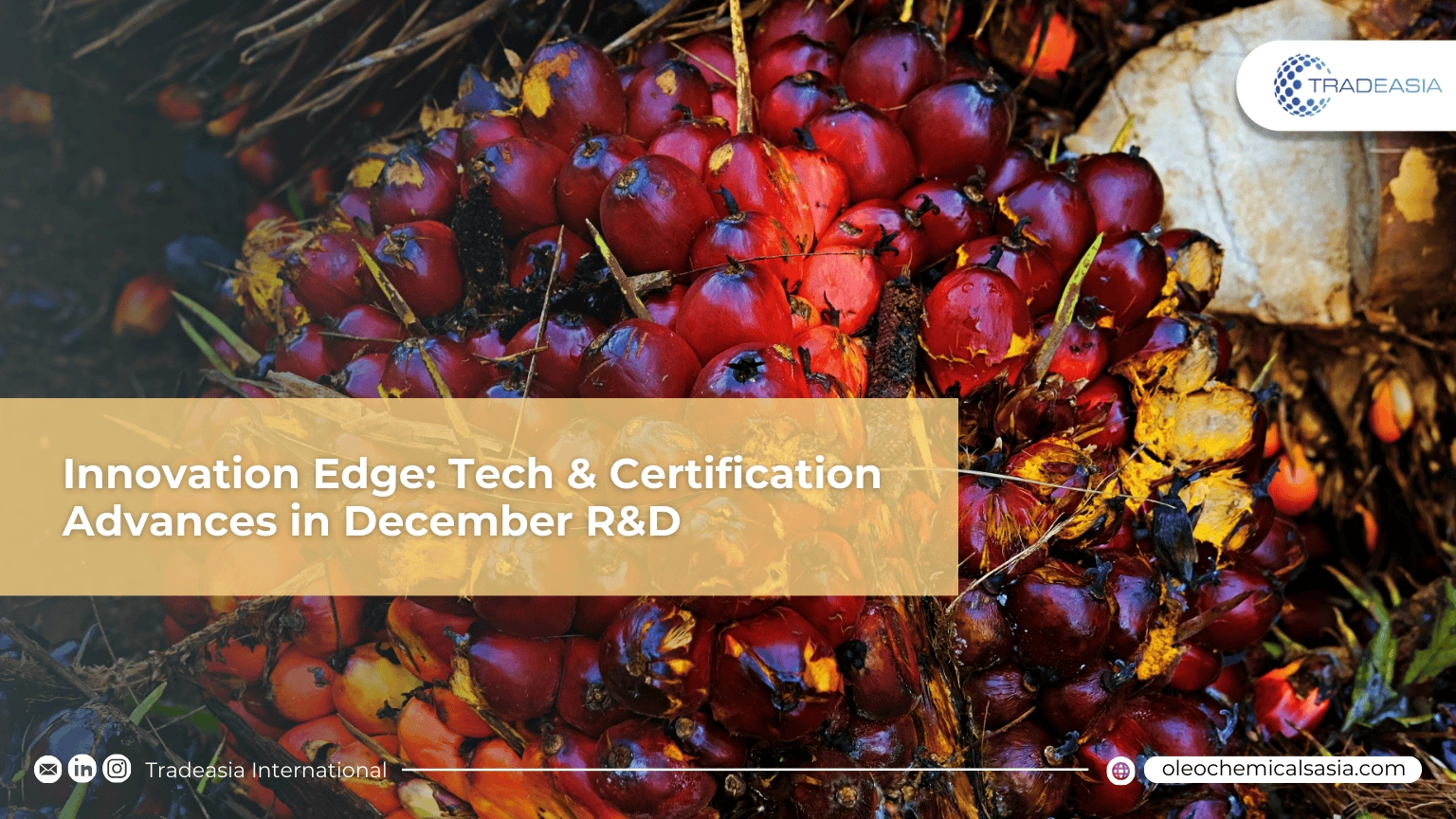
Technical Refinement for Enhanced Quality and Stability
Embedding Sustainability into Every Batch
The pursuit of excellence in palm-based oleochemicals goes hand-in-hand with the drive for sustainability. As a core supplier of raw materials, ensuring that our final product meets rigorous ethical and technical standards is non-negotiable. Our December R&D efforts have been strategically focused on integrating advanced technical improvements directly with verifiable sustainability metrics, ensuring that our soap noodles are ready for the most demanding global buyers.
In the complex world of global sourcing, securing certified, traceable raw materials is foundational. Tradeasia International has consistently demonstrated the power of a streamlined supply chain, connecting high-quality, sustainably sourced palm products to manufacturers worldwide. This principle of traceable quality must permeate every stage, especially the initial processing of the fatty acid feedstock.
The first weeks of December were dedicated to precision engineering in our dry fractionation process, which refines the palm stearin used for saponification. The critical metric we targeted was the Iodine Value (IV), a direct indicator of the noodle’s hardness and stability against oxidation. Through precise adjustments to temperature and the cooling curve, the R&D pilot plant successfully reduced the feedstock’s IV from the benchmark of 54 to an achieved average of 47.5. This significant 12% reduction ensures a harder, more stable soap noodle, making it ideal for shipping to and storage in highly humid regions. This process optimization simultaneously yielded a 2.5% increase in the purity of the collected solid fraction, thereby improving the efficiency of the subsequent saponification stage and supporting our target of TFM ≥ 78%.
Our commitment to ethical sourcing is reflected in every December R&D batch, which utilized 95% Certified Sustainable Palm Oil (CSPO) feedstock, primarily managed under the Mass Balance (MB) model. Our internal audit, finalized in Week 3 of December, confirmed successful tracing through 25 different supply points, marking a 25% increase in traceability coverage compared to the end of Q3. Furthermore, R&D focused on environmental stewardship: by implementing a newly tested flocculant in the pilot plant, the team achieved a significant reduction in process waste. The Chemical Oxygen Demand (COD) in our effluent discharge was lowered from 350 mg/L to 280 mg/L, a notable 20% decrease that far surpasses local environmental standards, confirming that innovation and responsibility can, and must, go hand in hand.
Sources:
Oleochemicals Asia: "The Traceability Imperative: Innovations in Sustainable Oleochemical Supply Chain Management."
RSPO Data Hub: "RSPO Annual Communication of Progress Key Data Highlights (2025)."
Company Internal Report: December 2025 Quality Control and Fractionation Performance Report.
We're committed to your privacy. Tradeasia uses the information you provide to us to contact you about our relevant content, products, and services. For more information, check out our privacy policy.


 English
 Indonesian
 简体字
简体字
 العربية
 Español
 Français
 Português
 日本語
日本語
 한국어
한국어
 Tiếng Việt



















