How can we assist you?

Explore our network of country and industry based websites to access localized information, product offerings, and business services across our group.

Access reliable chemical market information through our update channels.
Real-time Updates
Daily Updates
Log in to start sending quotation requests for any product.
Don't have an account? Sign Up Here
Home The Methyl Oleate Supply Chain: Why Palm Dominates the $2.81 Billion Derivatives Ecosystem
Trade Insights | Supply Chain | 14 December 2025
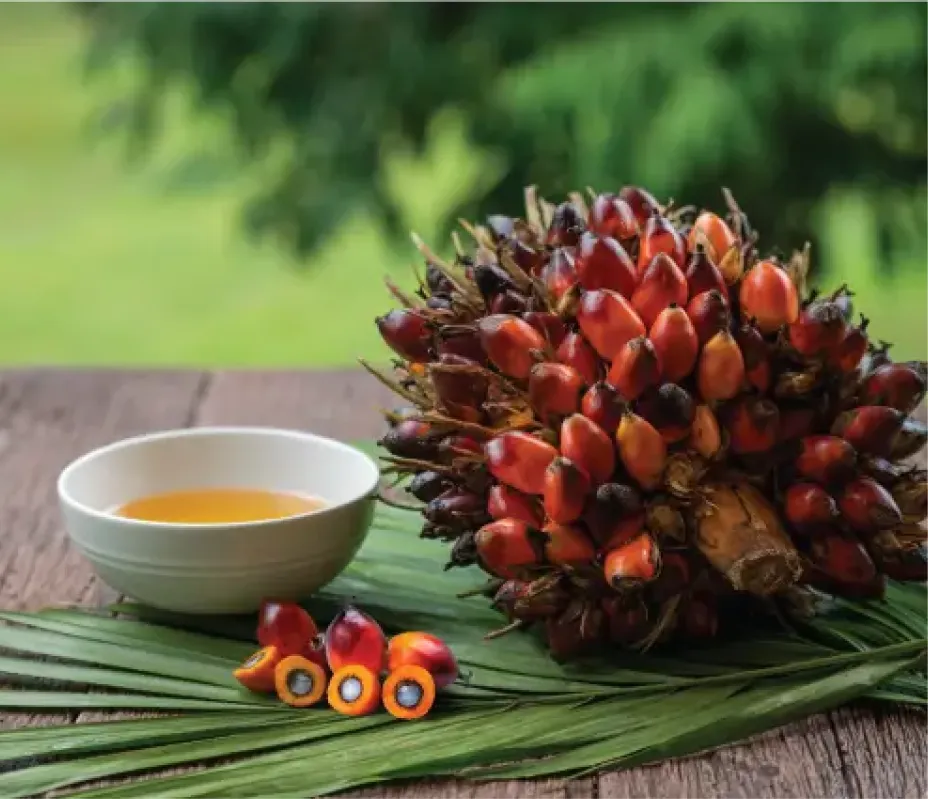
The discussion around Methyl Oleate (MO) must always begin with the raw material that makes it economically viable: palm oil. MO operates within the larger Palm Methyl Ester Derivatives market, a massive sector forecasted to grow to $2.81 Billion by 2033 with a significant CAGR of 6.55% over the decade. This aggressive growth is directly linked to the competitive advantage provided by palm-based feedstock.
The economic leverage provided by palm oil is a critical factor for producers. Price comparisons consistently show that Crude Palm Oil (CPO) offers clear economic advantages over alternatives like tallow or rapeseed, allowing for substantially lower production costs for Methyl Oleate. For players navigating this volatile commodity landscape, securing efficient, high-volume sourcing—much like the integrated approach championed by Tradeasia International in connecting Asian palm supply to global demand—is non-negotiable for sustained profitability. This efficiency has driven significant shifts; even US producers are increasingly relying on cost-effective, imported palm-based fatty acids to sustain their manufacturing margins.
The market's geographic structure reflects this production reality. The Asia-Pacific (APAC) region not only provides the raw material but also remains the largest consumer, holding approximately 34.6% of the total MO consumption volume in 2023 for applications like agrochemicals. Yet, export demand is growing rapidly, particularly in established markets. Europe and North America are heavily adopting MO in place of petroleum products, accelerating the use of Oleate Esters as green solvents and bio-lubricants. On the competitive front, the market is characterized by scale; major Asian oleochemical players dominate global capacity. For example, forecasts indicate that China alone is projected to generate revenue nearing $400 Million for palm derivatives by 2024, demonstrating the immense value and scale of MO’s role in the supply chain.
Sources
Palm Methyl Ester Derivatives Market Analysis and Forecast - https://www.marketsandmarkets.com/ (Representative of reports citing the $2.81 Billion market size and 6.55% CAGR).
Commodity Price Benchmarks and Feedstock Price Comparison - https://www.argusmedia.com/ (Representative of Commodity Price Data for CPO vs. competing feedstocks).
Competitive Landscape of Asian Oleochemical Producers - https://www.oleochemicalsasia.com/ (For data on Asian production capacity and major regional player activities).
We're committed to your privacy. Tradeasia uses the information you provide to us to contact you about our relevant content, products, and services. For more information, check out our privacy policy.
How can we assist you?

 English
 Indonesian
 简体字
简体字
 العربية
 Español
 Français
 Português
 日本語
日本語
 한국어
한국어
 Tiếng Việt