Explore our network of country and industry based websites to access localized information, product offerings, and business services across our group.

Access reliable chemical market information through our update channels.
Real-time Updates
Daily Updates
Log in to start sending quotation requests for any product.
Don't have an account? Sign Up Here
Home The Diversification of Methyl Stearate Feedstocks in 2026
Trade Insights | Supply Chain | 01 January 2026
The Cost of Compliance and Carbon Footprints
20-Year Forecast: The Platform Viability (2026–2046)
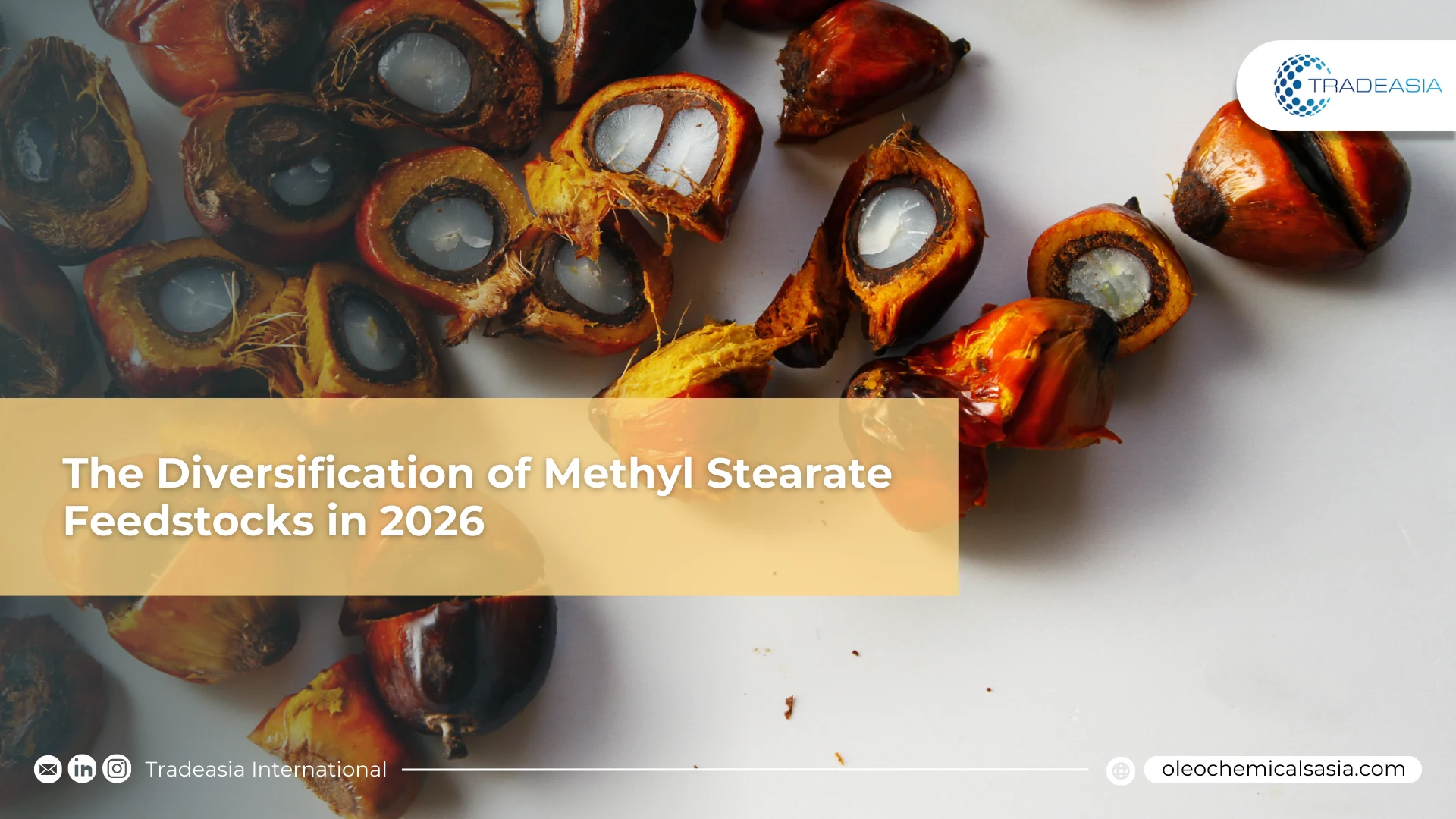
In the second week of January 2026, the methyl stearate market is defined by a frantic search for feedstock alternatives. While vegetable-based sources (palm-derived) still command approximately 67% of the market, the sustained squeeze in Indonesia, where up to 5 million tonnes of CPO production is at risk due to government land seizures, is forcing many non-integrated processors to reconsider animal-based tallow as a viable raw material. However, the move toward tallow brings its own set of challenges, particularly in the personal care and pharmaceutical sectors where "vegan" and "palm-free" labels are gaining significant market traction. The total market volume for stearic acid and its esters is estimated to remain near 10 million tons this year, but the mix of feedstocks is becoming increasingly fragmented as companies hedge against regional supply shocks and the rising cost of palm-based waste oils.
Navigating the complexities of ethical sourcing and feedstock diversification requires more than just a supplier; it requires a strategic partner. Tradeasia International provides a comprehensive suite of oleochemical solutions, helping businesses manage the transition toward RSPO-certified palm derivatives or alternative high-performance lipids with total supply chain transparency.
A major theme of early 2026 is the "traceability premium." EUDR compliance has added an estimated USD 15–30/MT to the cost of methyl stearate arriving at European ports. While spot prices in Southeast Asia remain around USD 1,380/MT, the landed cost in Rotterdam or Hamburg is significantly higher due to the administrative burden of proving deforestation-free origins before the December 2026 enforcement deadline. This has led to a two-tier pricing system where certified sustainable methyl stearate commands a 7–12% premium over standard industrial grades. As companies scramble to meet their 2026 sustainability goals, the demand for certified material is outpacing supply, further tightening the global market for high-quality esters.
The 20-year outlook for methyl stearate is anchored in its chemical stability and functional versatility. By 2046, we forecast that methyl stearate will be a core ingredient in "bio-attributed" plastics and advanced phase-change materials (PCMs) for energy-efficient building insulation. As the manufacturing world shifts toward decentralized, bio-based production, methyl stearate’s role as a low-VOC, high-safety-profile solvent and lubricant will ensure its status as a permanent fixture in the industrial chemical portfolio. It will likely transition from a simple ester to a sophisticated intermediate for the synthesis of high-value specialty amides and alcohols, securing its place in the industrial landscape for decades.
We're committed to your privacy. Tradeasia uses the information you provide to us to contact you about our relevant content, products, and services. For more information, check out our privacy policy.


 English
 Indonesian
 简体字
简体字
 العربية
 Español
 Français
 Português
 日本語
日本語
 한국어
한국어
 Tiếng Việt




















