Explore our network of country and industry based websites to access localized information, product offerings, and business services across our group.

Access reliable chemical market information through our update channels.
Real-time Updates
Daily Updates
Log in to start sending quotation requests for any product.
Don't have an account? Sign Up Here
Home Strategic Sustainability Frameworks for Indian Oleochemicals 2026
Trade Insights | Regulatory and Compliance | 12 January 2026
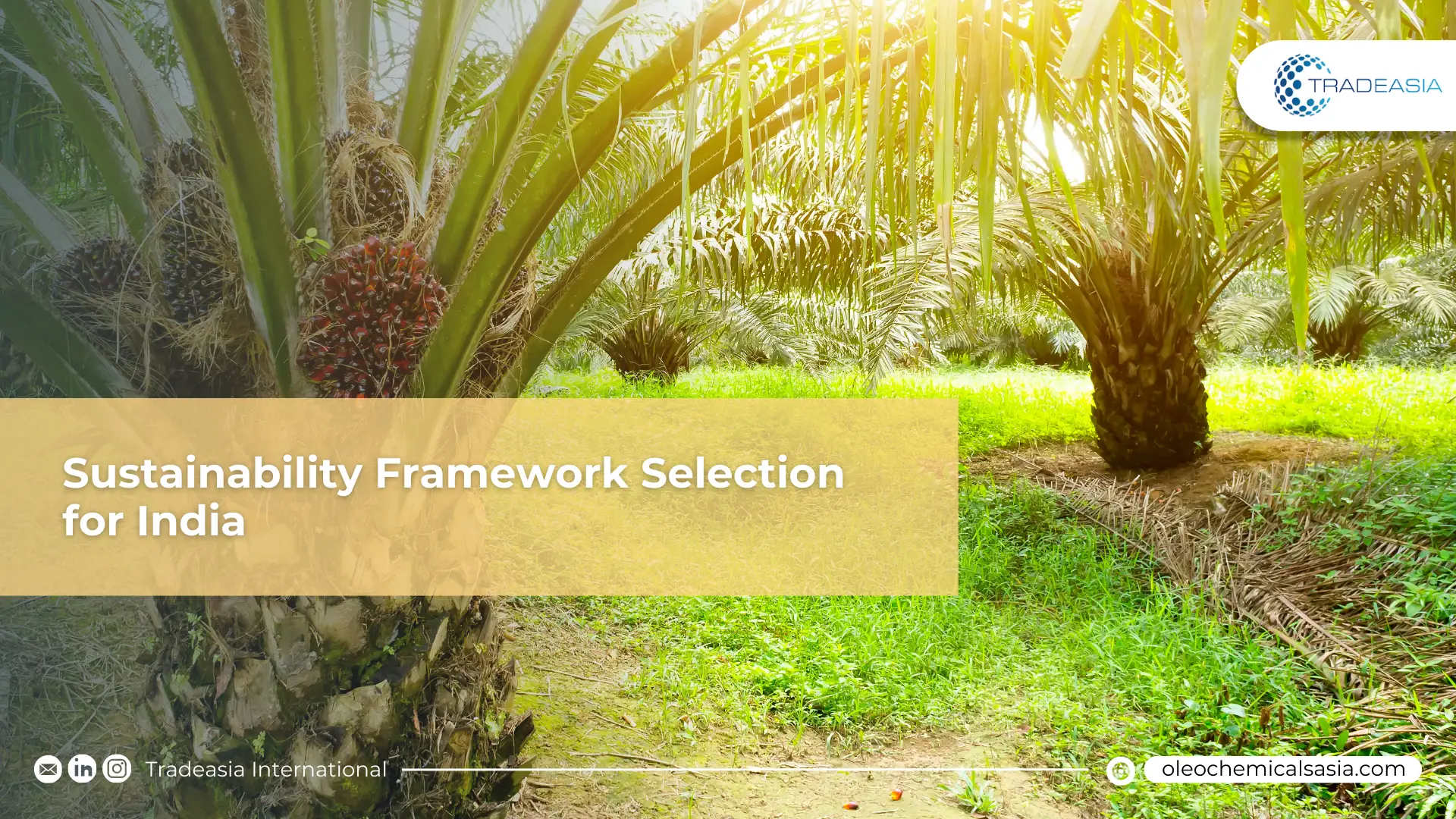
Integration of RSPO and ISCC in the Southeast Asia-India Corridor
Navigating the 2026 Regulatory and Cost Landscape
The landscape of sustainable procurement for Indian industrial buyers has reached a critical inflection point in 2026. As the primary destination for Southeast Asian palm oil, India now operates under heightened pressure to align with global environmental mandates while managing domestic price sensitivities. For a procurement officer at ports like Kandla or Nhava Sheva, the choice between the Roundtable on Sustainable Palm Oil (RSPO) and the International Sustainability and Carbon Certification (ISCC) is no longer a mere administrative checkbox. It is a fundamental financial and risk management decision. With the 2024 RSPO Principles and Criteria becoming fully mandatory as of June 1, 2026, and the ISCC tightening its requirements for bio-based feedstocks, the distinction between these two frameworks dictates not only the carbon footprint of your C16 and C18 derivatives but also the reliability of your physical supply chain.
The current market environment in early 2026 shows a diverging preference for these certifications based on the end-use of the oleochemical product. RSPO remains the dominant standard for the consumer goods sector, specifically for surfactants and fatty alcohols destined for India’s massive home and personal care market. In contrast, ISCC has solidified its position as the gold standard for the emerging green energy sector, particularly as the Indian government accelerates its move toward higher biodiesel blending mandates. From a logistics perspective, sourcing RSPO-certified material from Sumatra or Peninsular Malaysia currently commands a premium, with Crude Palm Oil (CPO) reference prices in Indonesia hovering around 915.64 USD per metric ton as of January 2026. Buyers should note that while RSPO focuses heavily on the social and environmental integrity of the plantation, ISCC provides a more rigorous greenhouse gas (GHG) tracking mechanism that is increasingly required for exports to more regulated western markets.
Supply chain dynamics have been further complicated by the 2026 La Niña event, which has triggered unseasonably high rainfall across North Sumatra and Riau. This weather pattern has disrupted the harvest of Fresh Fruit Bunches (FFB) and slowed the delivery of certified oils to the refineries in Dumai and Belawan. For Indian importers, this translates to heightened volatility and potential demurrage at Nhava Sheva. Current forecasts suggest that the supply of certified sustainable palm oil (CSPO) may remain tight through the first half of the year, potentially pushing spot prices for RSPO-segregated material toward the 1,150 USD per metric ton range. This scarcity makes the Mass Balance (MB) model a more pragmatic entry point for many Indian firms, allowing them to support sustainable production without the logistical overhead of physical segregation during weather-induced supply crunches.
Evaluating the total cost of ownership for certified oleochemicals requires a deep look at the price structures for 2026. While the Indonesian government has set the January export duty for CPO at 74 USD per metric ton, the additional sustainability premiums can fluctuate significantly. Historically, RSPO premiums have ranged from 20 to 50 USD per metric ton, but in the current climate of stagnant global production—projected to remain near 82 million tonnes—these premiums are trending toward the higher end of the spectrum. Procurement strategies must also account for the fact that India is predicted to lead global palm oil demand this year, with import volumes estimated to reach 9.3 million tons. This massive volume means that even small shifts in certification requirements can lead to significant cost escalations across the domestic industrial sector.
The analytical reality is that neither RSPO nor ISCC is "better" in a vacuum; rather, they serve different strategic ends. For an Indian manufacturer focused on high-volume domestic consumption, the newly endorsed India National Interpretation of the RSPO Independent Smallholder Standard offers a localized pathway to sustainability that supports domestic farmers while meeting global benchmarks. However, for those looking to participate in the global bio-economy, the cross-sectoral applicability of ISCC across various feedstocks—including used cooking oil and palm mill effluent—offers superior flexibility. As we progress through 2026, the successful procurement officer will be the one who maintains a dual-certified supply chain, leveraging the social credibility of RSPO and the technical carbon-tracking strengths of ISCC to hedge against both regulatory shifts and climate-driven supply disruptions.
The decision-making process for sustainability certification in 2026 is an exercise in balancing regional supply realities with global compliance. As weather patterns like La Niña disrupt Southeast Asian yields and Indian demand surges to record levels, the choice between RSPO and ISCC must be guided by a clear understanding of the end-market’s requirements and the specific risk profile of the supply corridor. Managing these certifications effectively is no longer optional; it is the primary mechanism for ensuring long-term supply security and price stability in a volatile global market.
We're committed to your privacy. Tradeasia uses the information you provide to us to contact you about our relevant content, products, and services. For more information, check out our privacy policy.


 English
 Indonesian
 简体字
简体字
 العربية
 Español
 Français
 Português
 日本語
日本語
 한국어
한국어
 Tiếng Việt