Explore our network of country and industry based websites to access localized information, product offerings, and business services across our group.

Access reliable chemical market information through our update channels.
Real-time Updates
Daily Updates
Log in to start sending quotation requests for any product.
Don't have an account? Sign Up Here
Home Learning Center Caprylic Acid
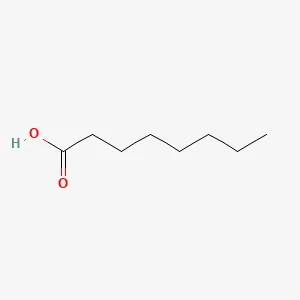
Caprylic Acid Structure
| IUPAC Name | : Octanoic acid |
| CAS Number | : 124-07-2 |
| HS Code | : 2915.90 |
| Molecular Formula | : C8H16O2 |
| Structural Formula | : CH3(CH2)6COOH |
| Synonyms | : Octanoic acid, n-Caprylic acid, n-Octylic acid, C8 fatty acid |
| Molecular Weight | : 144.21 g/mol |
Caprylic acid is a saturated medium-chain fatty acid with an 8-carbon chain. It is naturally found in coconut oil, palm kernel oil, and the milk of various mammals including goats and cows. Its name derives from the Latin word for goat (caper), reflecting its presence in goat milk fat.
Caprylic acid is valued in both industrial and nutritional applications. As a medium-chain fatty acid, it is rapidly metabolized in the liver and used as a quick energy source. It also exhibits notable antimicrobial properties against bacteria, yeasts, and fungi.
In industry, caprylic acid serves as a precursor for the production of esters, flavors, fragrances, and lubricants. It is obtained primarily through the hydrolysis and fractionation of coconut or palm kernel oil.
| Physical Description | : Clear oily liquid with a slight rancid or goat-like odor. |
| Color / Form | : Colorless to pale yellow liquid. |
| Odor | : Mild rancid, fatty odor. |
| Taste | : Slightly bitter fatty taste. |
| Boiling Point | : Approx. 239 °C |
| Melting Point | : 16–17 °C |
| Flash Point | : ~130 °C |
| Solubility | : Practically insoluble in water; freely soluble in ethanol and diethyl ether. |
| Density | : Approx. 0.910 g/cm³ |
| Vapor Density | : Greater than air. |
| Vapor Pressure | : Very low at ambient temperature. |
| Stability / Shelf Life | : Stable under normal storage conditions. Avoid strong oxidizing agents. |
| Viscosity | : Low viscosity liquid. |
| Heat of Combustion | : Approx. −5,380 kJ/mol. |
| Polymerization | : No hazardous polymerization known. |
| Ionization Potential | : No data available. |
Caprylic acid is an important chemical intermediate in the oleochemical and pharmaceutical industries. It is used in the synthesis of mono-, di-, and triglycerides (notably caprylic/capric triglycerides or MCT oil), which are widely used as emollients in cosmetics, as nutritional supplements, and as pharmaceutical lipid carriers.
In the fragrance and flavor industry, caprylic acid itself and its esters (ethyl caprylate, isoamyl caprylate) contribute fruity, fatty, and dairy-like flavor notes to processed foods, beverages, and artificial dairy flavors. Antimicrobial applications of caprylic acid exploit its activity against Candida species, Staphylococcus, Salmonella, and other pathogens; it is used as a natural antimicrobial in food products, animal feed, and personal care preservative systems.
Pharmaceutical applications include its use in lipid excipients for drug delivery, particularly in oral lipid formulations and self-emulsifying drug delivery systems (SEDDS). Caprylic acid sodium salt is also used as a pharmaceutical excipient to stabilize human albumin formulations.
Industrially, caprylic acid is used in the production of metallic soaps (zinc, calcium, and aluminum caprylates) for lubricants and PVC stabilizers, and as a starting material for making plasticizers, corrosion inhibitors, and surfactants. In agriculture, dilute caprylic acid solutions are used as EPA-registered antimicrobial pesticides for disinfecting and sanitizing surfaces.
Caprylic acid is produced commercially by hydrolysis of coconut oil or palm kernel oil, followed by fractional distillation to isolate the C8 fatty acid fraction. The hydrolysis (fat splitting) is typically performed using high-pressure steam at 250–260 °C (Colgate-Emery process), yielding a mixture of free fatty acids and glycerol.
The crude fatty acid mixture is then fractionated under vacuum distillation. The C8 fraction is collected and may be further purified by redistillation or steam stripping to achieve pharmaceutical or food grade purity requirements. Quality parameters controlled include acid value, iodine value, color (APHA/Gardner), moisture, and GC purity.
Alternative production routes include fermentation of sugars using specific yeast strains (Saccharomyces cerevisiae), though this route is currently more relevant for research and specialty production rather than commercial scale manufacturing.
May cause mild irritation to the skin, eyes, and respiratory tract. Not classified as highly toxic. Combustible liquid.
Combustible liquid. Flash point ~130 °C. Keep away from open flames and strong oxidizers.
Skin and eye irritation may occur on direct contact. Vapor inhalation at high concentrations may irritate respiratory tract.
Combustible organic liquid.
Remove contaminated clothing. Wash skin thoroughly with soap and water.
Irrigate eyes immediately with clean water for at least 15 minutes. Seek medical attention if irritation persists.
Do not induce vomiting. Rinse mouth with water and seek medical advice.
Use CO₂, foam, or dry chemical extinguisher. Water spray may be used to cool containers.
Small spill: Absorb with dry sand, earth, or inert absorbent material. Place in closed containers for disposal. Prevent entry into drains, sewers, or watercourses.
Large spill: Dike spilled material to prevent spreading. Use non-sparking tools to collect material. Ventilate area. Report spill to appropriate environmental authorities if necessary.
Store in tightly closed containers in a cool, dry, well-ventilated area. Keep away from oxidizing agents, strong bases, and ignition sources. Use corrosion-resistant storage containers (stainless steel or HDPE). Ensure adequate ventilation to prevent vapor accumulation.
Recommended storage temperature: 20–30 °C (above melting point, 16–17 °C, to keep liquid). For long-term storage, maintain below 35 °C. Shelf life: 12–24 months in sealed containers under proper conditions. Containers: stainless steel 304/316, HDPE, or epoxy-coated carbon steel. Protect from light and moisture.
For more detailed information including pricing, customization, and shipping:
Discover more about this product and understand how it may fit into your operations, formulations, or production requirements.
Browse Product

 English
 Indonesian
 简体字
简体字
 العربية
 Español
 Français
 Português
 日本語
日本語
 한국어
한국어
 Tiếng Việt



















