Explore our network of country and industry based websites to access localized information, product offerings, and business services across our group.

Access reliable chemical market information through our update channels.
Real-time Updates
Daily Updates
Log in to start sending quotation requests for any product.
Don't have an account? Sign Up Here
Home Learning Center Cetyl Alcohol
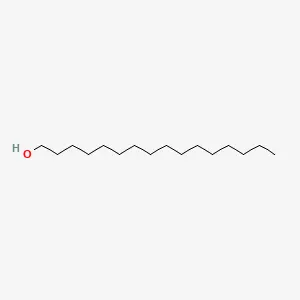
Cetyl Alcohol Structure
| IUPAC Name | Hexadecan-1-ol |
| CAS Number | 36653-82-4 |
| HS Code | 2905.17 |
| Molecular Formula | C16H34O |
| Structural Formula | CH3(CH2)14CH2OH |
| Synonyms | 1-Hexadecanol, Palmityl alcohol, C16 fatty alcohol, Ethal |
| Molecular Weight | 242.44 g/mol |
Cetyl alcohol is a long-chain fatty alcohol with a 16-carbon chain. Despite its name, it is not a traditional alcohol in the intoxicating sense but rather a waxy, solid substance used extensively in cosmetics and pharmaceuticals as an emulsifier, emollient, and thickener.
It was historically derived from spermaceti (whale oil) but is now commercially produced from the reduction of palmitic acid or through the hydrogenation of palm oil-derived fatty acid esters.
Cetyl alcohol is widely used in skin creams, lotions, hair conditioners, and ointments. It imparts a smooth, creamy texture to formulations and helps stabilize emulsions.
| Physical Description | White waxy solid or flakes with a faint characteristic odor. |
| Color / Form | White. |
| Odor | Faint, characteristic fatty odor. |
| Taste | Bland. |
| Boiling Point | Approx. 344 °C |
| Melting Point | 49–51 °C |
| Flash Point | ~185 °C |
| Solubility | Insoluble in water; soluble in ethanol and ether. |
| Density | Approx. 0.811 g/cm³ (liquid) |
| Vapor Density | Greater than air. |
| Vapor Pressure | Negligible at ambient temperature. |
| Stability / Shelf Life | Stable under normal conditions. Avoid strong oxidizing agents. |
| Viscosity | Solid at room temperature; melts to low-viscosity liquid above 50 °C. |
| Heat of Combustion | Approx. −10,160 kJ/mol. |
| Polymerization | No hazardous polymerization. |
| Ionization Potential | No data available. |
Cetyl alcohol is one of the most versatile and widely used fatty alcohols in the cosmetic and personal care industry. It functions primarily as an emollient, emulsifier, thickener, and co-emulsifier in oil-in-water (o/w) and water-in-oil (w/o) emulsions. In skin creams and body lotions, it contributes to a smooth, creamy skin feel and improves spreadability. In hair conditioners and hair masks, cetyl alcohol deposits on the hair shaft, improving softness, combability, and reducing static electricity.
Pharmaceutical applications include its use as a base ingredient in topical ointments and creams (e.g., cetyl alcohol is a component of cetomacrogol cream), suppository bases, and tablet coatings. It is listed in multiple pharmacopoeias (USP, Ph.Eur., BP) as an approved excipient.
In the manufacturing of surfactants and detergents, cetyl alcohol is used as a raw material for the production of cetyl sulfate, ethoxylated cetyl alcohols (non-ionic surfactants), and other cetyl-derived amphiphiles. It is also used in the production of specialty waxes, polishes, candles, and lubricant formulations. Industrial uses include its application as a foam stabilizer and rheology modifier in drilling fluids and as a textile processing aid.
Cetyl alcohol is produced commercially by the catalytic hydrogenation of methyl palmitate or palmitic acid (derived from palm oil) under high-pressure hydrogen in the presence of copper chromite or copper-zinc oxide catalyst at temperatures of 200–300 °C and pressures of 100–300 bar.
The crude fatty alcohol product is then purified by fractional distillation under vacuum to isolate the C16 fraction. The purity of the final product is determined by GC analysis (typically >95% or >99% for high-purity cosmetic/pharma grades). Other quality parameters include melting point, acid value, hydroxyl value, iodine value, and color (Hazen/APHA).
Palm-derived cetyl alcohol is the predominant commercial product globally, with major production located in Southeast Asia (Malaysia and Indonesia). Tallow-derived cetyl alcohol is also available from animal fat-based production. Biosynthetic routes via fermentation of sugars are under development but not yet commercially significant.
Low acute toxicity. May cause mild skin or eye irritation on direct contact. Dust from powdered material may be irritating to the respiratory tract.
Combustible solid. Dust may form explosive mixtures in air.
Generally well tolerated on skin. May cause mild eye irritation on direct contact. Dust inhalation may cause respiratory irritation.
Combustible solid; dust/air mixtures may be explosive.
Wash with soap and water.
Flush with water for 15 minutes. Seek medical advice if irritation persists.
Rinse mouth. Not considered toxic in small amounts; seek medical advice for large ingestion.
Use CO₂, foam, or dry chemical. Do not use water jet which may spread burning material.
Small spill (solid): Sweep or vacuum up spilled material and place in labeled containers for disposal. Avoid generating dust. Clean residual with detergent and water.
Molten liquid spill: Allow to solidify before cleanup. Scrape up solidified material and place in waste containers. Do not allow molten material to enter drains. Warn personnel of slip hazard from solidified material on floor.
Store in original, tightly closed containers in a cool, dry, well-ventilated warehouse. Keep away from heat sources, ignition sources, and oxidizing agents. Prevent moisture ingress. Store away from incompatible materials (strong oxidizers, strong acids). When stored as a melt in tanks, maintain temperature at 55–65 °C; avoid overheating.
Recommended storage temperature: 15–30 °C (solid form). If stored as a melt, maintain at 55–65 °C. Shelf life: 24 months in original sealed containers. Suitable containers: HDPE, stainless steel 304/316, or mild steel (for melt storage). Protect from moisture and excessive heat. Drums should be stored upright.
For more detailed information including pricing, customization, and shipping:
Discover more about this product and understand how it may fit into your operations, formulations, or production requirements.
Browse Product

 English
 Indonesian
 简体字
简体字
 العربية
 Español
 Français
 Português
 日本語
日本語
 한국어
한국어
 Tiếng Việt



















