Explore our network of country and industry based websites to access localized information, product offerings, and business services across our group.

Access reliable chemical market information through our update channels.
Real-time Updates
Daily Updates
Log in to start sending quotation requests for any product.
Don't have an account? Sign Up Here
Home Learning Center Cetyl Stearyl Alcohol
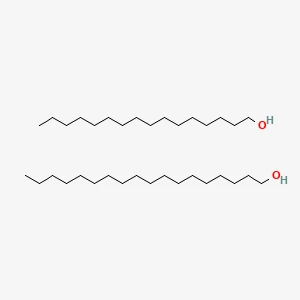
Cetyl Stearyl Alcohol Structure
| IUPAC Name | Hexadecan-1-ol / Octadecan-1-ol mixture |
| CAS Number | 67762-27-0 |
| HS Code | 2905.17 |
| Molecular Formula | C16H34O / C18H38O |
| Structural Formula | CH3(CH2)14CH2OH / CH3(CH2)16CH2OH |
| Synonyms | Cetostearyl alcohol, Cetearyl alcohol, C16-C18 fatty alcohol blend |
| Molecular Weight | 242.44 / 270.50 g/mol |
Cetyl stearyl alcohol (cetearyl alcohol) is a mixture of cetyl alcohol (C16) and stearyl alcohol (C18), two long-chain fatty alcohols. It is a white, waxy solid that is widely used in cosmetic, pharmaceutical, and personal care industries.
This mixture exhibits excellent emulsification and emollient properties, making it one of the most commonly used co-emulsifiers and stabilizers in o/w and w/o emulsions. It helps create stable, smooth-textured creams and lotions.
Commercially, cetyl stearyl alcohol is produced from the reduction of corresponding fatty acids derived from palm or coconut oil.
| Physical Description | White to off-white waxy solid, pellets, or flakes. |
| Color / Form | White. |
| Odor | Faint, characteristic odor. |
| Taste | Bland, slightly waxy. |
| Boiling Point | ~330–345 °C |
| Melting Point | 48–56 °C |
| Flash Point | ~185 °C |
| Solubility | Practically insoluble in water; soluble in hot ethanol, ether, and most oils. |
| Density | Approx. 0.81–0.84 g/cm³ |
| Vapor Density | Greater than air. |
| Vapor Pressure | Negligible at ambient temperature. |
| Stability / Shelf Life | Stable under normal conditions. Resistant to oxidation. |
| Viscosity | Solid at room temperature; low viscosity when melted. |
| Heat of Combustion | Approx. −10,160 to −11,375 kJ/mol (weighted average for C16/C18 blend). |
| Polymerization | No hazardous polymerization. |
| Ionization Potential | No data available. |
Cetyl stearyl alcohol is a primary co-emulsifier and emollient in the formulation of creams, lotions, skin care products, and hair conditioners. It forms a lamellar liquid crystalline phase in combination with emulsifiers such as ceteareth-20, providing excellent emulsion stability, a rich texture, and enhanced moisturization by occlusively locking moisture into the skin.
In hair care products, cetearyl alcohol is a key ingredient in conditioners and treatments, where it deposits on the hair to improve softness, reduce tangling, and impart shine. It is also used in hair bleaching creams and permanent wave formulations.
Pharmaceutical applications include use as an excipient in topical creams and ointments. Cetearyl alcohol is listed in the USP, Ph.Eur., and BP as an approved excipient under the name "Cetostearyl Alcohol." It is a component of cetomacrogol emulsifying wax and other approved emulsifying bases.
Industrial applications include use in polish formulations, surfactant production (ethoxylation to produce ceteareth-n non-ionic surfactants), and as a processing aid in rubber and plastic compounding.
Cetyl stearyl alcohol is produced by catalytic hydrogenation of fatty acid methyl esters derived from palm oil or coconut oil using copper chromite or copper-zinc oxide catalysts at elevated temperature and pressure. The hydrogenation converts the ester groups to hydroxyl groups, yielding the corresponding fatty alcohol.
Fractional distillation of the crude fatty alcohol product yields different cuts with varying C16:C18 ratios. Typical commercial cetearyl alcohol contains approximately 30% cetyl alcohol (C16) and 70% stearyl alcohol (C18), though other ratios are also available. Quality is controlled by GC purity analysis, melting range, acid value, hydroxyl value, iodine value, and color (APHA).
Low acute toxicity. Generally regarded as safe for cosmetic use. May cause mild irritation on prolonged skin or eye contact.
Combustible solid. Dust may form explosive mixtures in air.
Mild skin and eye irritation possible on prolonged or repeated contact.
Combustible solid; dust may form explosive mixtures.
Wash with soap and water.
Rinse eyes with water for several minutes.
Not considered significantly toxic. Seek medical advice if large amounts ingested.
Use CO₂, foam, or dry chemical. Water may be used to cool surrounding structures.
Small spill: Sweep or vacuum up. Avoid generating dust. Collect in closed containers for disposal. For molten spill, allow to solidify before collection. Warn of slip hazard on solidification.
Large spill: Contain spill. Prevent entry into drains. Collect mechanically after solidification. Clean residual with hot water and detergent.
Store in original, well-sealed containers in a cool, dry, ventilated area. Keep away from heat, ignition sources, and strong oxidizing agents. Moisture should be avoided to prevent product degradation. Bulk melt storage tanks should be maintained at 55–65 °C and fitted with inert gas blankets.
Recommended storage temperature: 15–30 °C (solid). Melt storage: 55–65 °C. Shelf life: 24 months in sealed packaging. Suitable containers: HDPE drums/bags, stainless steel tanks. Avoid PVC containers for melt storage. Store in a dry warehouse; protect from moisture.
For more detailed information including pricing, customization, and shipping:
Discover more about this product and understand how it may fit into your operations, formulations, or production requirements.
Browse Product

 English
 Indonesian
 简体字
简体字
 العربية
 Español
 Français
 Português
 日本語
日本語
 한국어
한국어
 Tiếng Việt



















