Explore our network of country and industry based websites to access localized information, product offerings, and business services across our group.

Access reliable chemical market information through our update channels.
Real-time Updates
Daily Updates
Log in to start sending quotation requests for any product.
Don't have an account? Sign Up Here
Home Learning Center Lauric Acid
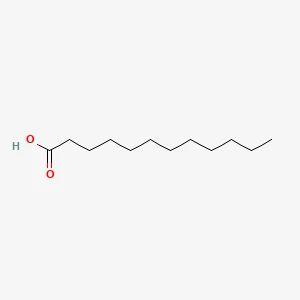
Lauric Acid Structure
| IUPAC Name | Dodecanoic acid |
| CAS Number | 143-07-7 |
| HS Code | 2915.90 |
| Molecular Formula | C12H24O2 |
| Structural Formula | CH3(CH2)10COOH |
| Synonyms | Dodecanoic acid, n-Dodecanoic acid, n-Lauric acid, C12 fatty acid |
| Molecular Weight | 200.32 g/mol |
Lauric acid is a saturated medium-chain fatty acid with a 12-carbon chain. It is the most abundant fatty acid in coconut oil and palm kernel oil, constituting approximately 45–55% of their fatty acid composition.
Lauric acid is prized for its exceptional antimicrobial activity against bacteria, viruses, and fungi. This property drives its use in personal care products, pharmaceuticals, and food preservation.
Industrially, lauric acid is a key feedstock for producing surfactants (sodium lauryl sulfate, lauryl alcohol), emulsifiers, soaps, and metallic soaps used as PVC stabilizers. Its derivatives are widely used in detergents, cosmetics, and lubricants.
| Physical Description | White crystalline powder or flakes with a characteristic soapy odor. |
| Color / Form | White. |
| Odor | Characteristic, mild soapy odor. |
| Taste | Bland to slightly soapy. |
| Boiling Point | 298–299 °C |
| Melting Point | 43–44 °C |
| Flash Point | ~180 °C |
| Solubility | Practically insoluble in water; soluble in ethanol, diethyl ether, and benzene. |
| Density | Approx. 0.883 g/cm³ (liquid) |
| Vapor Density | Greater than air. |
| Vapor Pressure | Very low at ambient temperature. |
| Stability / Shelf Life | Stable under normal conditions. Resistant to oxidation. |
| Viscosity | Low viscosity liquid when molten (above 44 °C). |
| Heat of Combustion | Approx. −7,390 kJ/mol. |
| Polymerization | No hazardous polymerization known. |
| Ionization Potential | No data available. |
Lauric acid is one of the most industrially important fatty acids derived from coconut and palm kernel oil. Its primary industrial use is as a feedstock for the production of sodium lauryl sulfate (SLS) and related anionic surfactants, which are among the most widely used detergent and foaming agents in shampoos, toothpastes, and cleaning products globally.
As a soap-making raw material, lauric acid produces soaps with excellent lathering and cleansing characteristics — the high lather quality of coconut oil-based soaps is primarily due to their high lauric acid content. Metallic laurates (zinc laurate, calcium laurate) are used as PVC stabilizers, mold release agents in plastics manufacturing, and lubricant additives.
In the personal care and cosmetics industry, lauric acid contributes antimicrobial, emollient, and cleansing properties. Monolaurin (glycerol monolaurate, derived from lauric acid) is a potent antimicrobial agent with activity against enveloped viruses, bacteria, and yeasts, and is used in food preservation, personal care preservative systems, and as a potential nutraceutical.
Food-grade lauric acid is used as a flavoring agent (it contributes a soapy, waxy note), and as a component of confectionery fats and cocoa butter substitutes. Lauric acid-rich fats are important in confectionery because lauric acid contributes a desirable sharp melting point, quick-melting texture, and resistance to bloom.
Pharmaceutical applications include its use as a penetration enhancer in transdermal drug delivery and as a lipid excipient in lipid-based drug delivery formulations.
Lauric acid is produced industrially by hydrolysis (fat splitting) of coconut oil or palm kernel oil, which contain 45–55% lauric acid in their triglyceride fraction. The fat splitting is typically conducted using the Colgate-Emery continuous high-pressure steam splitting process at temperatures of 250–260 °C and pressures of 50–60 bar, or by enzymatic hydrolysis using lipase enzymes.
The crude fatty acid mixture from splitting contains C8, C10, C12, C14, C16, C18, and C18:1 fatty acids in proportions reflecting the original oil composition. Fractional distillation under vacuum is used to separate individual fatty acids, with the C12 (lauric acid) cut being isolated as a high-purity fraction.
High-purity lauric acid (>99% GC purity) is obtained by additional recrystallization from solvents or melt crystallization. Quality is characterized by GC purity, acid value, iodine value, melting point, color (APHA), and moisture content.
Low toxicity. May cause mild skin and eye irritation. Dust may irritate respiratory tract.
Combustible solid. Dust may form ignitable mixtures.
Mild irritation to skin and eyes on direct contact.
Combustible solid; dust may form ignitable mixtures with air.
Wash with soap and water.
Rinse with water for 15 minutes.
Generally low toxicity. Seek medical advice if large amounts are ingested.
Use CO₂, foam, or dry chemical. Water may be used to cool containers.
Small spill (solid): Sweep up carefully to avoid dust generation. Collect in labeled waste containers. For molten spill, allow to solidify then collect mechanically.
Large spill: Prevent entry into drains and waterways. Bund area. Collect mechanically after solidification or pump if liquid. Dispose according to local environmental regulations.
Store in original, tightly closed containers in a cool, dry, well-ventilated area. Keep away from strong oxidizing agents, strong bases, and reactive metals. Protect from moisture and heat. Bulk melt storage in heated stainless steel or mild steel tanks at 50–60 °C. Use nitrogen blanket in bulk storage to prevent oxidation.
Recommended storage temperature: 15–30 °C (solid); 50–55 °C if stored as melt. Shelf life: 24 months in original sealed containers. Suitable containers: HDPE drums, multi-wall paper bags, stainless steel 304/316 tanks. Avoid copper, bronze, and galvanized iron containers. Protect from moisture. Conduct periodic quality checks (acid value, color).
For more detailed information including pricing, customization, and shipping:
Discover more about this product and understand how it may fit into your operations, formulations, or production requirements.
Browse Product

 English
 Indonesian
 简体字
简体字
 العربية
 Español
 Français
 Português
 日本語
日本語
 한국어
한국어
 Tiếng Việt



















