Explore our network of country and industry based websites to access localized information, product offerings, and business services across our group.

Access reliable chemical market information through our update channels.
Real-time Updates
Daily Updates
Log in to start sending quotation requests for any product.
Don't have an account? Sign Up Here
Home Learning Center Methyl Caprate
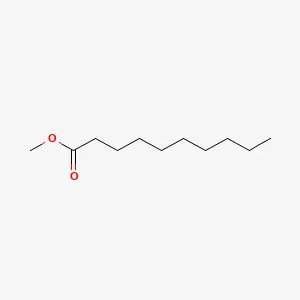
Methyl Caprate Structure
| IUPAC Name | Methyl decanoate |
| CAS Number | 110-42-9 |
| HS Code | 2915.90 |
| Molecular Formula | C11H22O2 |
| Structural Formula | CH3(CH2)8COOCH3 |
| Synonyms | Methyl decanoate, Decanoic acid methyl ester, Capric acid methyl ester, C10:0 methyl ester |
| Molecular Weight | 186.29 g/mol |
Methyl caprate is the methyl ester of capric acid (decanoic acid, C10:0). It is a medium-chain fatty acid methyl ester (FAME) produced primarily from coconut or palm kernel oil through transesterification with methanol.
Methyl caprate is used as a chemical intermediate, solvent, and analytical reference standard. It is also a component of biodiesel produced from coconut or palm kernel oil.
In the fragrance and flavor industry, methyl caprate contributes a mild, waxy, fruity note. It is also used as a solvent for pharmaceutical and cosmetic actives, and as a component in specialty lubricant formulations.
| Physical Description | Clear, colorless liquid with a faint, characteristic fatty odor. |
| Color / Form | Colorless. |
| Odor | Faint, waxy, fruity odor. |
| Taste | Mild, fatty. |
| Boiling Point | Approx. 224 °C |
| Melting Point | -18 °C |
| Flash Point | ~98 °C |
| Solubility | Practically insoluble in water; soluble in ethanol and most organic solvents. |
| Density | Approx. 0.873 g/cm³ |
| Vapor Density | Greater than air. |
| Vapor Pressure | Low at ambient temperature. |
| Stability / Shelf Life | Stable under normal conditions. |
| Viscosity | Low viscosity liquid. |
| Heat of Combustion | Approx. −6,760 kJ/mol (estimated). |
| Polymerization | No hazardous polymerization. |
| Ionization Potential | No data available. |
Methyl caprate serves as a versatile chemical intermediate and industrial solvent. As a fatty acid methyl ester, it is used in the synthesis of decyl alcohol (via hydrogenation), decyl aldehydes (via oxo synthesis), and other C10 fatty acid derivatives used in surfactants, plasticizers, and lubricants.
In the biodiesel and biofuel industry, methyl caprate is a component of coconut oil-derived biodiesel (COME), which is characterized by excellent cold-flow properties and oxidative stability due to its high content of medium-chain methyl esters. Coconut biodiesel blends containing methyl caprate, caprylic, laurate, and myristate esters exhibit low cloud points and are particularly suitable for use in tropical and temperate climates.
As a solvent, methyl caprate has good dissolving power for lipophilic substances and is used as a carrier in pharmaceutical topical formulations, as a solvent for herbicide and pesticide active ingredients in agricultural adjuvant formulations, and as a solubilizer in cosmetic preparations.
In the flavor and fragrance industry, methyl caprate contributes a waxy, fatty, fruity, and slightly cheese-like nuance to flavor compositions and fragrance blends, particularly in dairy and tropical fruit applications.
Analytical applications include its use as a certified reference standard for calibrating GC FAME analysis methods (e.g., AOAC, ISO, AOCS methods).
Methyl caprate is produced by transesterification of capric acid-containing oils (coconut oil, palm kernel oil) with methanol in the presence of an alkaline catalyst (NaOH, KOH) or acid catalyst (H₂SO₄) at temperatures of 60–80 °C (base catalysis) or 100–120 °C (acid catalysis).
The crude FAME mixture from transesterification of coconut or palm kernel oil contains C8, C10, C12, C14, C16, C18, and C18:1 methyl esters. Methyl caprate (C10:0) is isolated by fractional distillation under vacuum, utilizing its distinct boiling point relative to adjacent fractions.
High-purity methyl caprate (>99% GC purity) for pharmaceutical or reference standard use requires additional redistillation. Quality parameters include GC purity, acid value, saponification value, iodine value, moisture, and color (APHA).
Low acute toxicity. May cause mild skin and eye irritation.
Combustible liquid. Flash point around 98 °C.
Mild skin and eye irritation on direct contact.
Combustible liquid.
Wash with soap and water.
Rinse with water.
Seek medical advice if large quantities ingested.
Use CO₂, foam, or dry chemical.
Small spill: Absorb with dry sand or inert absorbent. Collect in labeled, sealable containers. Ventilate area to remove vapors. Prevent entry into drains and waterways.
Large spill: Contain with bunds. Eliminate ignition sources (flash point ~98 °C). Pump into recovery containers. Report to environmental authorities if waterways are at risk.
Store in tightly closed containers in a cool, dry, well-ventilated area. Keep away from heat sources and open flames. Avoid contact with strong oxidizing agents and strong acids/bases. Containers should be grounded during transfer to prevent static discharge.
Recommended storage temperature: 10–25 °C. Shelf life: 24 months in original sealed containers. Suitable containers: stainless steel 304/316, HDPE, or glass-lined vessels. Protect from light and moisture. Nitrogen blanket for bulk storage. Keep containers tightly sealed when not in use.
For more detailed information including pricing, customization, and shipping:
Discover more about this product and understand how it may fit into your operations, formulations, or production requirements.
Browse Product

 English
 Indonesian
 简体字
简体字
 العربية
 Español
 Français
 Português
 日本語
日本語
 한국어
한국어
 Tiếng Việt



















