Explore our network of country and industry based websites to access localized information, product offerings, and business services across our group.

Access reliable chemical market information through our update channels.
Real-time Updates
Daily Updates
Log in to start sending quotation requests for any product.
Don't have an account? Sign Up Here
Home Crude Glycerine in Chemical Synthesis: Industrial Uses & Buyer Demand in Asia
Trade Insights | Applications and Buyers | 12 May 2026
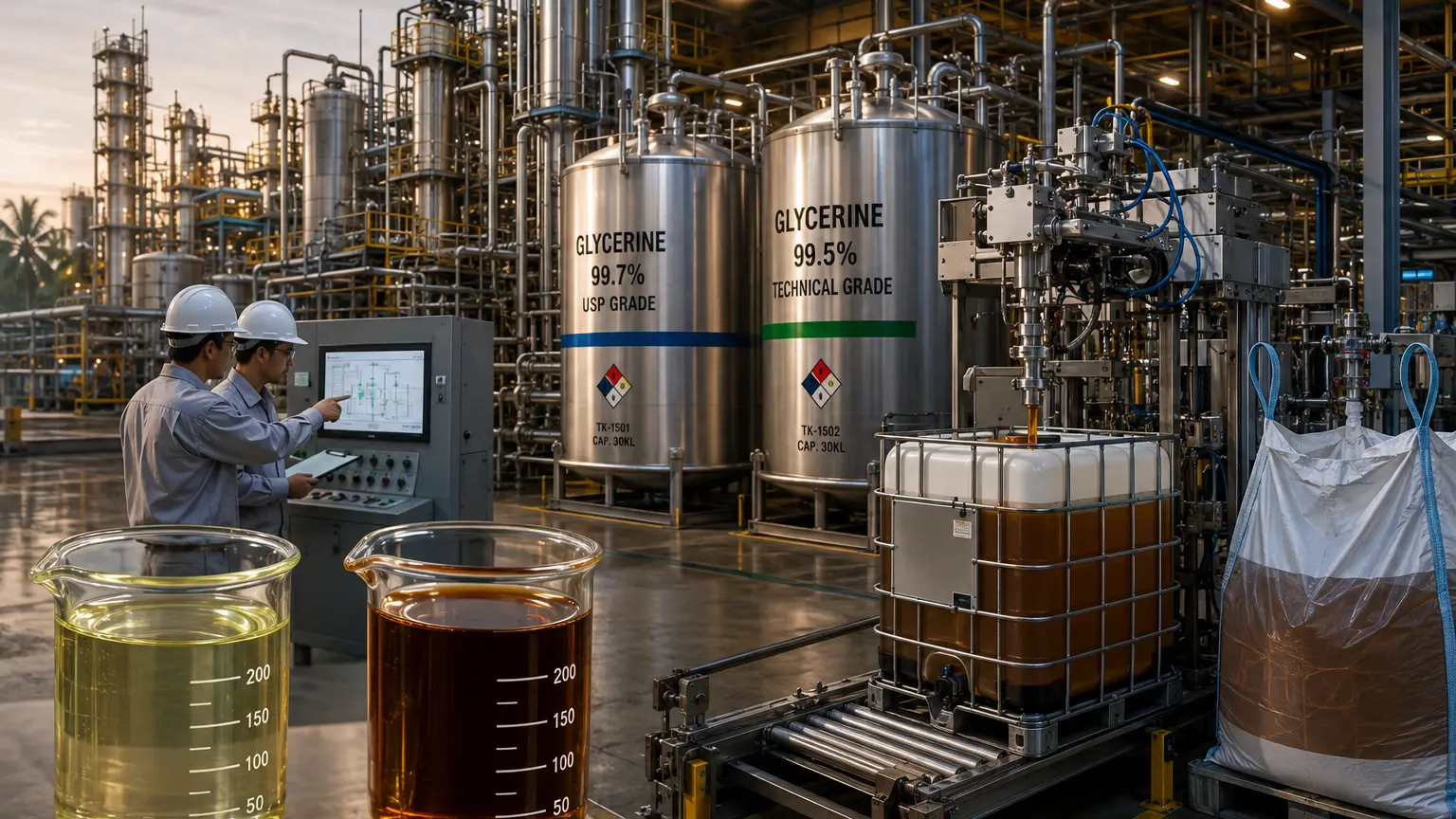
Crude glycerine has spent decades as the undervalued co-product of soap making and biodiesel production, a low-cost residue that refiners and oleochemical operators needed to dispose of rather than sell. That positioning has changed materially. As Asia's chemical manufacturing base has scaled, and as petrochemical feedstock prices have made bio-based alternatives increasingly cost-competitive, crude glycerine has emerged as a genuine platform chemical: a low-cost, renewable feedstock that can be converted into high-value downstream products ranging from epoxy resin intermediates to propylene glycol, acrolein, and specialty polyols. For chemical manufacturers and industrial buyers across Asia, understanding how crude glycerine functions as a synthesis feedstock, which conversion pathways are commercially viable, and how the regional supply landscape is structured is now a relevant procurement intelligence question.
Crude glycerine, also referred to as crude glycerol or raw glycerine, is the unpurified glycerol stream generated as a co-product of two primary industrial processes: the transesterification of vegetable oils or animal fats during biodiesel production, and the saponification of fats and oils during soap manufacturing. For every tonne of biodiesel produced from vegetable oil, approximately 100 kg of crude glycerine is generated as a by-product. This co-product relationship means that crude glycerine supply in Asia is structurally linked to the region's biodiesel production volumes rather than to glycerine demand itself.
Asia-Pacific is both the dominant producer and the largest consuming region for crude glycerine globally, holding approximately 49% of global glycerine market volume in 2025. The primary production hubs within Asia are Indonesia and Malaysia, together the world's largest palm oil producers, where biodiesel manufacturing programs generate substantial crude glycerine co-product streams. Indonesia's B40 biodiesel mandate, implemented in 2025 requiring a 40% palm oil blend in diesel fuel, drove palm oil-based biodiesel production to 13 billion litres in 2024, generating over 1.3 million metric tonnes of crude glycerine. China, while not a large biodiesel producer domestically, is the world's largest importer of crude glycerine, accounting for approximately 53% of global crude glycerine imports by value, and retains associated crude glycerol from its biodiesel exports to the EU for domestic oleochemical processing.
Crude glycerine at commercial grade is a dark brown to yellowish viscous liquid containing 75–85% glycerol alongside water (10–15%), methanol residues (up to 5%), soap (sodium or potassium salts), ash, and other organic impurities from the transesterification process. This impurity profile defines the processing requirements and limits the direct application of crude glycerine to industrial chemical synthesis uses where purity specifications are more tolerant than pharmaceutical or food applications. The 80–90% purity segment dominated the crude glycerine market by revenue in 2024 precisely because it serves multiple industrial synthesis applications without requiring full pharmaceutical-grade purification.
The chemical versatility of glycerine, a trihydroxy alcohol (C₃H₈O₃) with three hydroxyl groups available for chemical reaction, makes it one of the most functionally rich bio-based platform chemicals available to the chemical industry. Its conversion into downstream products can proceed through esterification, etherification, oxidation, dehydration, hydrogenolysis, and chlorination pathways, each generating commercially significant chemical intermediates. In Asia, four downstream conversion pathways have achieved or are approaching industrial-scale commercial viability.
Epichlorohydrin is the largest-volume chemical derivative of glycerine in commercial production globally, and China is the most significant Asian market for this conversion pathway. ECH is a key building block for epoxy resins, used in coatings, composites, electronics, and construction, and has traditionally been produced from propylene via a multi-step chlorination route. The glycerine-to-ECH process (commercially designated as the GTE or Epicerol process) converts refined or technical-grade glycerine into ECH through hydrochlorination with hydrogen chloride followed by dehydrochlorination with caustic soda.
Biobased glycerine now meets approximately 50% of ECH feedstock requirements for epoxy resin production in China, with the remainder sourced through the traditional propylene route. This substitution has been driven by the periodic cost advantage of bio-based glycerine over propylene, particularly during natural gas and naphtha price spikes. The ECH-to-epoxy resin chain positions crude glycerine as an indirect input into China's massive construction coatings, electronics, and composites manufacturing base, sectors that collectively consume millions of tonnes of epoxy resin annually.
For Asian chemical manufacturers evaluating the crude-to-ECH conversion, the key technical consideration is that the process typically requires technical-grade glycerine (minimum 80% purity, methanol below 0.5%) rather than raw crude glycerine in its as-received state. This means that most crude glycerine processors targeting ECH production operate an intermediate purification step before conversion, a capital cost that must be factored into feedstock economics.
Monopropylene glycol (MPG) is the second major chemical derivative of glycerine with established and growing commercial production in Asia. The conversion process, catalytic hydrogenolysis of glycerine over a metal catalyst under hydrogen pressure, cleaves one of glycerine's hydroxyl groups to produce a mixture of propylene glycol isomers, with the 1,2-propanediol (propylene glycol) isomer as the primary commercial product. MPG is used across antifreeze formulations, unsaturated polyester resins, industrial fluids, personal care products, and food-grade applications.
The commercial viability of glycerine-based MPG production in Asia has been demonstrated by multiple industrial investments. Sojitz Indonesia signed an agreement with PT Protech Mitra Perkasa for a 30,000 tpa glycerine-based MPG plant in Java, a commitment that reflects the commercial logic of converting Indonesia's surplus crude glycerine from biodiesel production into a value-added chemical intermediate rather than exporting it as a low-margin commodity. The plant's proximity to Indonesia's palm-based biodiesel co-product stream reduces feedstock logistics costs relative to importing MPG from Europe or the Americas.
The glycerine-to-MPG pathway faces a technical challenge relevant to procurement: catalyst sensitivity to impurities in crude glycerine, particularly chlorides, sulfur compounds, and ash, which can deactivate hydrogenolysis catalysts and increase operating costs. This has made catalyst-tolerant crude glycerine specifications a technical procurement requirement for MPG producers, with buyers specifying maximum chloride content (typically below 50 ppm) and maximum ash content alongside standard purity parameters.
Acrolein is produced from glycerine through a gas-phase dehydration reaction over an acid catalyst at high temperature, yielding the reactive aldehyde that serves as a chemical intermediate for methionine (an animal feed amino acid), glutaraldehyde (a biocide), and as a precursor to acrylic acid for superabsorbent polymer production. The glycerine-to-acrolein pathway is commercially established in Europe and is gaining evaluation attention in Asia as regional methionine producers, particularly in China and Japan, assess bio-based feedstock alternatives to propylene-derived acrolein.
Japan and South Korea are the Asian markets most actively evaluating glycerol-based green chemistry pathways, including the acrolein and acrylic acid routes, as part of broader industrial sustainability strategies. The Australian Institute of Petroleum has noted a growing trend among petrochemical firms to integrate glycerol into refinery operations to produce glycerol ether and oxygenated compounds, a trend relevant to Asian refining operations as biofuel mandates expand the available glycerol co-product stream.
Glycerol carbonate, produced by the transesterification of glycerine with dimethyl carbonate or propylene carbonate, is a high-value specialty chemical with applications as a reactive solvent in coatings, a plasticizer, and a polymer building block. While currently produced at smaller volumes than ECH or MPG, glycerol carbonate is gaining attention from Asian specialty chemical manufacturers as a differentiated glycerine derivative with premium pricing potential.
Polyether polyols from glycerine, produced through propoxylation or ethoxylation, represent another high-value derivative pathway. Approximately 520,000 metric tonnes of glycerol were consumed in polyol synthesis globally in 2023, with demand for bio-based polyether polyols in flexible foams and coatings growing steadily as environmental regulations and sustainability pressures incentivize the substitution of petrochemical polyols. Asian polyurethane foam manufacturers in China, India, and South Korea represent the target buyer base for glycerol-derived polyols as a renewable alternative to conventional petroleum-based polyol feedstocks.
China is by far the dominant buyer of crude glycerine for chemical synthesis applications in Asia, accounting for 53% of global crude glycerine imports by value. Chinese chemical manufacturers consume crude glycerine as a feedstock for ECH production (for the epoxy resin industry), as a starting material for glycerine derivatives including glycerol ethers and carbonate esters, and as a feedstock for oleochemical processing. China's highly developed petrochemical industry, where synthetic glycerol from propylene has historically also competed, means that Chinese buyers are sophisticated price arbitrageurs who switch between bio-based crude glycerine and synthetic alternatives based on relative feedstock economics.
The Chinese buyer segment is structured in two tiers. Large integrated oleochemical and chemical groups, including producers operating ECH plants at scale, source crude glycerine on long-term supply contracts with defined purity specifications tied to their conversion process requirements. Smaller chemical distributors and trading companies source crude glycerine on spot terms and supply mid-scale chemical processors, soap manufacturers upgrading crude material, and specialty chemical formulators. Both tiers have contributed to China's position as the world's largest crude glycerine import market.
A structurally significant buyer category for crude glycerine in Asia is the biodiesel refinery operator, companies producing crude glycerine as a co-product of their own biodiesel manufacturing that then require either internal processing infrastructure or external buyers to convert the material into value-added derivatives. Indonesia and Malaysia's large-scale palm oil-based biodiesel producers have varying levels of downstream glycerine valorization capability. Those with integrated glycerine refining operations sell refined glycerine into food, cosmetic, and pharmaceutical markets. Those without refining capability sell crude glycerine to external chemical processors at industrial-grade pricing.
As Indonesia's biodiesel mandate has expanded, driving production volumes that generate over 1.3 million metric tonnes of crude glycerine annually at B40 implementation levels, the pressure to develop domestic downstream valorization of crude glycerine has intensified. Louis Dreyfus Company's opening of a 55,000 tpa glycerine refining plant in Lampung, Indonesia in May 2025 reflects this downstream integration trend, aimed at upgrading crude co-product into regulated-end-use refined grades for export to controlled markets.
India is a growing buyer of crude glycerine for chemical synthesis, reflecting the expansion of India's chemical manufacturing base, particularly in Gujarat and Maharashtra, where oleochemical processors, soap noodle manufacturers, and specialty chemical companies use crude glycerine as a feedstock for purification and downstream chemical synthesis. India's domestic biodiesel production has expanded significantly, with output jumping approximately 60% between 2024 and 2025, generating increasing volumes of domestic crude glycerine co-product. However, India remains a net importer of crude glycerine from Indonesia and Malaysia to meet domestic industrial demand above domestic co-product supply.
Godrej Industries' July 2025 announcement of an INR 750 crore investment in its chemicals business, including doubling glycerine production capacity by 24,000 tpa, signals the commitment of India's major oleochemical producers to expanding value-added glycerine processing rather than exporting crude material at commodity pricing. This investment is positioned to serve the same downstream chemical synthesis markets, epoxy intermediates, specialty chemicals, and pharmaceutical precursors, that Chinese buyers already access.
Japan and South Korea represent the most specification-intensive buyer segment for glycerine-derived chemical intermediates in Asia. Both countries' chemical industries use glycerine derivatives in pharmaceutical synthesis, specialty polymer production, and green chemistry applications. Japanese firms are among the most active evaluators of glycerol-based ECH and acrolein alternatives as part of their broader bio-based chemical transition programs. South Korean specialty chemical companies are evaluating glycerol carbonate and glycerol-derived polyols as sustainable inputs for coatings and adhesive formulations.
These buyers import from Malaysian and Indonesian refiners who have invested in WHO-GMP and certified-grade processing capabilities, preferring documented-quality technical or refined glycerine over commodity crude material. The price premium for certified-grade glycerine in Japan and South Korea relative to crude industrial grade material, typically USD 100–200 per metric tonne, creates a commercial incentive for regional glycerine refiners to upgrade crude material before targeting these markets.
The crude glycerine pricing environment in Asia in 2026 reflects the tension between oversupply at the crude level, driven by Indonesia's B40 mandate and Malaysia's expanding biodiesel capacity, and constrained supply at the refined grade level, where refining capacity has not kept pace with downstream demand growth from pharmaceutical, food, and personal care sectors. For chemical synthesis buyers targeting crude and technical-grade material, this dynamic creates a procurement environment where crude glycerine is available at competitive pricing with an 80–90% purity specification, but where securing consistent quality, particularly on methanol residue, ash content, and chloride levels, requires supplier qualification rather than commodity spot purchasing.
Crude glycerine prices in Indonesia reached approximately USD 430–570 per metric tonne FOB Tanjung Priok in Q1 2025, reflecting a 17.75% quarter-on-quarter increase driven by tight supply from high biodiesel production absorbing palm co-product. By comparison, refined USP 99.5% glycerine traded at significantly higher price points, confirming that the refining margin, and therefore the economic incentive to upgrade crude to refined, remained commercially viable for well-capitalized operators through 2025.
For buyers requiring crude glycerine as a chemical synthesis feedstock, the most critical procurement qualification criteria beyond purity are: methanol content (maximum 0.5% for most synthesis applications; sub-0.1% for catalyst-sensitive hydrogenolysis routes), chloride content (maximum 50–100 ppm for ECH and polyol production), ash content (maximum 3–5%), and color (measured by APHA or Lovibond, important for derivative product quality). Buyers should request lot-by-lot analysis from suppliers rather than accepting specification sheets alone, given the batch-to-batch variability inherent in biodiesel co-product streams from different crushing and transesterification operations.
Tradeasia International supplies crude glycerine and technical-grade glycerine to chemical manufacturers, oleochemical processors, and industrial buyers across Asia, with multi-origin sourcing from Indonesia, Malaysia, and other regional production hubs, full specification documentation per lot, and both spot and contract procurement options. Chemical synthesis buyers seeking to qualify crude glycerine supply for ECH production, propylene glycol synthesis, or oleochemical processing can contact our industry team to discuss grade requirements, purity documentation, and delivery terms.
The global crude glycerine market grew from USD 1.16 billion in 2024 to USD 1.26 billion in 2025 and is projected to continue at a CAGR of 8.48%, reaching USD 1.90 billion by 2030. Within Asia, chemical synthesis applications, covering ECH, propylene glycol, polyols, and specialty derivatives, represent the segment with the strongest structural growth trajectory among crude glycerine end uses, as bio-based chemical mandates, green chemistry investment, and the economics of glycerine-derived intermediates versus petrochemical alternatives increasingly favor glycerine valorization.
Two structural factors will shape chemical synthesis demand for crude glycerine across Asia through 2030. First, the expansion of bio-based epoxy resin production in China, where glycerine-based ECH already meets approximately 50% of feedstock demand, will continue to deepen as Chinese epoxy resin manufacturers respond to export market sustainability requirements. Second, the emergence of glycerine-based propylene glycol capacity in Indonesia and India will shift regional crude glycerine consumption from export-dependent commodity trading toward domestically processed derivative supply, a structural transition that reduces Asia's net crude glycerine export surplus while increasing the value captured within the regional oleochemical supply chain.
We're committed to your privacy. Tradeasia uses the information you provide to us to contact you about our relevant content, products, and services. For more information, check out our privacy policy.


 English
 Indonesian
 简体字
简体字
 العربية
 Español
 Français
 Português
 日本語
日本語
 한국어
한국어
 Tiếng Việt



















