Explore our network of country and industry based websites to access localized information, product offerings, and business services across our group.
Access reliable chemical market information through our update channels.
Real-time Updates
Daily Updates
Log in to start sending quotation requests for any product.
Don't have an account? Sign Up Here
Home SLES (Sodium Lauryl Ether Sulphate): The B2B Sourcing Guide
Trade Insights | Applications and Buyers | 14 April 2026
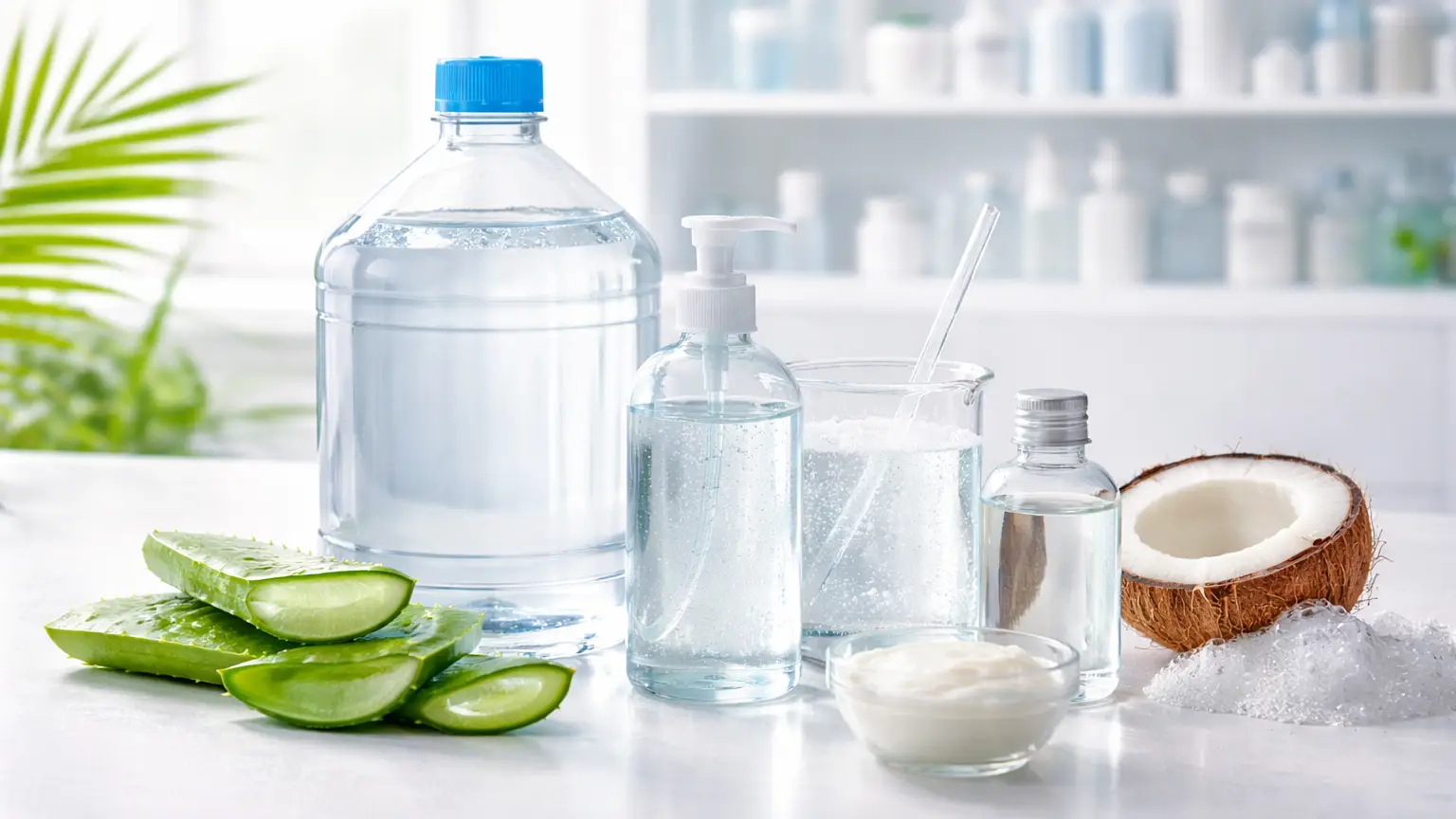
Sodium Lauryl Ether Sulphate — commercially abbreviated as SLES and also known as Sodium Laureth Sulfate — is one of the most widely consumed anionic surfactants in the global chemical industry. For procurement teams in personal care, household cleaning, and industrial applications, SLES represents a high-volume, cost-critical raw material that requires careful supplier evaluation, grade specification, and supply continuity planning.
|
MARKET SNAPSHOT |
Global SLES production reached approximately 2.39 million metric tonnes in 2024. The market is valued at USD 1.52 billion in 2025 and projected to reach USD 2.07 billion by 2030 at a CAGR of 6.2% — driven by liquid detergent growth, personal care expansion in emerging markets, and rising demand for milder surfactant formulations. |
SLES is an anionic surfactant — a molecule with a hydrophilic (water-attracting) head and a hydrophobic (oil-attracting) tail. This amphiphilic structure is what gives SLES its powerful detergency: it enables water to penetrate and lift oils, greases, and dirt from surfaces, fabrics, and skin. SLES is derived from palm kernel oil or coconut oil, and is produced through a three-step chemical process: ethoxylation of dodecyl (lauryl) alcohol, sulfation of the resulting ether, and neutralisation with sodium hydroxide (NaOH) to yield the sodium salt.
The key distinction between SLES and its close relative SLS (Sodium Lauryl Sulphate) is the ethoxylation step. The addition of ethylene oxide groups increases surface activity, reduces skin and eye irritation potential, and improves performance in hard water — making SLES the preferred choice across most personal care and cleaning formulations today.
SLES is commercially available in several grades and concentrations. Matching the correct grade to your application is essential to avoid cost over-specification or performance failure:
|
BUYER TIP |
When specifying SLES for personal care applications in the EU or UK market, always require a 1,4-dioxane test certificate. It is a trace byproduct of ethoxylation subject to strict regulatory limits in cosmetic products. Reputable suppliers will provide this data proactively. |
SLES is the backbone surfactant in the majority of rinse-off personal care products. In shampoos, it provides the foaming and cleansing action that consumers associate with effective hair washing. In body washes, shower gels, and liquid hand soaps, it delivers emulsification of skin oils and a rich lather experience. Its mildness compared to SLS makes it suitable for sensitive skin, children's products, and premium personal care lines. Cosmetic-grade SLES is the standard specification for this segment.
SLES is a primary active ingredient in dishwashing liquids, where its grease-cutting performance and dense foam production are critical product attributes. In liquid laundry detergents, it functions as the primary surfactant responsible for soil removal and emulsification of fatty stains. SLES performs effectively at both high and low washing temperatures, making it well-suited for modern cold-wash and energy-efficient machine cycles.
Industrial buyers source SLES for hard surface cleaners, transportation cleaners (vehicle wash products), carpet and textile cleaners, and institutional hygiene products. Industrial-grade SLES is formulated for robustness across a wide pH range and in both soft and hard water conditions. It is commonly combined with other surfactants and builders to create high-performance industrial detergent concentrates.
In textile processing, SLES functions as a wetting and scouring agent — reducing water surface tension to improve the penetration of dyes, bleaching agents, and finishing chemicals into fibres. In leather treatment, it is used as an emulsifier during tanning. In the paper industry, it supports pulp wetting and de-inking operations. These industrial applications typically use lower-purity, cost-optimised SLES grades.
SLES is used as a surfactant additive in pesticide and herbicide formulations, where it improves the spreading, wetting, and absorption of active ingredients on plant surfaces. Its ability to reduce rainfast time — speeding up herbicide absorption before rain can wash it away — makes it a valuable adjuvant in crop protection chemistry.
In oral care products, SLES contributes to the spreading and foaming of toothpaste across tooth surfaces, aiding in the mechanical removal of plaque and food debris. It is commonly used in standard and whitening toothpaste formulations, as well as mouthwash. Cosmetic-grade purity with low residual impurities is required for this application.
SLES is generally considered biodegradable under aerobic conditions and breaks down in standard sewage treatment facilities. Regulatory bodies including the EU SCCS and US FDA have assessed SLES as safe for use in personal care products at defined concentration limits. Procurement teams should ensure suppliers provide the following compliance documentation:
SLES is produced predominantly in Asia-Pacific, which accounts for approximately 42% of global supply. Key producing countries include China, India, Indonesia, Malaysia, and South Korea. For buyers in Southeast Asia and the Middle East, regional sourcing from Asian producers generally offers the most competitive landed costs.
SLES is shipped in liquid form — typically in ISO tank containers (20,000–25,000 litres), IBC totes (1,000 litres), or drums (170–200 kg) for smaller order quantities. Storage requires standard corrosion-resistant equipment; high-concentration SLES can gel below approximately 10°C and may require temperature-controlled logistics in cold climates.
Chemtradeasia supplies both cosmetic-grade and industrial-grade SLES to B2B buyers across Asia, the Middle East, Africa, and beyond. We offer flexible packaging options, competitive pricing from vetted producers, and full documentation support including COA, MSDS, and regulatory compliance certificates.
Get a quote for SLES supply: chemtradeasia.com/sles-sodium-lauryl-ether-sulphate
We're committed to your privacy. Tradeasia uses the information you provide to us to contact you about our relevant content, products, and services. For more information, check out our privacy policy.


 English
 Indonesian
 简体字
简体字
 العربية
 Español
 Français
 Português
 日本語
日本語
 한국어
한국어
 Tiếng Việt



















