Explore our network of country and industry based websites to access localized information, product offerings, and business services across our group.
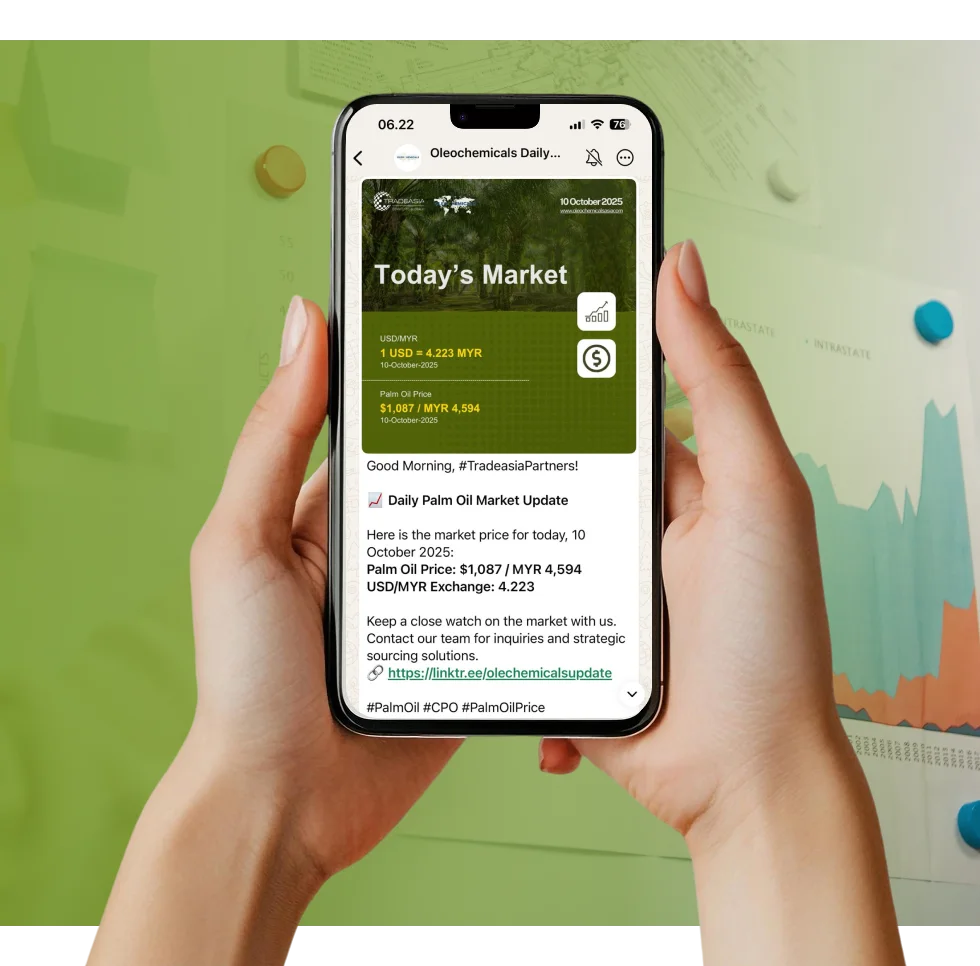
Access reliable chemical market information through our update channels.
Real-time Updates
Daily Updates
Log in to start sending quotation requests for any product.
Don't have an account? Sign Up Here
Home Measuring CO2 Reduction and Traceability Benefits of Sustainable Soap Noodles
Trade Insights | Applications and Buyers | 30 November 2025
The Measurable Edge: Lower Emissions, Higher Compliance
Transparency as a Non-Negotiable Asset in December
As the deadline for Q4 corporate environmental reporting looms, businesses are under immense pressure to validate their sustainability claims with hard data. The focus is squarely on key feedstocks like Soap Noodles, which form the foundation of countless consumer products. Through rigorous Life Cycle Assessment (LCA), we now have clear evidence of the environmental benefits of certified products. A standard Sustainable Soap Noodle (SSN) (80/20 formulation) boasts a measured carbon footprint of 2.5 kg CO2-eq/kg, representing a powerful 18% reduction compared to the conventional average of 3.05 kg CO2-eq/kg. This significant leap forward is the direct result of exclusively sourcing from NDPE (No Deforestation, No Peat, No Exploitation) compliant supply chains. Leveraging high-standard palm and oleochemicals expertise, like that provided by the global network of Tradeasia International, ensures your supply chain upholds these crucial environmental standards.
This environmental commitment translates directly into market advantage. The shift is already underway: Global trading in RSPO (Mass Balance) Soap Noodles hit a record 250,000 MT this December 2025. This impressive figure means that certified volumes now account for 12.5% of the total market, representing a remarkable 20% Year-over-Year increase since December 2024. This trend underscores a clear corporate commitment to meeting consumer and regulatory demand. By embedding low-carbon Soap Noodles into your product line, you are securing immediate compliance and a competitive edge ahead of evolving global climate policies.
Furthermore, in the final weeks of the year, transparency is key. Our data shows that for all premium-market-bound Soap Noodle shipments in December, sophisticated supply chain management achieved an exceptional traceability rate of 92% all the way to the mill level. An additional 75% of volume was traceable down to the specific plantation or smallholder group. This granular level of data not only mitigates reputational risk but also provides a concrete decarbonization dividend that drastically improves the quality of your Q4 environmental reporting. Traceability is no longer optional; it is a 92% necessity for market access and credibility.
Sources:
Technical Specs: Carbon Footprint Comparison of Oleochemical Grades
RSPO Q4 2025 Dashboard: Certified Sustainable Soap Noodle Volume
LCA Report: Environmental Impact of Palm-Based Oleochemicals 2025
We're committed to your privacy. Tradeasia uses the information you provide to us to contact you about our relevant content, products, and services. For more information, check out our privacy policy.


 English
 Indonesian
 简体字
简体字
 العربية
 Español
 Français
 Português
 日本語
日本語
 한국어
한국어
 Tiếng Việt




















