Explore our network of country and industry based websites to access localized information, product offerings, and business services across our group.

Access reliable chemical market information through our update channels.
Real-time Updates
Daily Updates
Log in to start sending quotation requests for any product.
Don't have an account? Sign Up Here
Home Learning Center Isopropyl Palmitate
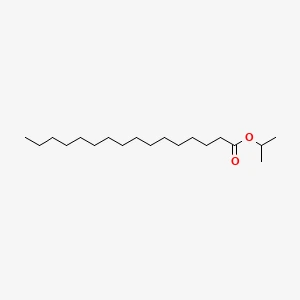
Isopropyl Palmitate Structure
| IUPAC Name | Propan-2-yl hexadecanoate |
| CAS Number | 142-91-6 |
| HS Code | 2915.70 |
| Molecular Formula | C19H38O2 |
| Structural Formula | CH3(CH2)14COO-CH(CH3)2 |
| Synonyms | IPP, Isopropyl hexadecanoate, 2-Propyl palmitate |
| Molecular Weight | 298.50 g/mol |
Isopropyl palmitate (IPP) is a synthetic ester formed by the esterification of palmitic acid with isopropanol. It is a light, non-greasy emollient widely used in cosmetic and personal care formulations.
IPP is valued for its excellent skin-feel properties — it imparts a dry, silky texture to skin care and color cosmetic formulations without the heaviness of natural oils. It acts as a spreading agent, emollient, and binder in various formulations.
In industrial applications, IPP is used as a plasticizer, lubricant, and solvent in specialized coatings and leather-treatment products.
| Physical Description | Clear, colorless to slightly yellowish oily liquid. |
| Color / Form | Colorless to pale yellow. |
| Odor | Practically odorless. |
| Taste | Mild, fatty. |
| Boiling Point | Approx. 206–208 °C at 20 mmHg |
| Melting Point | 13–14 °C |
| Flash Point | ~193 °C |
| Solubility | Practically insoluble in water; miscible with most oils and organic solvents. |
| Density | Approx. 0.852 g/cm³ |
| Vapor Density | Greater than air. |
| Vapor Pressure | Very low at ambient temperature. |
| Stability / Shelf Life | Stable under normal conditions. Resistant to hydrolysis under mildly acidic or alkaline conditions. |
| Viscosity | Low viscosity (approximately 7–10 mPa·s at 20 °C). |
| Heat of Combustion | Approx. −12,400 kJ/mol (estimated). |
| Polymerization | No hazardous polymerization. |
| Ionization Potential | No data available. |
Isopropyl palmitate is widely used in cosmetics and personal care products as an emollient and texture modifier. Its lightweight, non-greasy feel makes it particularly popular in sunscreen formulations, where it serves as a cosmetically elegant carrier for UV filters such as benzophenone, avobenzone, and octinoxate, improving their spreadability and skin feel. It is also used in foundations, BB creams, tinted moisturizers, and skin care serums to improve spreadability and achieve a smooth, velvety skin feel.
In color cosmetics (lipsticks, eye shadows, blushes), IPP functions as a binder and emollient that improves color payoff and adhesion. In hair care products, it is used to improve combability, reduce frizz, and impart shine.
Industrial applications include its use as a plasticizer in polymer films, a lubricant in precision metalworking and clock mechanism lubrication, a solvent in wood treatment preparations and leather-care products, and as a spreading agent in agricultural adjuvants for improving leaf coverage by crop protection agents.
In pharmaceutical topical formulations, IPP is used as a penetration enhancer, improving the transdermal absorption of active pharmaceutical ingredients. It is also used as a solvent vehicle in transdermal patches and topical drug delivery systems.
Isopropyl palmitate is produced by direct esterification of palmitic acid (derived from palm oil hydrolysis and distillation) with isopropanol in the presence of an acid catalyst such as p-toluenesulfonic acid or sulfuric acid at temperatures of 100–140 °C.
Water formed during the esterification reaction is removed continuously by azeotropic distillation (with isopropanol/water azeotrope) or by molecular sieves to drive the reaction to completion (>98% conversion). Excess isopropanol is recovered by distillation and recycled.
The crude ester is purified by washing with alkali solution to remove residual acid, followed by water washing, drying, and final distillation or filtration through activated carbon or bleaching earth for color improvement. Quality parameters include acid value, color (APHA/Gardner), saponification value, moisture, and GC purity.
Low acute toxicity. Not classified as hazardous under standard regulations.
Combustible liquid with a high flash point (~193 °C).
Mild skin and eye irritation may occur on prolonged contact.
Combustible liquid with high flash point.
Wash with soap and water.
Rinse with clean water for 15 minutes.
Seek medical advice. Not expected to be highly toxic.
Use CO₂, foam, or dry chemical.
Small spill: Absorb with inert absorbent material. Collect in labeled containers. Prevent entry into drains or waterways. Clean residual with detergent.
Large spill: Contain with bunds. Pump into recovery containers. Do not allow entry into sewers — consult environmental authorities. Ventilate area. Dispose of collected material according to local regulations.
Store in original, tightly closed containers in a cool, dry, well-ventilated area. Keep away from heat sources, open flames, and strong oxidizing agents. Avoid contact with strong acids and bases (can cause hydrolysis). Inspect container seals regularly. Do not store in direct sunlight.
Recommended storage temperature: 15–25 °C. Shelf life: 24 months in original sealed containers. Suitable containers: HDPE, stainless steel 304/316, or glass-lined vessels. Avoid aluminum, copper, and zinc containers. Protect from light and moisture. Containers should be kept sealed when not in use.
For more detailed information including pricing, customization, and shipping:
Discover more about this product and understand how it may fit into your operations, formulations, or production requirements.
Browse Product

 English
 Indonesian
 简体字
简体字
 العربية
 Español
 Français
 Português
 日本語
日本語
 한국어
한국어
 Tiếng Việt



















