How can we assist you?

Explore our network of country and industry based websites to access localized information, product offerings, and business services across our group.

Access reliable chemical market information through our update channels.
Real-time Updates
Daily Updates
Log in to start sending quotation requests for any product.
Don't have an account? Sign Up Here
Home Caprylic Acid Drives MCT Oil & Supplement Growth
Article | 24 November 2025
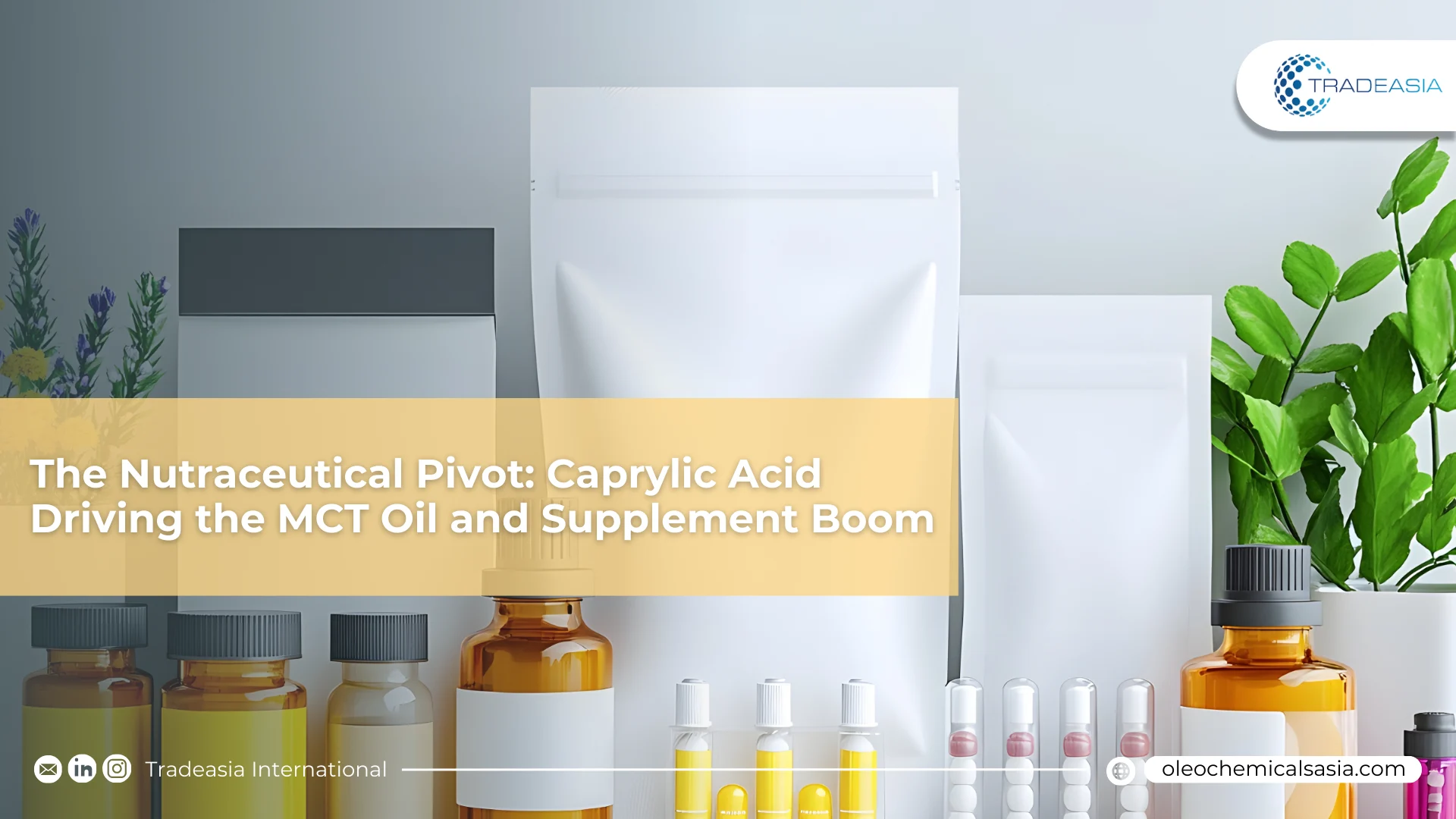
The utilization of Caprylic Acid is undergoing a significant transformation, driven by its high-value applications in the nutraceutical and dietary supplement sectors. This segment is not just growing; it's redefining the demand structure for palm-derived oleochemicals and demanding high purity from the supply chain. This is where reliable global trading partners become indispensable. Companies like Tradeasia International specialize in securing and delivering the specific high-purity Caprylic Acid derivatives that health manufacturers require, effectively ensuring that the palm sector captures maximum value from this burgeoning market.
The Nutraceuticals segment is the undisputed leader in Caprylic Acid consumption, a position fueled by the unique metabolic pathway of Caprylic Acid (C8), which allows for rapid conversion into energy, making it an indispensable component in Medium-Chain Triglyceride (MCT) Oil production. Currently, this sector commands approximately 45% of the total global market volume in 2023. This explosive growth is highly sustainable, with analysts projecting a robust Compound Annual Growth Rate (CAGR) of 5.8% for this segment through 2040—significantly outperforming traditional industrial uses. The volume demand for Caprylic Acid specifically for MCT Oil production is forecasted to reach 65 kilotons by 2035, up from an estimated 40 kilotons in 2025. This surge is further evidenced by a 40% increase in the adoption of C8 in sports nutrition and cognitive health supplements in North America between 2020 and 2023.
The reliance on exceptional Caprylic Acid purity for dietary consumption creates stringent quality control requirements throughout the palm supply chain. Consequently, the average selling price (ASP) for pharmaceutical-grade C8 used in nutraceuticals typically commands a 10% to 15% premium over industrial-grade material. Furthermore, this strong consumer-driven demand provides inherent supply stability, as supplement manufacturing tends to be less susceptible to cyclical economic downturns than industrial chemical production. Palm traders who can consistently guarantee the delivery of traceable, high-purity PKO-derived Caprylic Acid are strategically positioned to secure long-term, high-margin contracts within this pivotal market segment, ensuring the palm sector remains synonymous with health and wellness ingredients.
We're committed to your privacy. Tradeasia uses the information you provide to us to contact you about our relevant content, products, and services. For more information, check out our privacy policy.
How can we assist you?

 English
 Indonesian
 简体字
简体字
 العربية
 Español
 Français
 Português
 日本語
日本語
 한국어
한국어
 Tiếng Việt




















