Explore our network of country and industry based websites to access localized information, product offerings, and business services across our group.
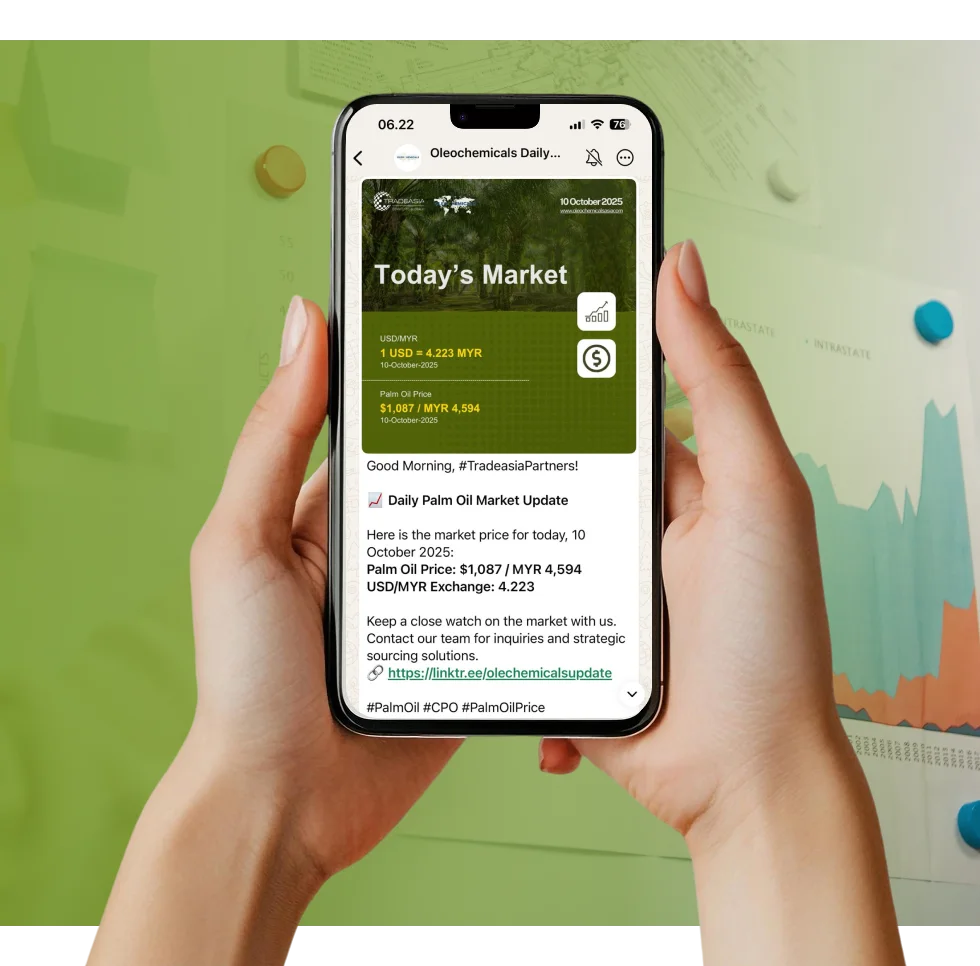
Access reliable chemical market information through our update channels.
Real-time Updates
Daily Updates
To view and access the document, you are required to sign in to your account first.
Don't have an account? Sign Up Here
Home Seasonal Demand Lifts Palm Olein Prices Ahead of Lunar New Year and Ramadan
Pricing Indices | 03 February 2026

Palm olein prices in Asia are entering an upward phase as seasonal demand strengthens ahead of Lunar New Year and Ramadan. These two major consumption periods traditionally exert strong influence on edible oil markets, particularly in Asia. Early 2026 is no exception, with buyers actively securing supply.
Palm olein plays a central role in food processing, household cooking, and foodservice sectors during festive periods. Demand typically accelerates weeks in advance as manufacturers and distributors build inventories. This seasonal cycle creates predictable, yet impactful, price pressure.
Research published in Elsevier journals on edible oil seasonality confirms that cultural and religious consumption patterns significantly influence short-term price movements. Palm olein is especially sensitive due to its wide application and high consumption elasticity during festive periods.
As a result, early 2026 pricing reflects not only fundamentals but also anticipatory buying behavior across Asian markets.
The Lunar New Year remains one of the most important demand drivers for palm olein in East and Southeast Asia. Food manufacturers increase production of festive goods, while households stock up on cooking oils well ahead of celebrations. This front-loaded demand supports early-year price strength.
In countries with large Lunar New Year celebrations, palm olein demand spikes across retail and industrial channels. This surge often coincides with limited selling interest from producers, amplifying upward price momentum. Buyers compete to secure volumes before holiday disruptions.
According to MDPI research on food consumption seasonality, edible oil demand during Lunar New Year periods can rise significantly compared to baseline months. This structural demand pattern repeats annually with minimal variation.
These dynamics reinforce why palm olein prices often firm in the weeks leading up to the Lunar New Year.
Following the Lunar New Year, attention quickly shifts toward Ramadan, another major driver of palm olein demand. Foodservice operators, snack producers, and households increase edible oil usage during the fasting month. Preparatory buying begins well before Ramadan starts.
This overlapping demand window creates a compounding effect on palm olein markets. Buyers who delay procurement risk facing higher prices or limited availability as inventories tighten. As a result, early purchasing becomes a strategic necessity.
Studies referenced in Springer publications on food supply chains highlight Ramadan as a recurring peak-demand period for vegetable oils. Palm olein benefits directly due to its functional and cost advantages.
The convergence of Lunar New Year and Ramadan demand in early 2026 explains the sustained upward price trend rather than a short-lived spike.
On the supply side, palm olein availability has not expanded at the same pace as seasonal demand. Production growth remains measured, while inventories are carefully managed by producers. This balance favors firmer pricing during peak consumption periods.
Market sentiment is further influenced by developments in competing vegetable oils and broader agricultural conditions. Strength in rival oils and cautious selling behavior reinforce palm olein’s price trajectory. Traders respond by holding inventory rather than accelerating sales.
Market reports from Hellenic Shipping News indicate that Asian palm oil prices recently reached multi-month highs due to stronger rival oils and lower production. These signals support the bullish seasonal narrative.
Additional analysis from UkrAgroConsult confirms that while short-term corrections occur, palm oil prices have risen on a monthly basis, reflecting sustained demand pressure.
For buyers, early 2026 presents a classic seasonal procurement challenge. Delayed purchasing increases exposure to price escalation, while early commitment requires careful demand forecasting. Strategic timing is critical.
Industrial buyers often balance sourcing between crude and refined grades depending on application needs. Food-grade users prioritize refined palm olein for consistency and compliance. Seasonal demand heightens competition for preferred specifications.
Research published in Wiley on edible oil procurement strategies emphasizes advance contracting during known demand cycles. This approach reduces price volatility and supply risk during peak seasons.
Access to technical data, certifications, and specifications through the Download Center supports informed purchasing decisions during high-demand periods.
Seasonal demand linked to Lunar New Year and Ramadan is once again proving to be a decisive driver of palm olein prices in early 2026. These recurring consumption patterns create predictable upward pressure when supply growth remains constrained. Market participants are responding accordingly.
Buyers should recognize that seasonal price strength is not speculative but structurally embedded in consumption behavior. Procurement strategies must therefore anticipate these cycles rather than react to them. Early engagement remains a key risk-management tool.
Sourcing strategies can be optimized by monitoring product segments such as Crude Palm Olein, RBD Palm Olein CP 10°C, and RBD Palm Olein CP 8°C, while aligning decisions with market intelligence from Hellenic Shipping News and UkrAgroConsult.
For sourcing discussions, long-term contracts, or seasonal supply planning, buyers are encouraged to engage via the Contact Us channel.
Access the complete article and discover related coverage.
We're committed to your privacy. Tradeasia uses the information you provide to us to contact you about our relevant content, products, and services. For more information, check out our privacy policy.


 English
 Indonesian
 简体字
简体字
 العربية
 Español
 Français
 Português
 日本語
日本語
 한국어
한국어
 Tiếng Việt