How can we assist you?

Explore our network of country and industry based websites to access localized information, product offerings, and business services across our group.

Access reliable chemical market information through our update channels.
Real-time Updates
Daily Updates
Log in to start sending quotation requests for any product.
Don't have an account? Sign Up Here
Home Feedstock Factors: Mastering Upstream Drivers in Cetyl Stearyl Alcohol Pricing
Market Insight | 29 September 2025
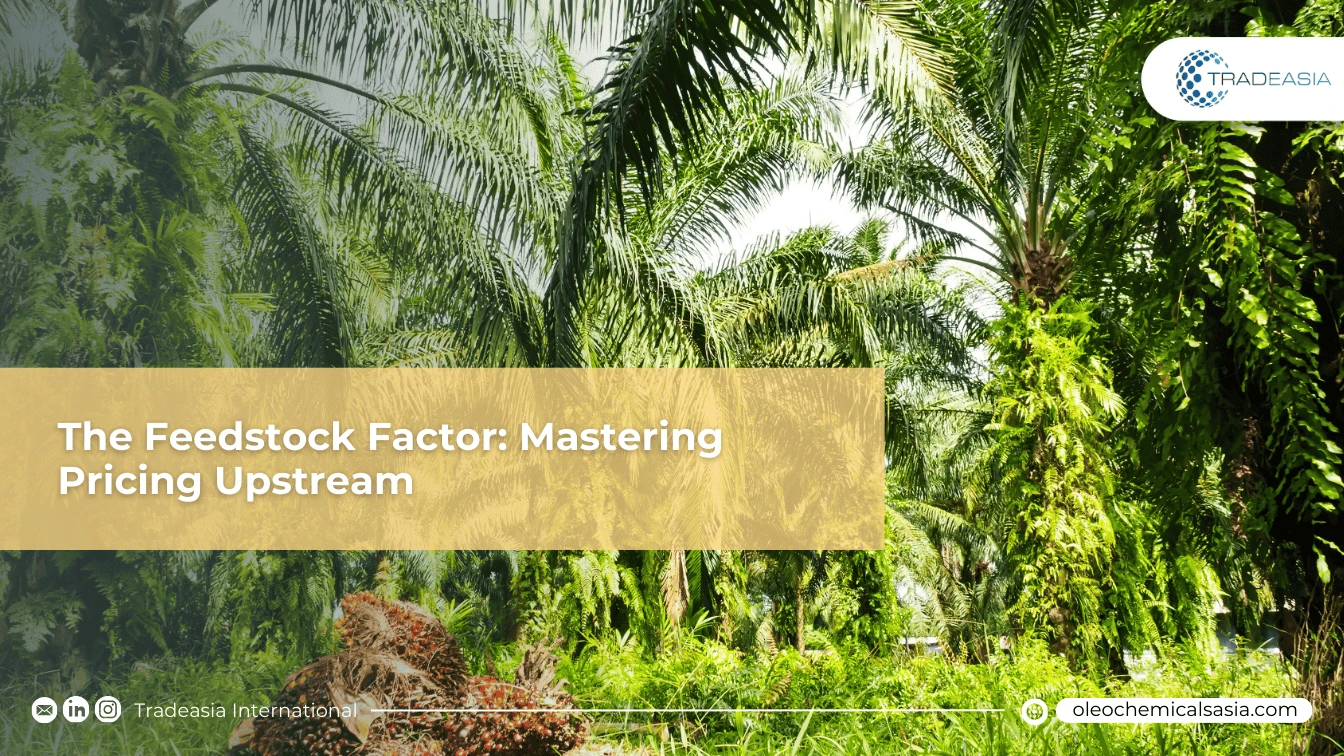
The Economics of a Single Drop
From Plantation to Price Tag
In the oleochemical market, stability is a luxury. This September, the direct and powerful link between agricultural commodity markets and industrial ingredient pricing is clearer than ever. Recent fluctuations of over $50 per metric tonne in the price of Palm Kernel Oil (PKO) are not just abstract market noise; they are translating directly into tangible cost impacts for buyers of cetyl stearyl alcohol. Mastering this volatility requires more than just watching the market; it demands a proactive and informed sourcing strategy. At Tradeasia International, we provide our partners with the market intelligence and procurement expertise needed to turn this volatility into a competitive advantage.
Understanding the math behind the price is crucial. Cetyl stearyl alcohol's journey begins in the palm plantation, and its production cost is inextricably tied to its origins. An industry-standard economic model provides a stark formula: for every $10 increase in the price of PKO, the direct production cost of the finished fatty alcohol rises by approximately $8.50 per tonne. With producer margins already razor-thin at 4-7%, there is no buffer to absorb these swings. This means feedstock volatility isn't just a producer's problem; it becomes the buyer's reality almost immediately. In this intricate dance of numbers, foresight is currency. Knowing how upstream movements will impact downstream costs tomorrow is the defining characteristic of a smart procurement strategy.
The daily drama unfolding on the Bursa Malaysia Derivatives Exchange, the global benchmark for palm oil, is now required viewing for any serious buyer of oleochemicals. The price agreed upon today is a direct consequence of yesterday's feedstock performance. This tight correlation underscores the need for a procurement strategy that is both agile and deeply informed. It is no longer enough to simply place an order; businesses must understand the full feedstock-to-formulation value chain to anticipate price movements and manage budgets effectively. In this market, knowledge isn't just power—it's profit.
We're committed to your privacy. Tradeasia uses the information you provide to us to contact you about our relevant content, products, and services. For more information, check out our privacy policy.
How can we assist you?

 English
 Indonesian
 简体字
简体字
 العربية
 Español
 Français
 Português
 日本語
日本語
 한국어
한국어
 Tiếng Việt




















