How can we assist you?

Explore our network of country and industry based websites to access localized information, product offerings, and business services across our group.

Access reliable chemical market information through our update channels.
Real-time Updates
Daily Updates
Log in to start sending quotation requests for any product.
Don't have an account? Sign Up Here
Home Why Bio-Based ODA's 75% Lower Carbon Footprint is Now a Must for Q4 Procurement
Market Insight | 10 November 2025
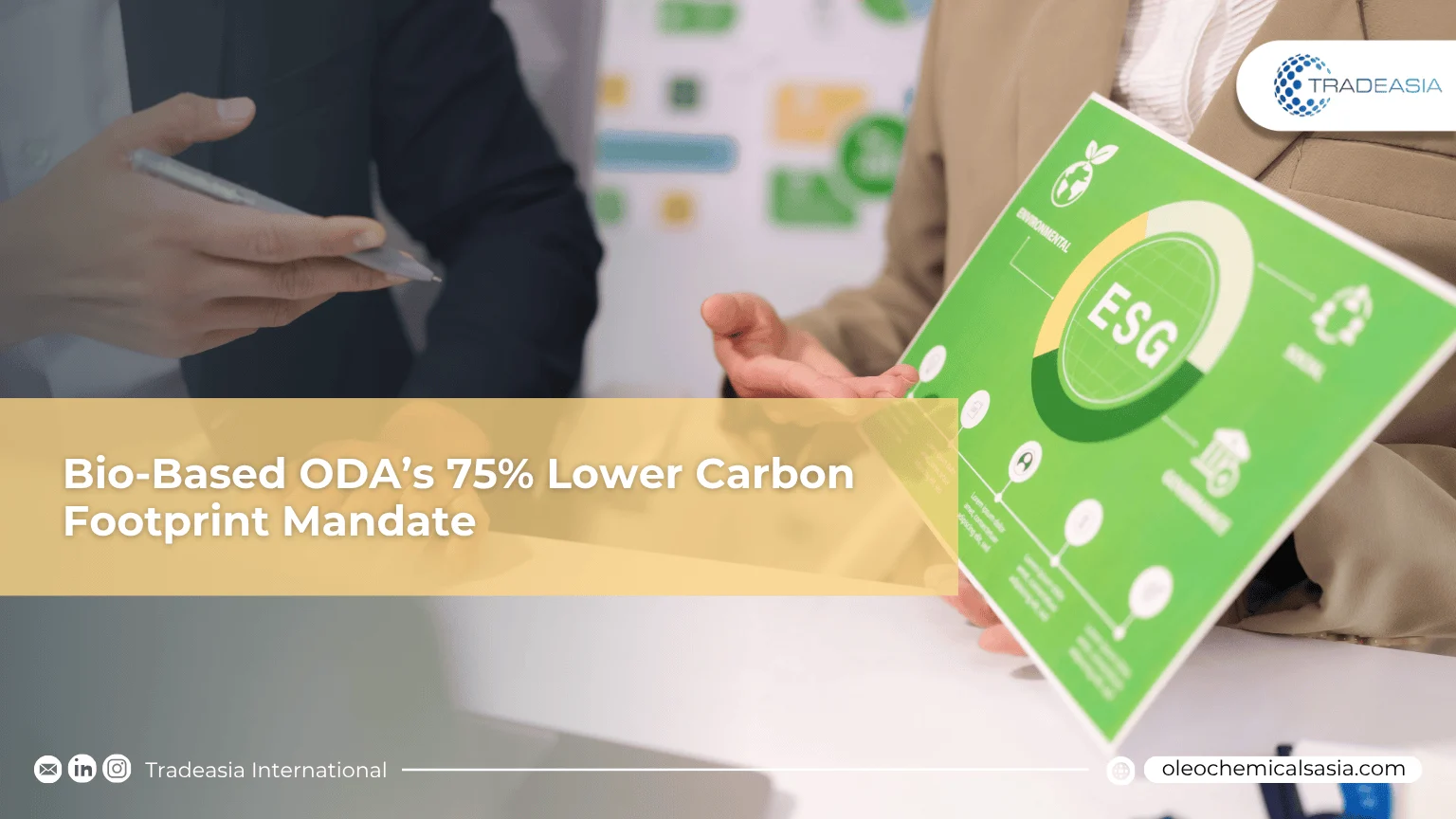
The final quarter of the year is traditionally defined by inventory management and volume targets, yet November 2025 is setting a different tone: it is becoming the month of the ESG mandate. For procurement leaders sourcing Octyl Decyl Alcohol (ODA), the focus has irrevocably shifted toward quantifiable sustainability metrics, making the choice between bio-based and petrochemical sources a strategic necessity. This isn't merely about ticking boxes; it’s about securing a supply chain that meets the growing global demand for net-zero ingredients.
To navigate the increasing complexity of supply and demand for critical bio-based inputs, reliable partnerships are paramount. The journey of every certified palm molecule, from plantation to oleochemical derivative, requires an unbroken chain of custody, ensuring that the promise of sustainability is rooted in tangible supply line management. This integrated approach, championed by expert partners like Tradeasia International in the palm and oleochemical space, provides the certainty businesses need to capitalize on market trends.
The core business case for palm-based ODA lies in its environmental superiority, a fact proven by rigorous Life Cycle Assessment (LCA) data. Comparative studies confirm that palm-based fatty alcohols consistently exhibit a carbon footprint that is 50% to 80% lower than their synthetic counterparts on a cradle-to-gate basis. This massive CO2 reduction is now driving corporate decisions, particularly within the Cosmetics & Personal Care sector, a significant ODA application, which saw its demand for sustainable oleochemical inputs climb by an estimated 4% in the third quarter of 2025. This growth confirms robust November procurement focused on minimizing Scope 3 emissions.
The investment in securing this greener supply is supported by a 10% year-on-year increase in advanced oleochemical processing technology investments, continually narrowing the cost gap with higher-carbon petrochemicals. Crucially, the material also delivers on its end-of-life promise, as fatty alcohols like ODA are highly biodegradable, with various oil-based derivatives achieving primary biodegradation rates of over 90% within 28 days. This swift breakdown aligns perfectly with consumer preference for eco-friendly products. This ensures that choosing the sustainable option is both an ethical and financially viable decision for Q4.
We're committed to your privacy. Tradeasia uses the information you provide to us to contact you about our relevant content, products, and services. For more information, check out our privacy policy.
How can we assist you?

 English
 Indonesian
 简体字
简体字
 العربية
 Español
 Français
 Português
 日本語
日本語
 한국어
한국어
 Tiếng Việt




















