How can we assist you?

Explore our network of country and industry based websites to access localized information, product offerings, and business services across our group.

Access reliable chemical market information through our update channels.
Real-time Updates
Daily Updates
Log in to start sending quotation requests for any product.
Don't have an account? Sign Up Here
Home Efficiency or Extinction: How Palm Acid Oil is Saving Margins in the Oleochemical Sector
Market Insight | 01 January 2026
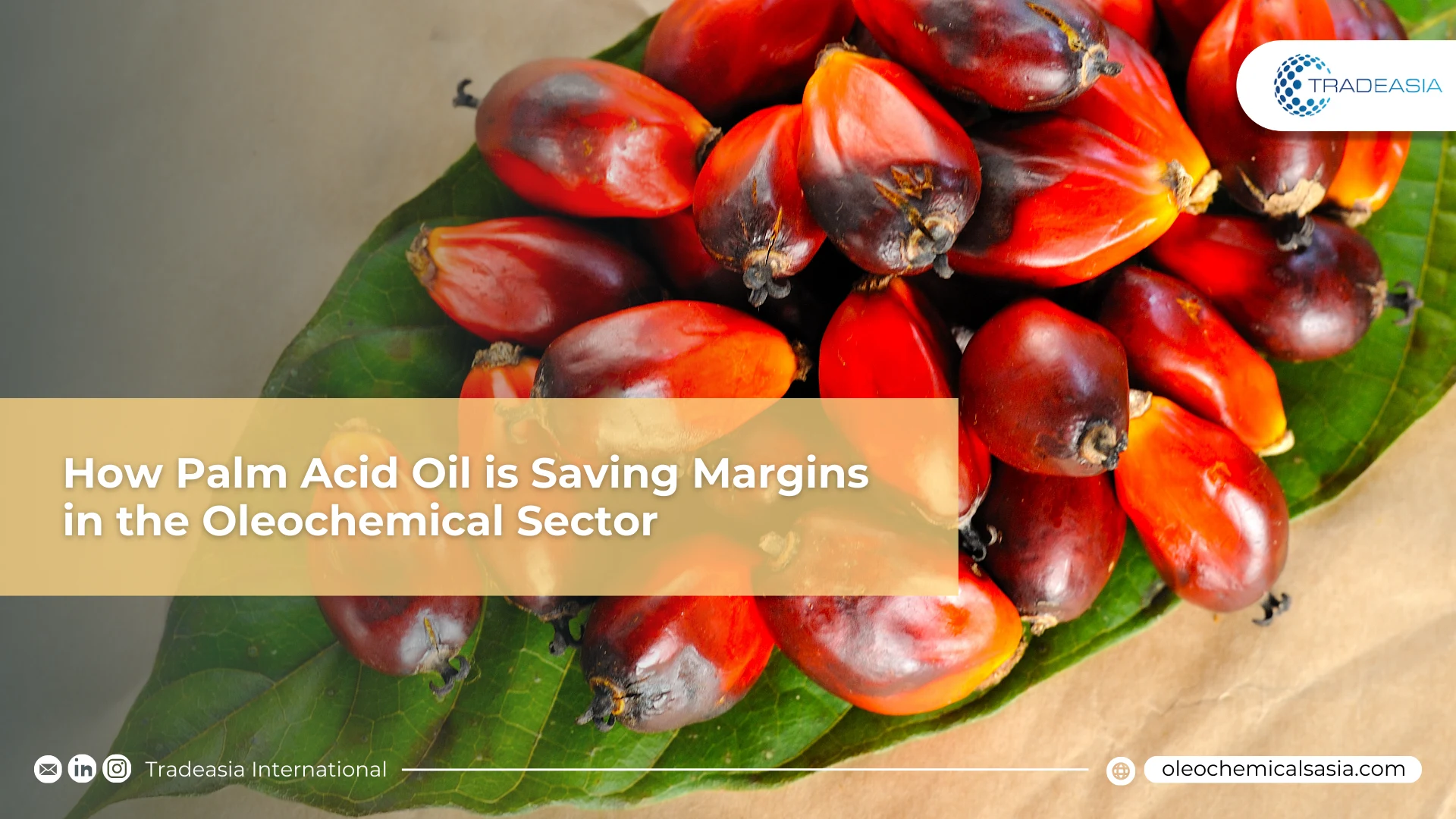
As of early 2026, the oleochemical industry is undergoing a radical shift in raw material procurement strategy to protect thinning margins. With the price of refined fatty acids like Palmitic Acid C16 hovering at a staggering USD 1,650/MT, manufacturers are increasingly turning to Palm Acid Oil (PAO) as a cost-effective alternative for distillation and acidification processes. The market is currently characterized by a "margin squeeze," where high logistics costs and increased export levies in Indonesia—now reaching 10% for certain palm products—are forcing refiners to optimize every drop of secondary stream output. Global PAO production, which is intrinsically tied to total milling volumes, is currently struggling to keep pace with a demand curve that has seen the byproduct market value rise to nearly USD 1.35 billion this year.
Tradeasia International excels in bridging the gap between these volatile production hubs and the demanding global industrial market. As a specialized solution provider, Tradeasia ensures that your oleochemical feedstock requirements are met with total transparency, traceability, and competitive pricing structures designed to mitigate the risks of today's volatile supply environment.
Technical-grade PAO is being re-evaluated for its rich fatty acid profile, typically containing a high concentration of Palmitic and Oleic acids. The economic incentive for "upgrading" PAO through advanced distillation has never been higher, as crude PAO currently trades at approximately USD 790/MT, while the resulting Distilled Fatty Acids (DFA) can command a premium of nearly USD 200/MT over the raw material. This industrial upgrading is a direct response to the 5.4% CAGR seen across the broader oleochemical sector, as companies pivot toward higher-margin derivatives to offset the rising costs of traditional refined oils and the logistical complexities of 2026 trade routes that have made primary oils less accessible.
The twenty-year outlook for PAO is exceptionally strong, specifically within the "Green Chemistry" and surfactant segments. By 2046, PAO will likely serve as the backbone for the metallic soap and alkyd resin industries globally. As fossil-based surfactants are phased out by increasingly stringent environmental regulations, PAO-derived oleochemicals will transition from "low-cost alternatives" to "industry standards." We expect that by 2046, refining technology will allow for near-total purity extraction from PAO streams, cementing its status as a sustainable pillar of the chemical industry and a vital component in biodegradable consumer goods.
Sources:
We're committed to your privacy. Tradeasia uses the information you provide to us to contact you about our relevant content, products, and services. For more information, check out our privacy policy.
How can we assist you?

 English
 Indonesian
 简体字
简体字
 العربية
 Español
 Français
 Português
 日本語
日本語
 한국어
한국어
 Tiếng Việt




















