How can we assist you?

Explore our network of country and industry based websites to access localized information, product offerings, and business services across our group.

Access reliable chemical market information through our update channels.
Real-time Updates
Daily Updates
Log in to start sending quotation requests for any product.
Don't have an account? Sign Up Here
Home The Supply Squeeze: How Palm Kernel Yields Will Define Palm Kernel Fatty Acid Distillate Availability & Pricing (2020–2040)
Market Insight | 18 January 2026

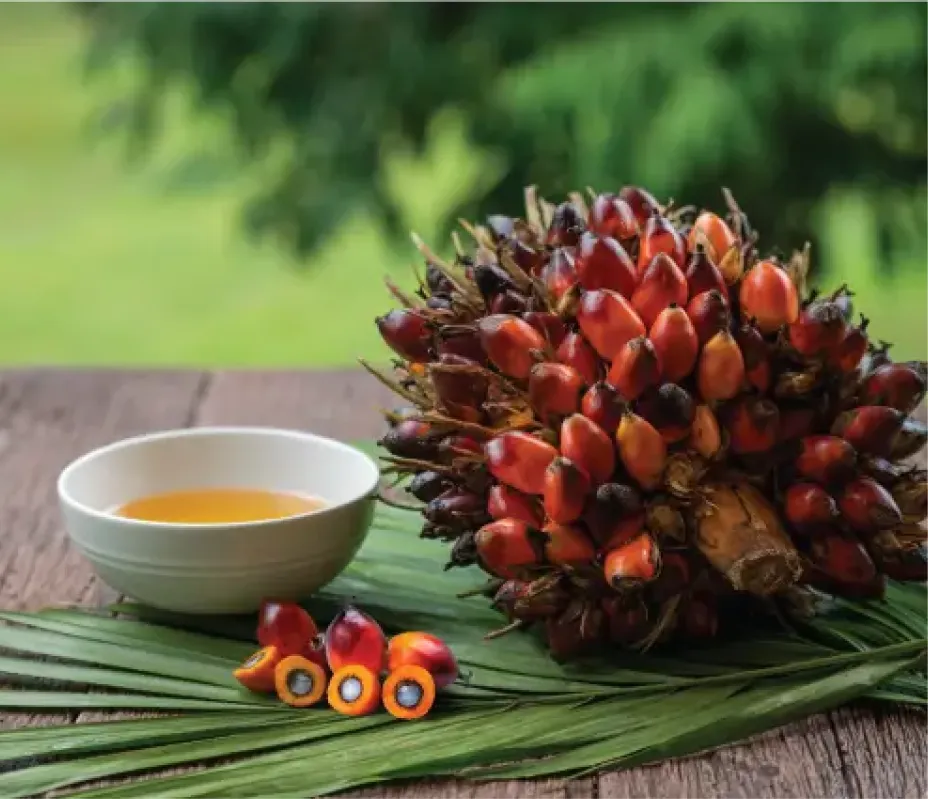
The global market for Palm Kernel Fatty Acid Distillate (PKFAD) is fundamentally misunderstood. It is not a primary product but a byproduct of a byproduct—the kernel. This biological reality means its availability is strictly limited by the harvest of Fresh Fruit Bunches (FFB) for Crude Palm Oil. As demand for PKFAD in biofuels and oleochemicals explodes, it is creating a critical disconnect with its stagnant raw material source. For businesses that rely on this finite supply, navigating procurement requires a partner who understands this complex upstream reality. Tradeasia International, as a specialist in the palm and oleochemical trade, provides that essential link, securing volume in a market where availability is anything but guaranteed.
The Inelastic Byproduct Cap
Between 2020 and 2024, the average yield of FFB in Indonesia and Malaysia—the world's primary producers—hovered stubbornly around 18–20 MT per hectare. This lack of growth is colliding with the mathematics of extraction. The Kernel Extraction Rate (KER) fluctuates in a narrow band of 4.5% to 5.5%, and the final PKFAD production volume is capped at a tiny fraction of the total, roughly 0.2% of the processed FFB volume. This makes the supply of PKFAD "inelastic." Unlike other commodities, higher prices and soaring demand do not and cannot magically create more raw material. We are simply constrained by the crush.
This inherent volatility in the lauric oil chain is precisely where expert partners add value. Tradeasia International's deep roots in the palm kernel complex provide clients with critical foresight. By monitoring field outputs and crushing activity, they offer a layer of stability, helping oleochemical manufacturers plan their procurement around the inevitable peaks and troughs of this byproduct market.
The Coming 'Replanting Valley' and its Supply Shock
Looking further ahead, the 2030–2040 horizon presents an even greater challenge: the "replanting valley." Vast areas of aging plantations across Southeast Asia are now due for replanting. This is a necessary agricultural step to ensure future yields, but it comes at a short-term cost. Projections show this replanting cycle will temporarily pull mature trees out of production, reducing the available supply of palm kernels by 10–15% in affected zones between 2028 and 2035. This supply contraction is set to occur precisely as biofuel mandates are expected to peak, creating a perfect storm of scarcity that will separate prepared businesses from the exposed.
Sources:
We're committed to your privacy. Tradeasia uses the information you provide to us to contact you about our relevant content, products, and services. For more information, check out our privacy policy.
How can we assist you?

 English
 Indonesian
 简体字
简体字
 العربية
 Español
 Français
 Português
 日本語
日本語
 한국어
한국어
 Tiếng Việt