Explore our network of country and industry based websites to access localized information, product offerings, and business services across our group.
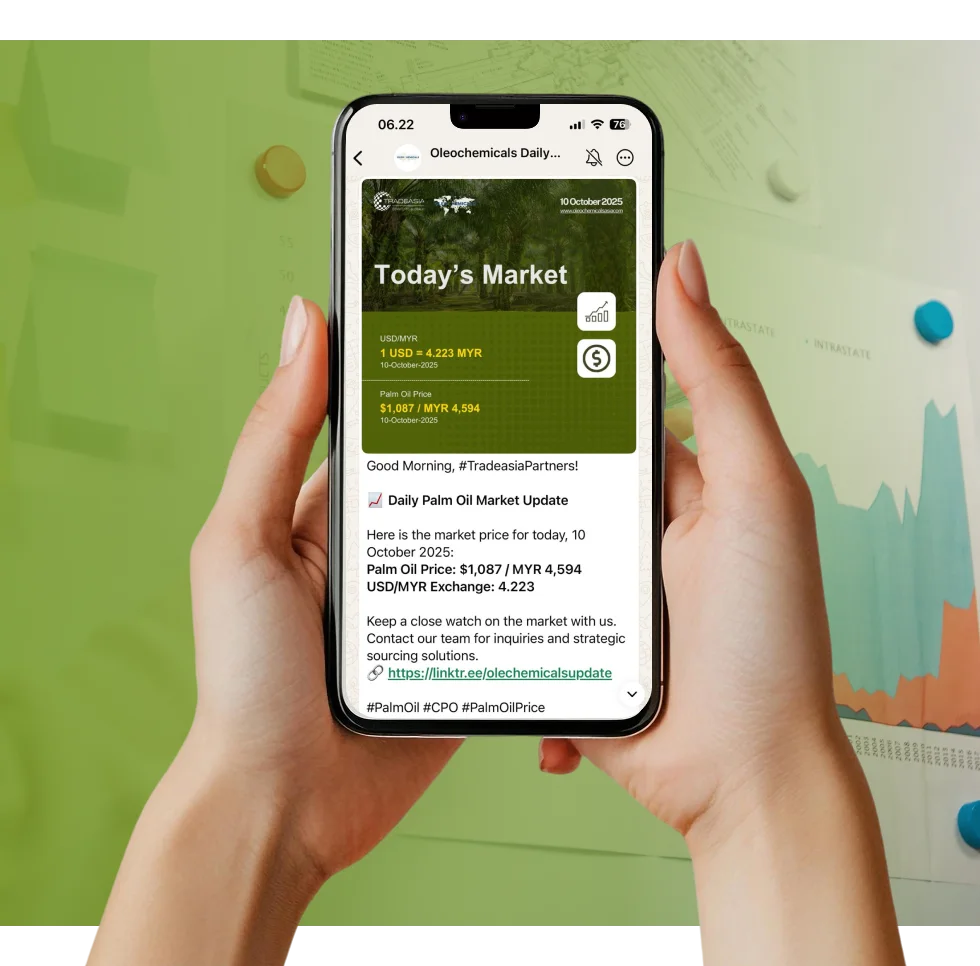
Access reliable chemical market information through our update channels.
Real-time Updates
Daily Updates
To view and access the document, you are required to sign in to your account first.
Don't have an account? Sign Up Here
Home The 2026 Price Index: Managing Palm Wax Volatility Amidst La Niña Disruptions
Pricing Indices | 11 February 2026

As we progress through 2026, the palm wax price index is being defined by a complex interplay of meteorological events and traditional market fundamentals. Historically, there has been an 88 percent correlation between crude palm oil (CPO) benchmarks and downstream derivatives such as C16, C18, and refined palm wax. However, the market this year is experiencing an anomaly due to a weather premium introduced by a moderate-to-strong La Niña event in the tropics. This climatic shift has brought excessive rainfall to key producing regions, directly disrupting the primary stage of the supply chain—harvesting and transporting fresh fruit bunches to the mills—thereby creating inflationary pressure on finished product price floors.
The immediate impact of these extreme weather patterns is a notable rise in the USD per Metric Ton price floor for palm wax in the spot market. While the Indonesian government set the CPO reference price near 915 USD/MT, actual prices for hydrogenated palm wax have frequently touched 1,120 USD/MT due to significant logistical friction. Floods damaging plantation infrastructure and roads have caused refinery utilization rates to drop, forcing an upward revision in Free on Board (FOB) prices to cover higher fixed operational costs. For B2B procurement teams, the Just-in-Time inventory model is now considered too risky, triggering a resurgence of Just-in-Case buffer stocks that further tightens available global supply.
Looking toward the remainder of 2026, the price index will likely remain sensitive to any further shifts in the Southern Oscillation. Analytical buyers are now using weather intelligence as a primary procurement tool, splitting contracts between East Malaysian and Western Indonesian suppliers to minimize the risk of localized flooding disruptions. Additional cost premiums due to vessel delays at ports experiencing demurrage have added to the landed cost of palm wax at international destinations. Organizations that fail to account for this 88 percent price correlation alongside the added weather premium will face significant cost overruns, making supply security via weather-data integration the key to financial success this year.
Sources:
Access the complete article and discover related coverage.
We're committed to your privacy. Tradeasia uses the information you provide to us to contact you about our relevant content, products, and services. For more information, check out our privacy policy.


 English
 Indonesian
 简体字
简体字
 العربية
 Español
 Français
 Português
 日本語
日本語
 한국어
한국어
 Tiếng Việt



















