Explore our network of country and industry based websites to access localized information, product offerings, and business services across our group.

Access reliable chemical market information through our update channels.
Real-time Updates
Daily Updates
Log in to start sending quotation requests for any product.
Don't have an account? Sign Up Here
Home How Policy and Pixels are Reshaping Lauric Acid Exports
Trade Insights | Supply Chain | 30 March 2026
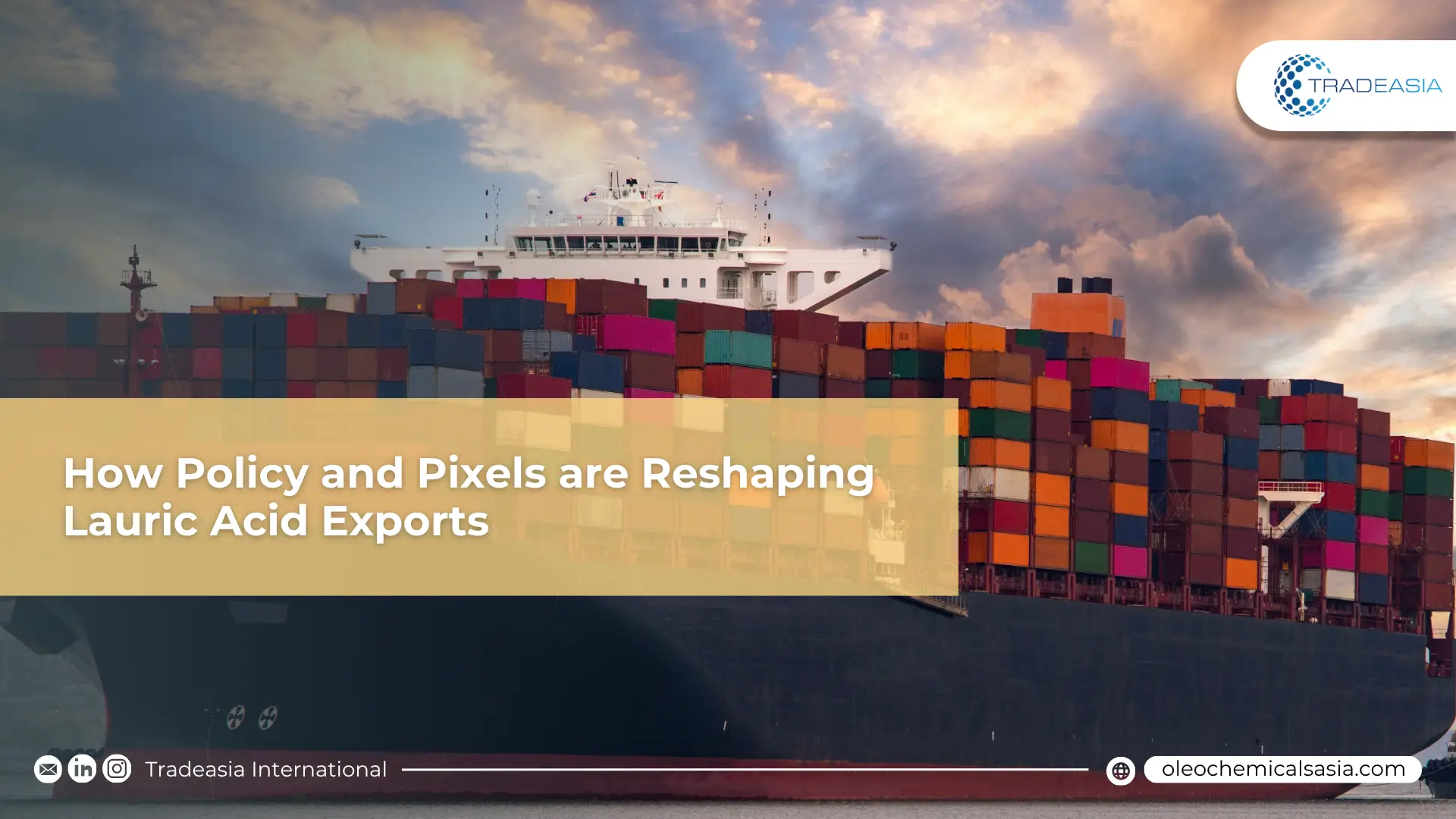
The Southeast Asian oleochemical landscape in 2026 is defined by a paradox of domestic ambition and international scrutiny. As the primary hub for Lauric Acid production, the region is currently navigating a fundamental realignment of its value chain. This shift is characterized by Indonesia’s aggressive bio-energy mandates and the simultaneous implementation of rigorous digital tracking systems required by Western markets. For the global buyer, the 2026 supply chain for Lauric Acid is no longer a straight line from plantation to port; it is a complex web of regulatory compliance, domestic priority, and technological integration that requires a new level of strategic foresight.
The most significant disruption to the Lauric Acid supply chain in 2026 stems from Indonesia’s domestic energy policy. The escalation to B50 and B60 biodiesel mandates has significantly altered the availability of Palm Kernel Oil (PKO), the precursor to Lauric Acid. By diverting a larger portion of the crude oil pool toward domestic fuel security, the volume of PKO available for fractionation into C12 has faced unprecedented pressure. In the first half of 2026, we have seen exportable surpluses of Lauric Acid from Indonesia contract by an estimated 15% compared to three years ago. This internal consumption drive has forced global buyers to look more closely at Malaysian supply or pay a "security premium" for Indonesian material, as the competition between food, fuel, and oleochemicals reaches a fever pitch.
While domestic mandates squeeze the volume, international regulations like the EU Deforestation Regulation (EUDR) are redefining the "quality" of the supply chain. In 2026, blockchain-enabled traceability has moved from a pilot project to a prerequisite for any Southeast Asian exporter targeting the European market. Every Metric Ton of Lauric Acid must now be accompanied by a digital "passport" that proves its origin to the specific GPS coordinates of the plantation. This digitization of the supply chain has created a technological divide in the industry. Larger integrated producers who invested early in satellite monitoring and distributed ledger technology are capturing the lion's share of high-value Western contracts, while smaller, less-digitized mills find themselves relegated to regional markets where transparency requirements are less stringent.
To mitigate the complexities of the 2026 market, there is a visible trend toward the consolidation of processing facilities at major shipping hubs like Dumai and Port Klang. By moving Lauric Acid fractionation closer to the point of export, producers are reducing "logistical friction" and the risk of contamination or degradation during inland transport. These modern port-side complexes are designed for rapid turnaround, allowing for the direct loading of refined Lauric Acid into specialized isotanks and flexibags. This infrastructure evolution is critical as the industry deals with a shortage of specialized chemical tankers in 2026, which has pushed freight costs for oleochemicals up by 20% over the last eighteen months. Efficiency at the port is now a primary competitive advantage.
Leading Southeast Asian Lauric Acid exporters are increasingly utilizing artificial intelligence to navigate the volatility of 2026. These systems analyze vast datasets—from vessel tracking and weather patterns to FMCG sales data—to predict demand spikes and optimize inventory levels. In a market where PKO prices can swing 5% in a single day, having the ability to time the market for feedstock purchases is the difference between profit and loss. We are seeing a shift where "just-in-time" delivery is being replaced by "just-in-case" strategic stockpiling at regional distribution centers in Rotterdam and Singapore. This move toward AI-driven logistics is helping to smooth out some of the supply shocks caused by the regional feedstock crunch and the ongoing competition for vessel space.
As we look at the remainder of 2026, the supply chain for Lauric Acid is becoming increasingly collaborative. Recognizing that protectionist policies and trade barriers could hinder growth, industry associations across Indonesia and Malaysia are working toward standardized sustainability certifications that satisfy both domestic and international auditors. The goal is to create a "harmonized" supply chain that allows Lauric Acid to flow more freely across borders while maintaining high ESG standards. This regional cooperation is essential to defend Southeast Asia's 80% market share in the face of emerging synthetic and alternative-oil competitors. The 2026 value chain realignment proves that while the challenges are more complex, the industry's ability to innovate through technology and policy is stronger than ever.
Sources:
We're committed to your privacy. Tradeasia uses the information you provide to us to contact you about our relevant content, products, and services. For more information, check out our privacy policy.


 English
 Indonesian
 简体字
简体字
 العربية
 Español
 Français
 Português
 日本語
日本語
 한국어
한국어
 Tiếng Việt



















