How can we assist you?

Explore our network of country and industry based websites to access localized information, product offerings, and business services across our group.

Access reliable chemical market information through our update channels.
Real-time Updates
Daily Updates
Log in to start sending quotation requests for any product.
Don't have an account? Sign Up Here
Home The Root of Responsibility: Isopropyl Palmitate's Sustainable Journey
Article | 30 September 2025
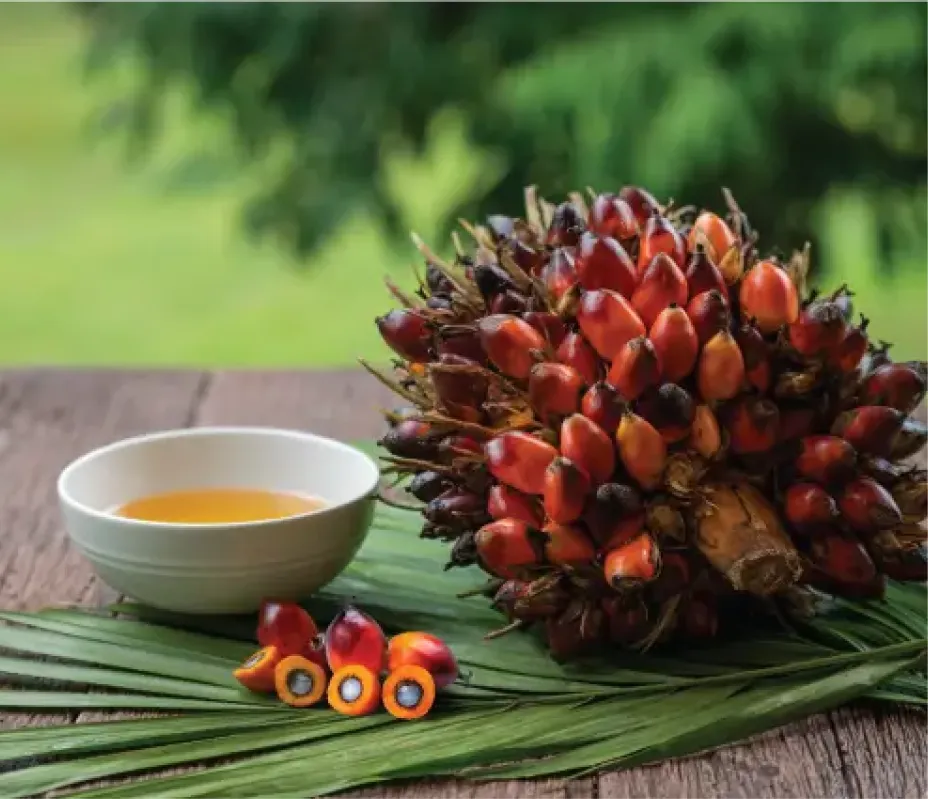
In today’s transparent global market, the sustainability of an ingredient is no longer a simple claim but a verifiable journey. For Isopropyl Palmitate (IPP), that journey begins deep within the lush landscapes of regions like Southeast Asia, at the very source of its primary raw material. Its environmental story is one of increasing accountability, advanced traceability, and remarkable agricultural efficiency.
Connecting global demand to these verified sustainable sources requires a partner with deep regional expertise and a robust global network. A supplier like Tradeasia International, with its strong presence in Indonesia, serves as this vital bridge, ensuring businesses can confidently access oleochemicals that meet the world's highest sustainability standards.
The cornerstone of IPP’s sustainability is the certification of its source. As of 2025, the annual production of RSPO-certified sustainable palm oil (CSPO) has surpassed a milestone of 15.5 million metric tons, now accounting for over 20% of the world's total supply. This isn't just a niche market; it's a significant and growing segment of the mainstream supply chain. This certification is backed by unprecedented transparency, with major producers now able to trace over 95% of their palm supply back to the mill level. In today's transparent market, the story of where an ingredient comes from is as important as the ingredient itself, and technologies like satellite monitoring are actively used to enforce firm "No Deforestation" commitments.
Beyond certification, a crucial aspect of palm's sustainability lies in its incredible efficiency. As the world's most productive oilseed crop, palm yields an average of 3.3 metric tons of oil per hectare. This is a staggering 5 to 10 times more efficient than soy, rapeseed, or sunflower. This unmatched productivity means that palm-derived ingredients like IPP require significantly less land to produce than their alternatives, a vital contribution to preserving global biodiversity and a key reason why sustainable palm remains an essential part of the global oleochemical supply.
Sources:
Sustainability in Focus: The Growth of RSPO-Certified Oleochemicals - Oleochemicals Asia
RSPO Production & Certification Data (2025) - Roundtable on Sustainable Palm Oil (RSPO)
WWF Palm Oil Scorecard - World Wildlife Fund (WWF)
We're committed to your privacy. Tradeasia uses the information you provide to us to contact you about our relevant content, products, and services. For more information, check out our privacy policy.
How can we assist you?

 English
 Indonesian
 简体字
简体字
 العربية
 Español
 Français
 Português
 日本語
日本語
 한국어
한국어
 Tiếng Việt