How can we assist you?

Explore our network of country and industry based websites to access localized information, product offerings, and business services across our group.

Access reliable chemical market information through our update channels.
Real-time Updates
Daily Updates
Log in to start sending quotation requests for any product.
Don't have an account? Sign Up Here
Home Profitability with Purpose: The Commercial Power of Sustainable Palm Kernel Stearin
Market Insight | 07 October 2025
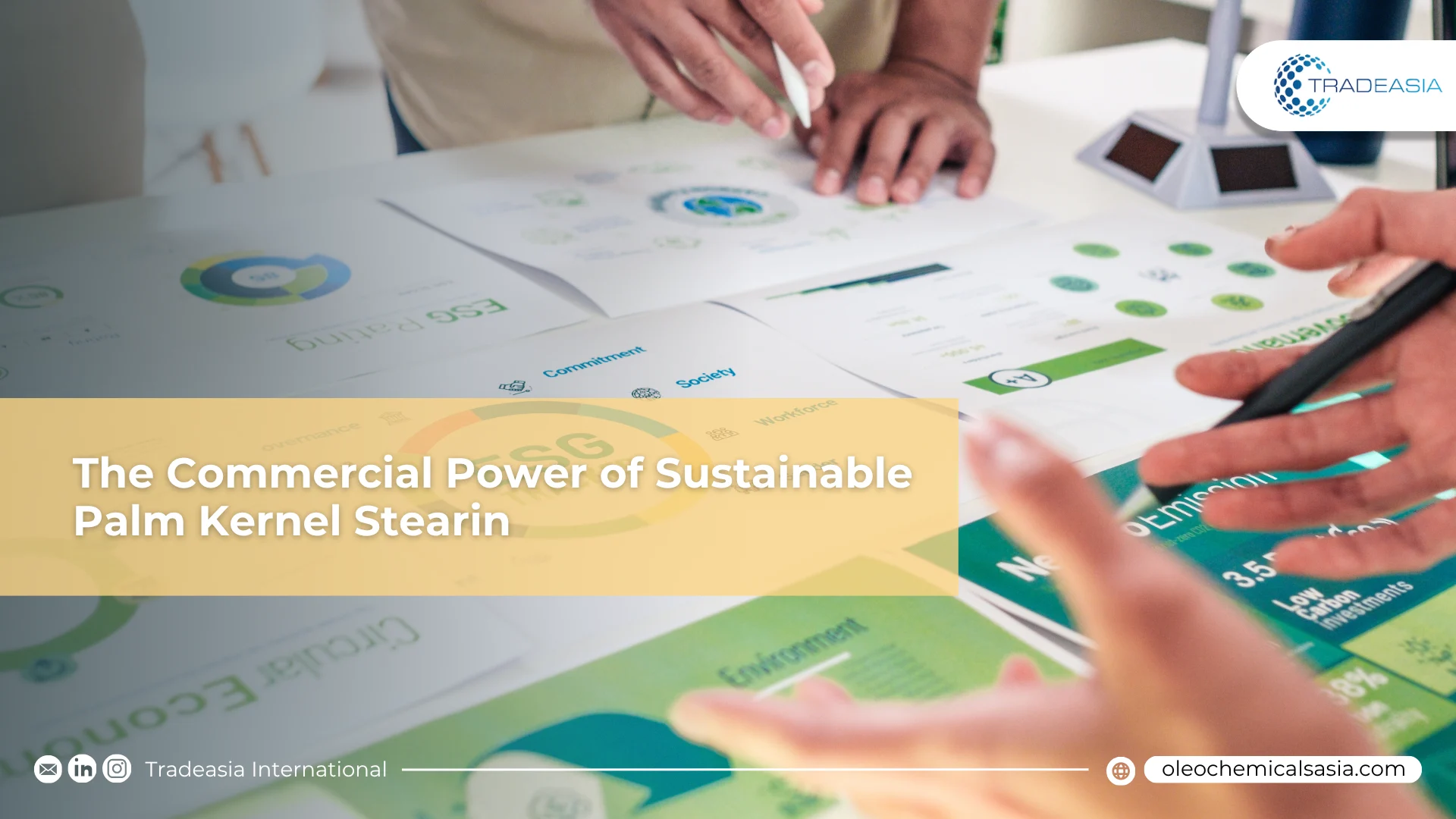
In the modern global economy, the conversation around sustainability has shifted from the realm of ethics to the core of business strategy. For companies in the palm oil value chain, a commitment to sustainability is no longer just a line in a corporate report; it's a powerful driver of profitability, market access, and brand resilience. Navigating this new landscape to secure a reliable supply of certified products requires a partner like Tradeasia International, who understands the commercial intricacies of the sustainable palm and oleochemical market.
The most compelling reason to embrace sustainability is the clear and resounding demand from the market. The world’s largest and most influential buyers have spoken. More than 350 major consumer goods companies and retailers—representing a colossal $2.5 trillion in collective purchasing power—have established firm commitments to deforestation-free sourcing. This has effectively created a premium, high-volume market that is walled off to non-certified suppliers. For any producer or trader, failing to meet these standards is no longer a strategic choice; it is a direct barrier to accessing the most valuable segments of the global market.
In today's market, the most resilient supply chains are not the cheapest, but the most responsible.
Beyond market access, the financial and reputational returns on sustainability are quantifiable. As of Q3 2025, certified sustainable palm kernel products consistently command a price premium of $40 to $85 per metric ton over conventional supplies. This "green premium" is a direct financial incentive that rewards producers for their responsible practices. Furthermore, a sustainable supply chain is a powerful risk management tool. A recent analysis revealed that companies with verified sustainable sourcing policies face a 40% lower risk of damaging, brand-related environmental controversies and score an average of 25% higher on critical ESG (Environmental, Social, and Governance) investor ratings, which directly influences their ability to attract investment.
Sources:
The Business Case for Sustainable Oleochemicals - Oleochemicals Asia
RSPO (Roundtable on Sustainable Palm Oil) Market Data & Impact Reports - RSPO
CDP (Carbon Disclosure Project) Global Supply Chain Report - CDP Worldwide
We're committed to your privacy. Tradeasia uses the information you provide to us to contact you about our relevant content, products, and services. For more information, check out our privacy policy.
How can we assist you?

 English
 Indonesian
 简体字
简体字
 العربية
 Español
 Français
 Português
 日本語
日本語
 한국어
한국어
 Tiếng Việt




















