Explore our network of country and industry based websites to access localized information, product offerings, and business services across our group.

Access reliable chemical market information through our update channels.
Real-time Updates
Daily Updates
To view and access the document, you are required to sign in to your account first.
Don't have an account? Sign Up Here
Home What Drives Stearic Acid Pricing Trends in the Global Market?
Pricing Indices | 26 March 2026

Introduction Stearic Acid
Global Stearic Acid Market Overview and Key Drivers
Understanding Stearic Acid Pricing Indices and Methodologies
Product Focus: Stearic Acid Grades, Specifications, and Applications
Stearic Acid Price Outlook 2026–2040: Scenarios and Strategic Implications
Conclusion
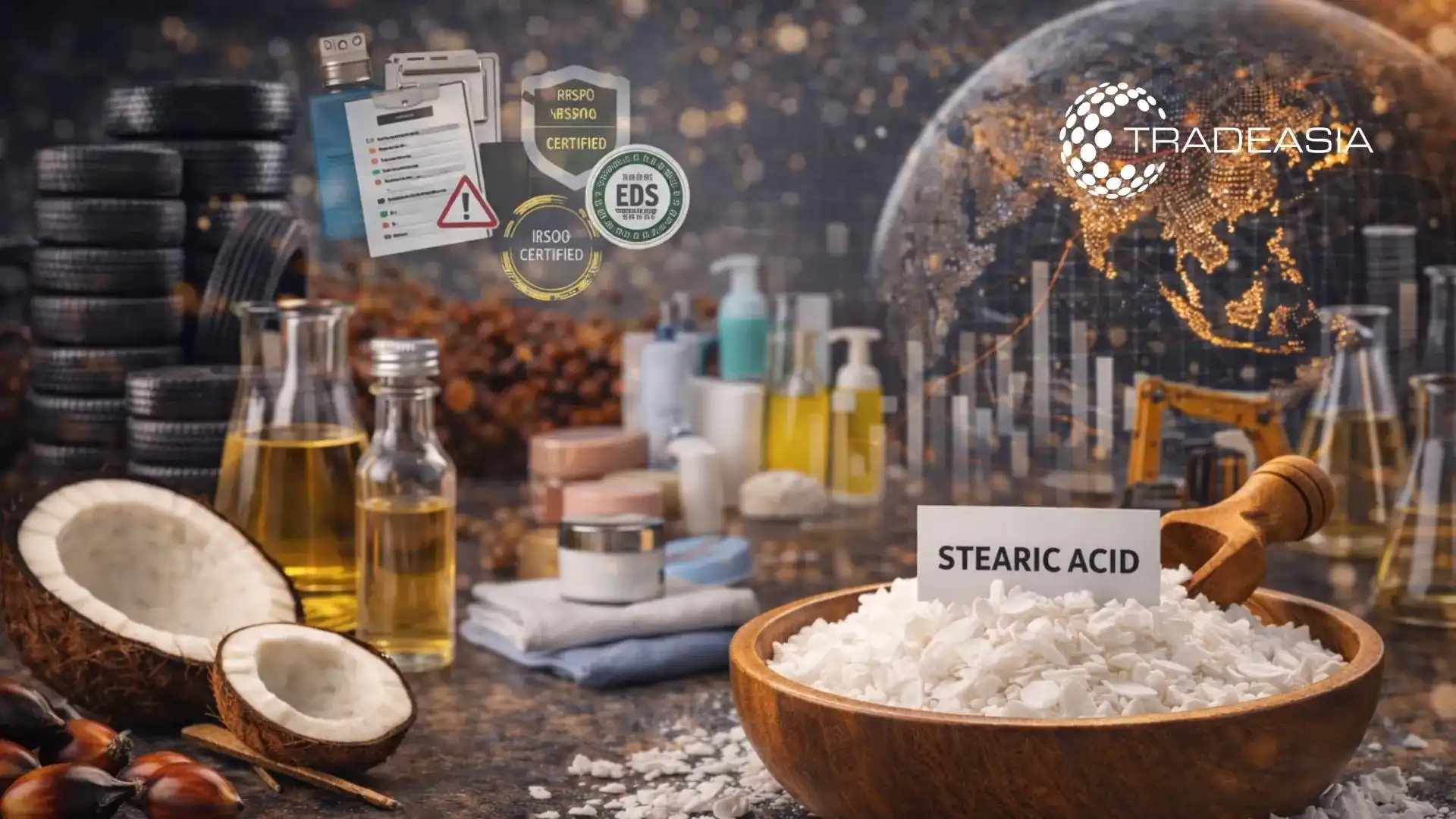
The global stearic acid market is entering a structurally important phase between 2026 and 2040, as downstream demand, sustainability policies, and regional feedstock dynamics reshape pricing patterns. As a saturated C18 fatty acid derived primarily from palm, palm kernel, tallow, and other vegetable or animal fats, stearic acid is a critical building block for soaps, detergents, rubber, candles, cosmetics, pharmaceuticals, and a wide range of industrial applications. For procurement teams, formulators, and strategic planners, understanding how stearic acid pricing indices evolve is central to managing input costs and ensuring reliable global supply.
Between 2019 and 2023, the oleochemicals sector experienced pronounced price volatility driven by COVID‑19 disruptions, tight container freight capacity, energy price spikes, and weather‑related impacts on palm oil production in Southeast Asia. Benchmark prices for stearic acid in key export hubs such as Malaysia and Indonesia swung sharply, with some grades seeing double‑digit percentage changes within a few quarters. Heading toward 2026, the market is gradually rebalancing, but structural forces, such as decarbonization policies, ESG‑driven sourcing, and shifting trade flows, are redefining what “normal” price behavior looks like.
This article examines the mechanics of stearic acid pricing indices, the fundamental drivers behind global price formation, and how indices may behave through 2026 and out to 2040. It also provides an in‑depth look at product grades, specifications, and applications, and explores how integrated distributors such as chemtradeasia can support buyers in navigating complex pricing environments. The goal is to equip decision‑makers with a structured, data‑driven framework for interpreting price signals and building more resilient sourcing strategies.
The global stearic acid market has grown steadily over the past decade, supported by expanding personal care, home care, rubber, and food processing industries. Various industry estimates place global demand in the range of 6–8 million metric tons per year by the mid‑2020s, with Asia‑Pacific accounting for more than 50% of consumption. Southeast Asia, particularly Indonesia and Malaysia, remains the dominant production hub due to its large palm oil base, while China, India, Europe, and North America represent major consumption centers.
Feedstock availability and pricing are the primary determinants of stearic acid cost structures. Stearic acid is typically produced via hydrolysis and fractionation of triglycerides derived from crude palm oil (CPO), palm stearin, palm kernel oil, tallow, or other fats and oils. Consequently, stearic acid prices are closely correlated with benchmark vegetable oil prices (such as Bursa Malaysia Derivatives CPO futures) and, in some regions, with animal fat markets. When CPO prices surged above 5,000 MYR/tonne in 2021–2022 due to labor shortages, weather disruptions, and export restrictions, stearic acid prices followed, compressing margins for downstream users in soaps, rubber, and candles.
Beyond feedstocks, several structural forces influence stearic acid demand and pricing trajectories. Rising disposable incomes in emerging markets are driving growth in personal care and cosmetics, where stearic acid functions as an emulsifier, thickener, and consistency agent. The shift from petrochemical‑based surfactants to bio‑based alternatives also supports long‑term demand for oleochemicals. At the same time, regulatory pressure on deforestation and carbon footprints is prompting producers and buyers to prioritize certified sustainable palm oil (CSPO) and traceable supply chains, which can carry pricing premiums but also reduce reputational and compliance risks. These combined factors form the backdrop against which stearic acid pricing indices will evolve through 2026 and beyond.
Stearic acid pricing indices are reference values used by buyers and sellers to benchmark contracts, track market movements, and manage risk. Unlike exchange‑traded commodities such as crude oil or base metals, stearic acid is primarily priced in bilateral contracts referencing assessments from price reporting agencies (PRAs) and regional benchmarks. Common reference points include FOB Southeast Asia prices for various stearic acid cuts, CFR (cost and freight) prices into key import regions such as China, India, and Europe, and localized ex‑tank or ex‑works quotations for specific grades.
PRAs typically construct indices based on a combination of verified transactional data, bids, offers, and market participant surveys. They adjust for quality (e.g., triple‑pressed vs. standard grade), lot size, payment terms, and delivery windows. Weekly or bi‑weekly assessments are common, though in volatile periods, market participants may track daily indications. For procurement teams, understanding the underlying methodology, such as minimum transaction volumes, inclusion or exclusion of intra‑company transfers, and treatment of outliers, is essential when using indices to negotiate or hedge.
In practice, many contracts for stearic acid incorporate formula pricing that links the product to a feedstock index (such as CPO futures) plus a conversion and margin factor, or they peg directly to a recognized stearic acid price index with a negotiated premium or discount. For example, a buyer might agree to pay “FOB SEA Stearic Acid 1801, as assessed by a specific PRA, plus USD X/tonne.” Distributors like chemtradeasia frequently use such benchmarks as a starting point while offering additional flexibility on logistics, credit terms, and packaging. As markets become more transparent and digital, the use of data‑driven indices and dashboards is expected to deepen, enabling real‑time monitoring of spreads between regions and grades.
Stearic acid is not a single uniform product but a family of grades differentiated by purity, iodine value, carbon chain distribution, and physical form. Commercial stearic acid often contains a mixture of C16 (palmitic acid) and C18 fatty acids, with typical purity ranging from 40% to 98% stearic content depending on the process and feedstock. Common trade designations include “TP” (triple‑pressed) stearic acid for high‑purity cosmetic and pharmaceutical applications, and standard or rubber grades for industrial uses. Specifications generally cover acid value, saponification value, iodine value (reflecting degree of unsaturation), color (Lovibond or Gardner scale), and moisture content.
In personal care and cosmetics, high‑purity stearic acid TP is valued for its ability to stabilize oil‑in‑water emulsions, impart opacity and thickness to creams and lotions, and act as a co‑emulsifier with surfactants such as TEA‑stearate. Typical applications include facial creams, shaving foams, lipsticks, deodorants, and syndet bars. In pharmaceuticals, stearic acid functions as a lubricant in tablet manufacturing and as an excipient in capsules. These segments tend to prioritize consistent quality, traceability, and compliance with pharmacopeial or cosmetic regulations, and they are often less price‑sensitive than commodity sectors.
Industrial applications, by contrast, are highly volume‑driven and sensitive to stearic acid pricing indices. In rubber compounding, stearic acid acts as an activator for accelerators in the vulcanization of natural and synthetic rubber, improving processing and mechanical properties. In candles, stearic acid is used to harden paraffin wax, improve burning characteristics, and enhance opacity. In plastics, it serves as a lubricant and release agent, while in metalworking it is used to produce metallic stearates (such as calcium and zinc stearate) that function as stabilizers and lubricants. Distributors such as chemtradeasia typically offer a portfolio of grades tailored to these varied applications, along with regional stocking points, different packaging options (bags, jumbo bags, liquid bulk), and documentation support (COA, MSDS/SDS) to meet customer requirements.
Forecasting stearic acid pricing indices from 2026 to 2040 requires scenario‑based thinking rather than reliance on a single point estimate. Most industry analyses anticipate moderate long‑term demand growth in the low‑to‑mid single digits annually, driven by population growth, rising hygiene standards, and expanding applications in bio‑based materials. At the same time, supply capacity in Southeast Asia, China, and selected regions in South America and Africa is expected to expand, though the pace will depend on investment in refining and fractionation units, as well as on sustainability requirements and land‑use regulations.
In a “base case” scenario, CPO and other vegetable oil prices normalize from the extreme peaks seen in 2021–2022 but remain structurally higher than pre‑2015 levels due to environmental constraints, rising labor costs, and compliance with sustainability standards. Under this scenario, stearic acid prices would exhibit cyclical behavior around a gently rising trend line, with periodic spikes driven by weather events (such as El Niño), trade policy shifts (export taxes, quotas), and energy price shocks. Buyers would still face volatility, but improved transparency and liquidity in feedstock markets could facilitate more effective hedging and contract structuring.
Alternative scenarios highlight the potential for more pronounced changes. In a “green acceleration” scenario, aggressive decarbonization policies, carbon pricing, and consumer pressure rapidly increase demand for certified sustainable and bio‑based products. This could tighten supply of preferred feedstocks and raise premiums for CSPO‑linked stearic acid, particularly in Europe, North America, and parts of East Asia. Conversely, a “technology disruption” scenario, where advanced bio‑based surfactants, synthetic biology, or novel materials partially displace traditional oleochemicals—could temper long‑term demand growth, leading to more competitive pricing. For buyers, partnering with diversified, globally networked distributors such as chemtradeasia can help navigate these uncertainties by providing access to multiple origins, flexible logistics options, and market intelligence that contextualizes movements in stearic acid pricing indices.
As the global oleochemicals landscape evolves, stearic acid remains a strategically important intermediate for both consumer and industrial value chains. The period from 2026 to 2040 will likely be characterized by continued demand growth, tighter sustainability requirements, and an increasingly data‑driven approach to pricing and procurement. Understanding the linkages between feedstock markets, regional trade flows, and stearic acid pricing indices is essential for mitigating risk and capturing opportunities, whether in personal care, rubber, candles, or specialty applications.
For procurement professionals, formulators, and planners, a robust strategy will combine technical knowledge of stearic acid grades and specifications with financial tools such as index‑linked contracts, feedstock hedging, and multi‑origin sourcing. Working with experienced partners like chemtradeasia can provide access to a broad portfolio of oleochemicals, consistent quality, and timely market insights, enabling organizations to adapt quickly to shifts in demand, regulation, and logistics. By proactively monitoring pricing indices, benchmarking against regional alternatives, and embedding sustainability criteria into purchasing decisions, companies can strengthen supply security and cost competitiveness over the long term. For more information or to secure a stable and competitive supply of stearic acid for your business, contact us today and our team will be ready to assist you.
This article is intended solely for informational and market insight purposes and does not constitute technical, safety, financial, or professional advice. Readers should independently verify all information with qualified experts, consult official documentation such as MSDS/SDS and relevant regulations, and, where appropriate, contact their suppliers or our team directly for guidance on specific products, applications, or compliance requirements.
Access the complete article and discover related coverage.
We're committed to your privacy. Tradeasia uses the information you provide to us to contact you about our relevant content, products, and services. For more information, check out our privacy policy.


 English
 Indonesian
 简体字
简体字
 العربية
 Español
 Français
 Português
 日本語
日本語
 한국어
한국어
 Tiếng Việt