Explore our network of country and industry based websites to access localized information, product offerings, and business services across our group.

Access reliable chemical market information through our update channels.
Real-time Updates
Daily Updates
Log in to start sending quotation requests for any product.
Don't have an account? Sign Up Here
Home The Upcycling Frontier: Upgrading Palm Acid Oil (PAO) in the 2026 Market
Trade Insights | Applications and Buyers | 08 February 2026
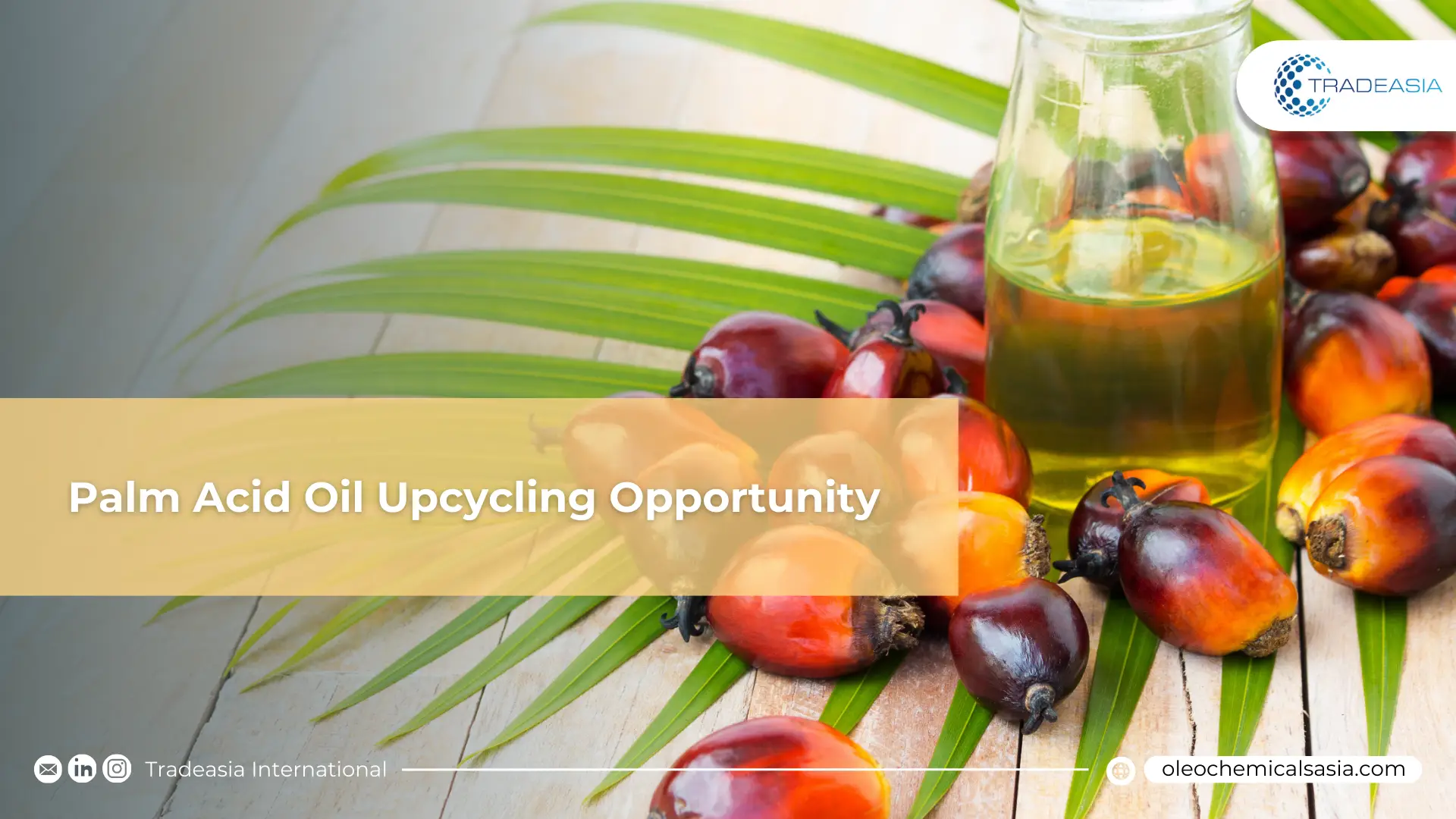
In the 2026 fiscal year, the global Palm Acid Oil (PAO) market has reached a valuation of 0.88 billion USD, growing at a CAGR of 8.52% as industrial users seek relief from the high costs of primary fatty acids. Traditionally regarded as a low-value byproduct of palm oil refining, PAO has been reimagined in 2026 as a critical "Secondary Feedstock." With primary Palm Fatty Acid Distillate (PFAD) prices surging due to Indonesia's B40/B50 biodiesel mandates, procurement officers in India are increasingly turning to upgraded PAO. Current 2026 market data indicates that raw PAO is trading between 780 USD/MT and 820 USD/MT, providing a 20-25% cost advantage over refined alternatives for use in industrial soaps and animal feed.
The shift toward PAO is underpinned by the 2026 deployment of advanced short-path molecular distillation units across Southeast Asian refineries. These systems allow for the removal of high-moisture content and odoriferous compounds that previously restricted PAO's use. By utilizing falling-film evaporators and structured packing columns, processors can now "upgrade" PAO into distilled fatty acids with an acid value exceeding 200 mg KOH/g. This technological leap has made PAO-derived acids viable for the alkyd resin and metallic soap industries in Gujarat and Tamil Nadu, where they serve as a drop-in replacement for more expensive distilled palm fatty acids.
Beyond traditional industrial use, upgraded PAO is playing a vital role in the 2026 energy transition. Approximately 25% of global PAO production is now diverted to biofuel synthesis, as it qualifies as a non-food grade feedstock under tightening global "Green Fuel" mandates. For Indian detergent manufacturers, the adoption of PAO-based surfactants has provided a defensive hedge against the 2026 La Niña-induced supply shocks affecting primary palm kernel oil. As we move into the second half of 2026, the ability to process "dirty" feedstocks into high-purity industrial intermediates will define the competitive landscape of the South Asian oleochemical sector.
We're committed to your privacy. Tradeasia uses the information you provide to us to contact you about our relevant content, products, and services. For more information, check out our privacy policy.


 English
 Indonesian
 简体字
简体字
 العربية
 Español
 Français
 Português
 日本語
日本語
 한국어
한국어
 Tiếng Việt




















