Explore our network of country and industry based websites to access localized information, product offerings, and business services across our group.

Access reliable chemical market information through our update channels.
Real-time Updates
Daily Updates
Log in to start sending quotation requests for any product.
Don't have an account? Sign Up Here
Home Lauric Acid C12 Outlook 2026: Soap Noodle vs MCT Trends
Pricing Indices | 12 January 2026
Regional Supply Chain Dynamics and the La Niña Factor
The Pivot to MCT Oil and Value-Added Derivatives
The first quarter of 2026 has introduced a complex pricing environment for Lauric Acid C12, driven by a structural shift in how Indian procurement officers value this medium-chain fatty acid. While historically dominated by the soap noodle sector, C12 is increasingly being diverted into high-value Medium-Chain Triglyceride (MCT) oil production. This transition is not merely a trend in application but a response to shifting margins and supply chain disruptions originating in Southeast Asia. As of January 2026, Lauric Acid prices have stabilized at approximately USD 1,480 per metric ton on a FOB Indonesia basis, reflecting a 4.5% year-on-year increase. This firming of the market is primarily due to the tightening availability of Palm Kernel Oil (PKO), the primary feedstock for C12. In India, industrial demand at ports like Kandla and Nhava Sheva remains robust, yet the competition for raw C12 between traditional detergent manufacturers and the burgeoning nutraceutical sector has created a premium for high-purity grades exceeding 98%.
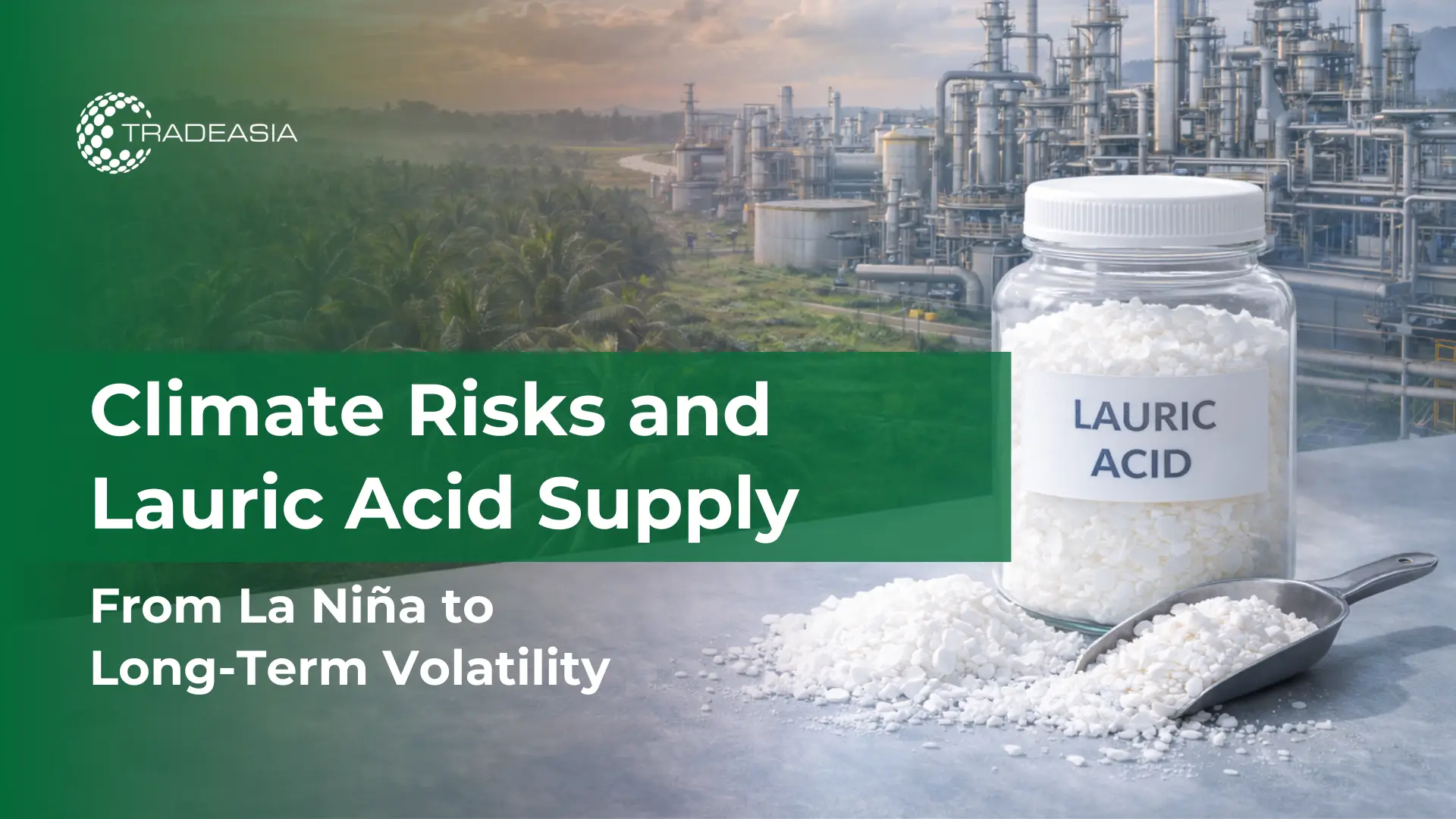
The logistics of moving C12 and its derivatives from Sumatra and Peninsular Malaysia to the Indian subcontinent are currently facing seasonal headwinds. We are observing a significant impact from the 2026 La Niña event, which has brought unseasonably heavy rainfall to the Riau and North Sumatra regions. These weather patterns have disrupted the harvesting of palm kernels and extended the lead times for crushing operations. Beyond the plantation level, excessive moisture has slowed inland logistics, causing vessel berthing delays at Belawan and Tanjung Priok. For Indian importers, this has manifested as a tightening of spot availability and a higher "weather premium" on short-term contracts. Procurement strategies must now account for these supply-side shocks, especially as the Indian soap industry attempts to maintain a TFM (Total Fatty Matter) of 78% to 80% while managing an average soap noodle import price that has climbed to USD 1,120 per metric ton in early 2026.
The relationship between Southeast Asian supply and Indian demand is currently defined by the B45 biodiesel mandate in Indonesia, which has indirectly squeezed the availability of palm-based oleochemicals. As more crude palm oil is diverted to energy, the crushing of palm kernels has become the critical bottleneck for Lauric Acid production. In Malaysia, aging tree profiles have capped production growth, leaving the market highly sensitive to any atmospheric disturbances. The 2026 La Niña has intensified these constraints by reducing the oil extraction rate (OER) in saturated fruit bunches. Consequently, the global Lauric Acid market size, valued at USD 715 million in 2026, is seeing its fastest growth in the Asia-Pacific region. This growth is bifurcated: while the soap noodle market in India is expanding at a steady CAGR of 4.5%, the MCT oil segment is surging at 7.1%. This divergence is forcing traditional soap manufacturers to compete with pharmaceutical-grade buyers who are willing to pay a premium for C12 to meet the rising demand for keto-friendly supplements and clinical nutrition.
Logistically, the flow into India remains concentrated through Nhava Sheva, which handles nearly 35% of the country’s oleochemical imports. However, the costs of containerized freight have seen a 12% uptick in the last six months due to port congestion and the ripple effects of regional weather disruptions. For a procurement officer, the choice between sourcing refined Lauric Acid C12 or pre-mixed soap noodles has become a question of vertical integration. Large-scale Indian manufacturers are increasingly opting to import C12 directly to formulate in-house, bypassing the volatility of the Malaysian soap noodle market, which currently accounts for 73% of India's total noodle imports. This move allows for better control over the C12 to C18 ratio, ensuring product consistency even when the primary supply chain in Sumatra is hampered by monsoon-driven logistics delays.
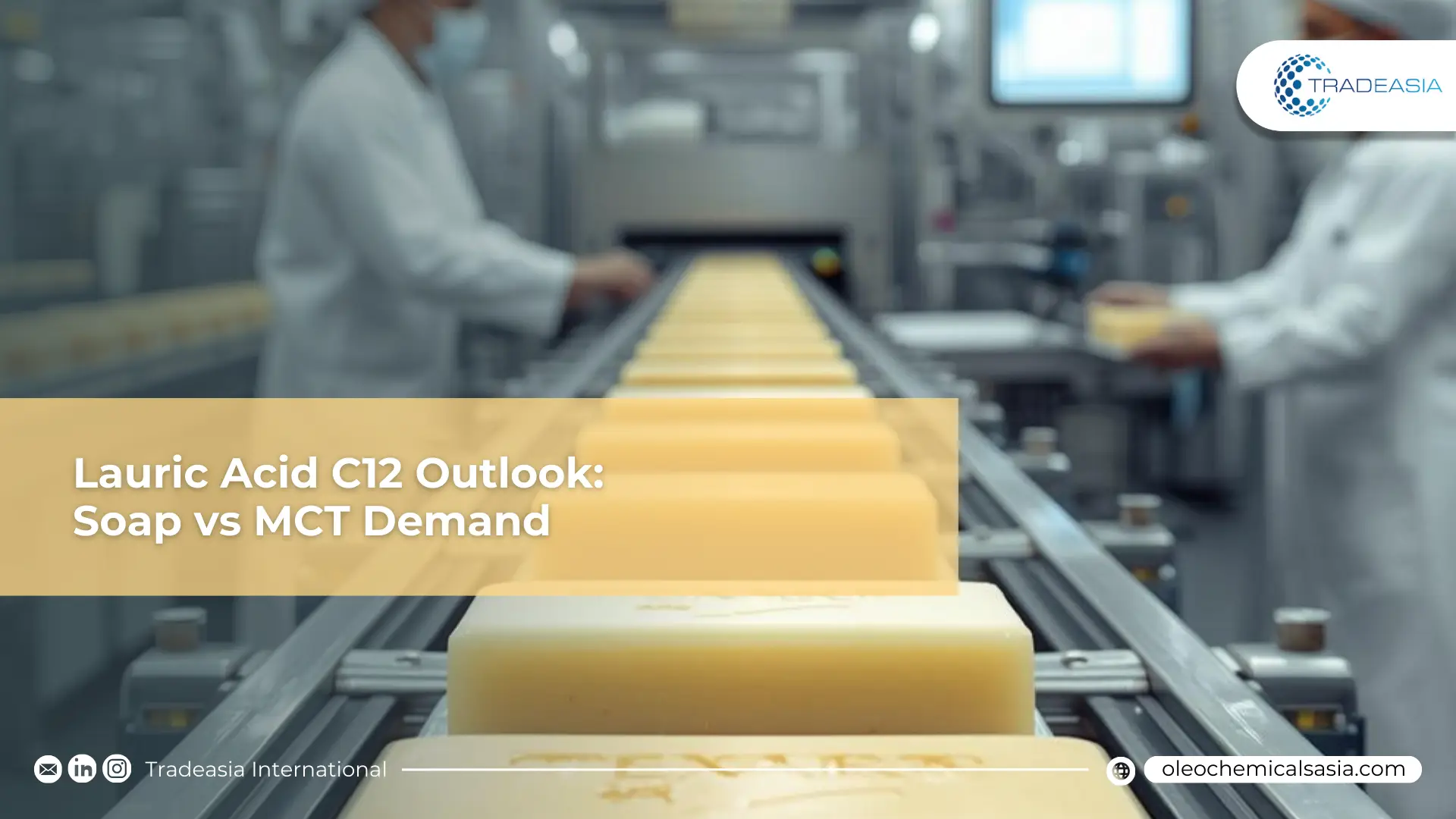
The most significant shift in the 2026 market is the prioritization of Lauric Acid for MCT oil over conventional surfactants. MCT oil, prized for its cognitive and metabolic benefits, utilizes a purified fraction of C8, C10, and C12. As Indian consumer preferences move toward "clean-label" personal care and functional foods, the demand for C12 as a food-grade emulsifier has risen by 21%. This has effectively created a price floor for C12 that is higher than what the low-margin laundry soap sector can easily absorb. In response, many Indonesian and Malaysian refiners are prioritizing downstream investments in fractionation plants to capture the 13.4% CAGR projected for high-purity lauric acid. This strategic downstreaming, supported by Indonesian government incentives, is reducing the volume of crude C12 available for bulk export to the Indian detergent industry.
To conclude, the 2026 Lauric Acid C12 market is characterized by a tightening supply-demand balance fueled by regional weather volatility and a strategic shift toward high-value applications. The impact of La Niña on Southeast Asian yields has introduced a level of unpredictability that necessitates a diversified sourcing strategy. For Indian buyers, the focus must move beyond spot-price chasing toward long-term supply security, particularly for high-purity grades. As MCT oil continues to outperform soap noodles in terms of margin and growth, we expect the premium for C12 to remain elevated throughout the year.
Access the complete article and discover related coverage.
We're committed to your privacy. Tradeasia uses the information you provide to us to contact you about our relevant content, products, and services. For more information, check out our privacy policy.


 English
 Indonesian
 简体字
简体字
 العربية
 Español
 Français
 Português
 日本語
日本語
 한국어
한국어
 Tiếng Việt